Artificial floor plants are no longer just fillers placed next to a sofa. Today, they function almost like architectural elements. A tall faux palm can visually lift a low ceiling. A bushy ficus can make a large hall feel warmer. When selected thoughtfully, these plants don’t just decorate, they structure the room.
In this guide, we’ll look at how to select them properly for different floor plans and room types.
Why Does Placement Matter for Artificial Floor Plants?
Placement is important since artificial floor plants determine the perception of a room as balanced, grounded, and complete. A plant placed randomly may look decorative but a strategically located plant can define the whole space.
- Visual anchor: Imagine a living room with one empty corner and all furniture pushed toward the center. That corner feels unfinished. Adding a 5–6 ft plant there can immediately stabilize the layout. It connects the floor, wall and ceiling in one vertical line and this makes the room appear purposeful.
- Concept of biophilic design: It is natural that human beings feel more at home when they are in the surroundings that reminds them of nature.
- Solve design problems: In open-plan houses, a large plant may be used to provide a slight separation between the dining and the living areas without building walls. Similarly, an artificial tall tree at the reception area of the offices makes the office look friendly rather than cold.
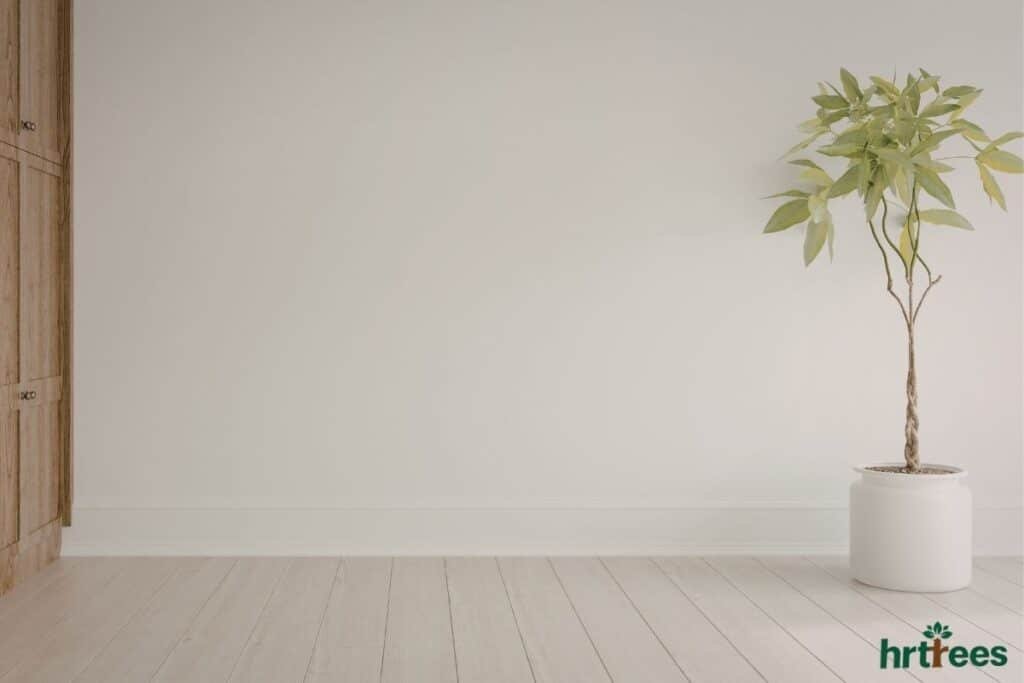
Best Artificial Floor Plant Types for Your Floor Layout
Before buying anything, pause and observe your layout. Where does the eye feel stuck? Where does the room look empty or heavy? That is usually where artificial floor plants should go.
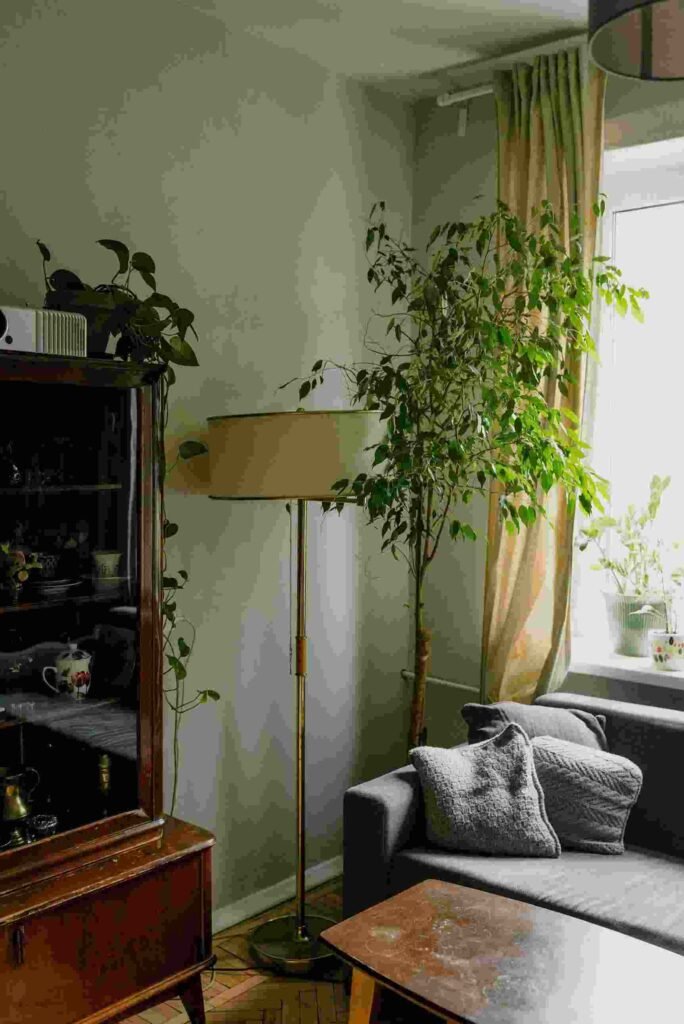
1- Tall Statement Plants (5–7 ft and above)
To have that wow factor, you must have something tall. They suit well when you are seeking to attract the eye upwards or even to balance a large and open wall.
- Best Locations: Living rooms that have higher ceilings, duplex houses, office lobbies or doorways.
- Placement: Behind a sectional couch, next to a media unit, or balcony doors. Make sure that the planter is of equal size.
Examples:
- Tall Fiddle Leaf Fig with its large waxy leaves
- Artificial pine tree for hotel lobby
Source: Pexels
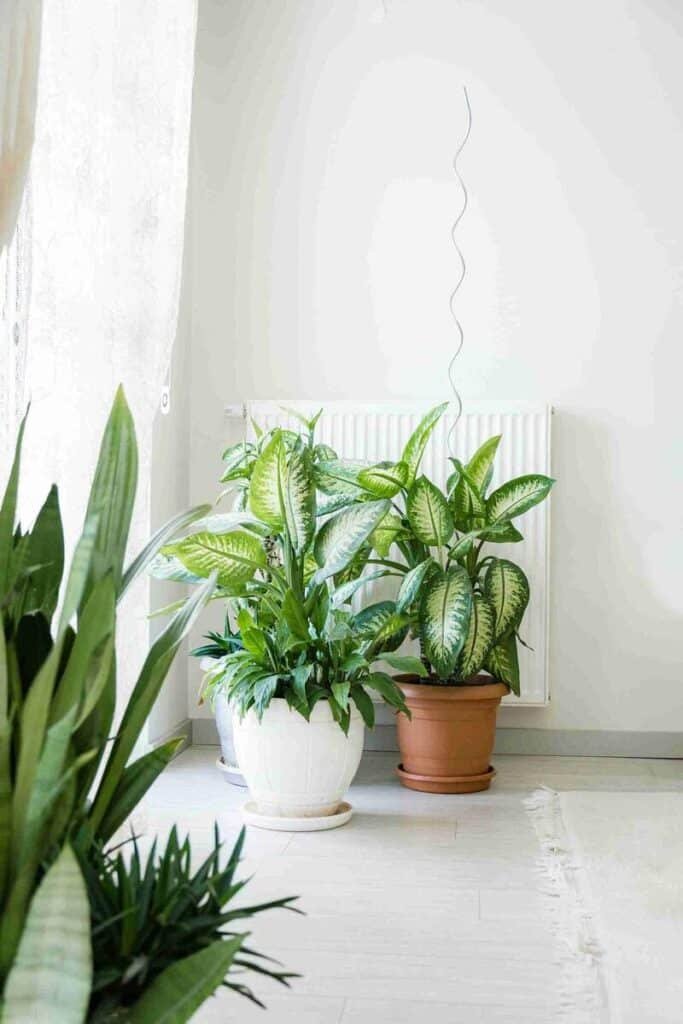
2- Medium-Height Plants (3–5 ft)
These are very versatile and work in almost any home. They are not too high to be visible but will not take up the whole room.
- Best Locations: Apartments, bedrooms, compact offices, and even café corners.
- Placement: Next to a sofa, beside a reading chair, under staircases, or near storage cabinets.
Examples:
- The Monstera Deliciosa (Swiss Cheese Plant)
- Bird of Paradise.
Source: Pexels
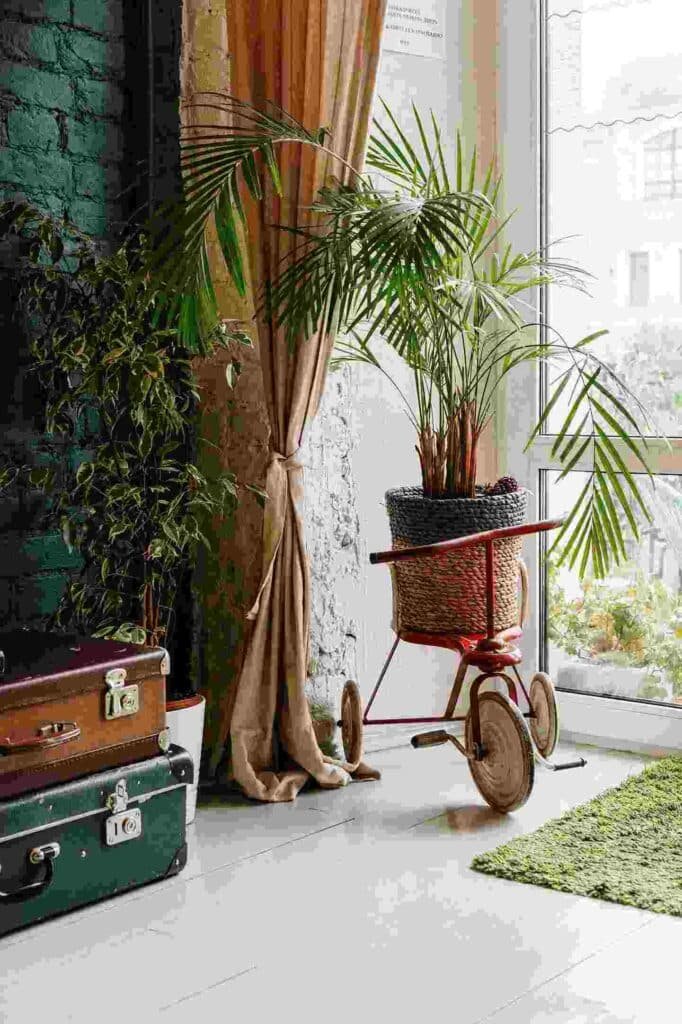
3- Slim Vertical Plants
In small spaces width is more significant than height. Here, thin, upwards-growing plants come to the rescue.
- Best Locations: Hallways, apartment entrances, or gaps between furniture and walls.
- Placement: In front of a console table and the wall, next to a study desk, etc.
Examples:
- Snake Plants (Sansevieria)
- Artificial Bamboo
Source: Pexels
4- Bushy or Wide-Spread Plants
In case your room is too open and it seems to echo, you should have plants that are a little more spread out to break the sight and make the room seem more unified.
- Best Locations: Studio apartments, open-plan living rooms, commercial halls, or even event space.
Examples:
- Artificial Palm tree for restaurant
- Large monestra
- Large Ferns
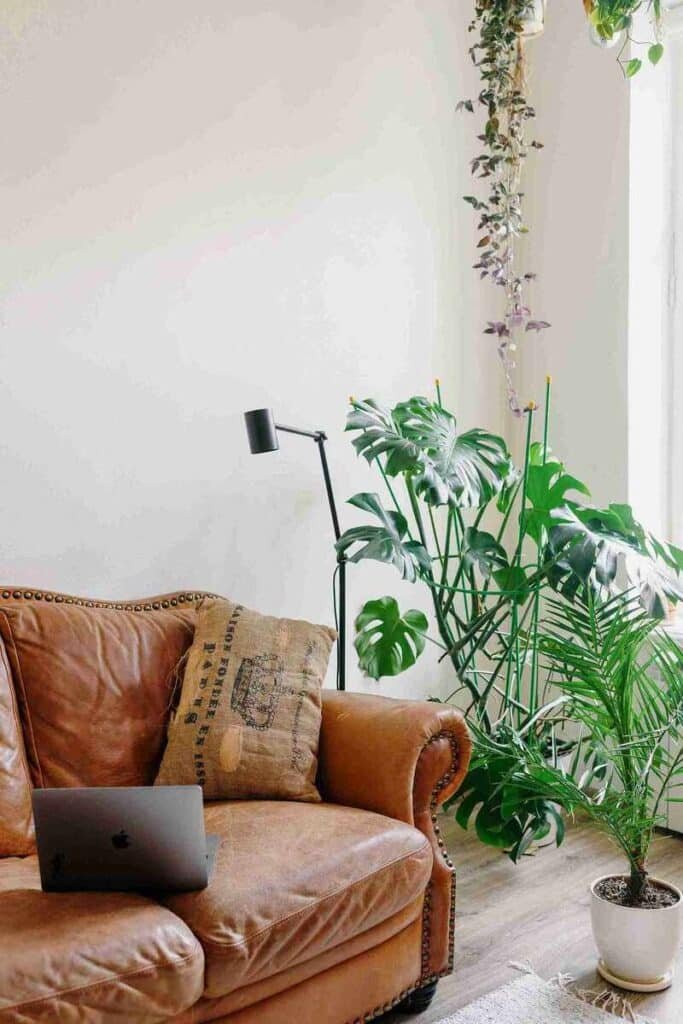
Source: Pexels
5- Broad-Leaf vs. Fine-Leaf Varieties
Which one should you pick? It mostly depends on your existing decor style.
| Feature | Broad-Leaf | Fine-Leaf |
| Visual Weight | Heavy; acts as a strong focal point. | Light; looks airy and delicate. |
| Style | Modern, Tropical, or Bold. | Minimalist, Zen, or Rustic. |
| Cleaning | Very easy; just wipe the big leaves. | Takes more time; needs a good dusting. |
| Best For | Hiding wall flaws or large gaps. | Softening sharp corners or furniture. |
If your furniture is already heavy and dark, fine-leaf artificial floor plants prevent the space from feeling overloaded. Alternatively, when your interior is quite simple and minimal, wide leaves provide texture and form.
How to Choose the Right Height and Proportion of Your Artificial Plant?
One of the most frequent mistakes is to choose a plant that is either too small or too tall.
The trick is to have it right by using the Rule of Three or the 2/3rds rule: your plant should ideally be one-half to two-thirds of the visible wall height. Thus, 9 ft high ceiling would have a 6-foot plant as the best choice as it would fill the area without hitting the ceiling, or the roof.
Also, don’t forget the base. To achieve a realistic appearance, the pot must be approximately 1/4th to 1/3rd the height of the plant itself.
A 5 ft Fiddle Leaf Fig in a small 10-inch pot will appear overweight and artificial.
A heavier, slightly wider base gives the impression that roots have space below. Adding real pebbles, soil topper, or moss on top of the artificial base makes a big difference also. Small detailing matters more than people think.
5 Common Artificial Floor Plant Placement Mistakes
Even premium artificial floor plants can look strange if placed wrongly. The following are some of the things that you should avoid:
- The “Floating” Plant: This means putting a small plant in a large open floor space where it appears like an isolated island.
- Ignoring the Light: Putting a “sun-loving” fake cactus in a dark basement corner—it looks suspicious because a real one would die there!
- The Perfectly Straight Stem: Real plants lean toward the window; if yours is 100% vertical and stiff, it looks like plastic. Bend the wired branches slightly.
- The “Price Tag” View: Forgetting to hide the plastic base or inner nursery pot. Always put it inside a decorative planter with some real moss or stones on top.
- Blocking Traffic: Placing wide, bushy plants in narrow walkways where people’s bags will keep hitting the leaves.

Conclusion – How to Select Artificial Floor Plants with Confidence?
Selecting the perfect artificial floor plants does not necessarily have to be a game. All you need to remember before you purchase is this 3-step checklist:
- You need to measure your space (height and width) to adhere to the 2/3rd rule of the wall.
- Correspond to the type of leaf (bold appearance, slim appearance).
- Invest in a heavy planter in order to make it appear to have a realistic grounded foundation.
Want to beautify your home or office without the hassle of gardening? Visit the high-end range of real-touch artificial floor plants at HRTrees and remain green throughout the year.