Selecting an artificial green wall for commercial spaces is a very clever way to introduce a fresh, high-end feel to the interior without the hassle of maintaining the greenery. In 2026, a good number of businesses are moving away from live plants to the high quality faux systems to save on the long term expenses and prevent risks of buildings such as water leakages.
In the following, we will explain the logic of design, installation procedures, and cost considerations of your project.
What Is an Artificial Green Wall?
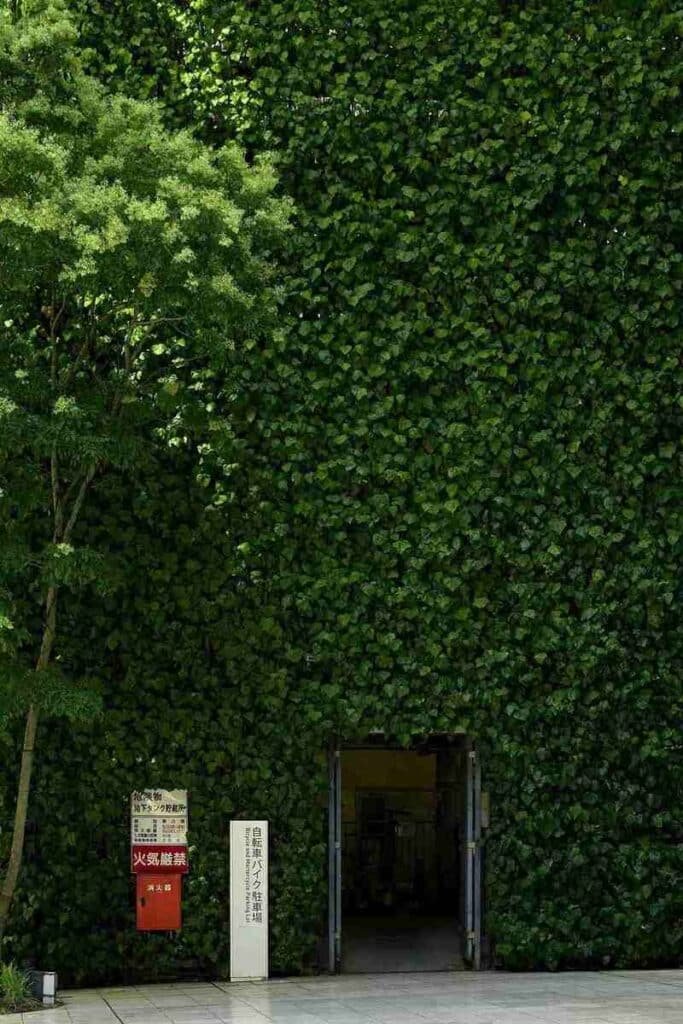
Artificial green wall is a vertical structure constructed with artificial plants, foliage panels or custom-designed structures that resemble the appearance of living green walls. These systems do not use soil, irrigation, and real roots but use backing panels which are light and made of high quality artificial leaves.
They are primarily applied to visual effect and design consistency, rather than air quality or plant growth, in commercial applications. Artificial green walls are also effective in offices, malls, and hotels among other places that have no water or sunlight, and live plants would normally not grow well.
Source: Unsplash
Why Are Artificial Green Walls Popular in Commercial Spaces?
Artificial green walls are becoming the go-to choice because they provide a permanent “wow factor” without any of the daily struggle of keeping real plants alive.
A. Smart Cost Management: CAPEX vs. OPEX
Property managers really prefer these systems because they offer a “set and forget” investment. While a real living wall requires high OPEX (Operating Expenditure) for professional pruning, expensive water bills, and constantly replacing dead plants, a faux wall is mostly a CAPEX (Capital Expenditure) cost.
Once it is installed, the ongoing cost is almost zero. Plus, you have no tension about water leaks damaging your expensive office electronics or flooring.
B. Total Reliability in AC and Low-Light Areas
In our modern climate-controlled offices, real plants often struggle very much because of the dry AC air and lack of natural sunlight. They start turning brown or dropping leaves, which looks quite bad for your brand’s image.
High-quality artificial walls are completely reliable in these spots; even a large artificial olive tree will not wilt or die, so that “first impression” when a client walks into your lobby stays perfect 24/7.
C. Better Safety and Risk Management
From a safety point of view, artificial walls are a much safer bet for public areas. You don’t have to worry about pests like gnats or spiders, and since there is no soil, there is no chance of mold or allergens bothering your staff.
For 2026 projects, using Fire-Rated foliage (Class A or B) is a standard requirement that keeps you compliant with building codes and avoids any liability issues that come with dry, natural leaves.
2 Types of Vertical Garden Systems Used in Commercial Projects
Most commercial projects fall into two categories: ready-to-install modular panels or custom-built bespoke design decorating with artificial trees and plants. Choosing between them depends on your budget and how unique you want the “flow” of the greenery to look.
| Feature | Modular Panels | Bespoke (Custom) Walls |
| Definition | Pre-made 50 x 50cm or 1m tiles with a set pattern. | Hand-assembled foliage built onto a custom frame. |
| Installation | Very fast; DIY-friendly or basic contractor work. | Requires specialist designers and longer labor. |
| Aesthetics | Repeatable patterns; looks clean and uniform. | Natural, organic flow; unique 3D depth. |
| Best For | Retail chains, gyms, and large-scale fences. | Luxury hotel lobbies and corporate boardrooms. |
Strategic Placement: Which Locations are Best for Commercial Green Walls?
It is not only about decor, but finding the appropriate place to place your green wall is a matter of wayfinding and building the atmosphere that will make people desire to be there.
1. Office Interiors
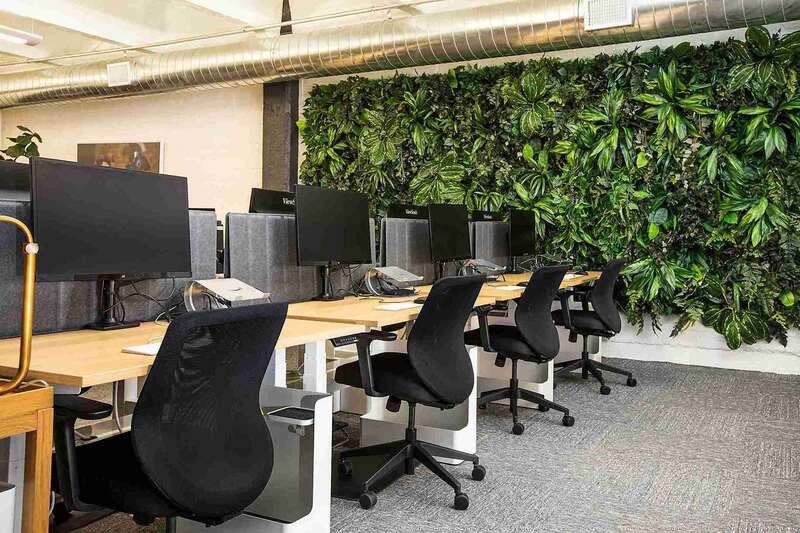
Reception areas and meeting rooms are the most suitable locations in an office. The visitors are immediately given the impression of sustainability and innovativeness by the green background behind the front desk.
The open-plan offices can have green walls that serve as room dividers to enhance the acoustics of the area by absorbing some of the surrounding noise, and to make the working area appear more personal and less of a concrete jungle.
Source: Unsplash
2. Retail Spaces
Instagrammable feature walls in retail are a must in foot traffic. Luxury products use green walls as visual merchandising backgrounds or at the storefront to attract attention on the street. They do not need light and that is why you can even put them in dark corners of a shop to light up dead areas which would otherwise not support life.
3. Hospitality: Hotels, Restaurants, and Cafés
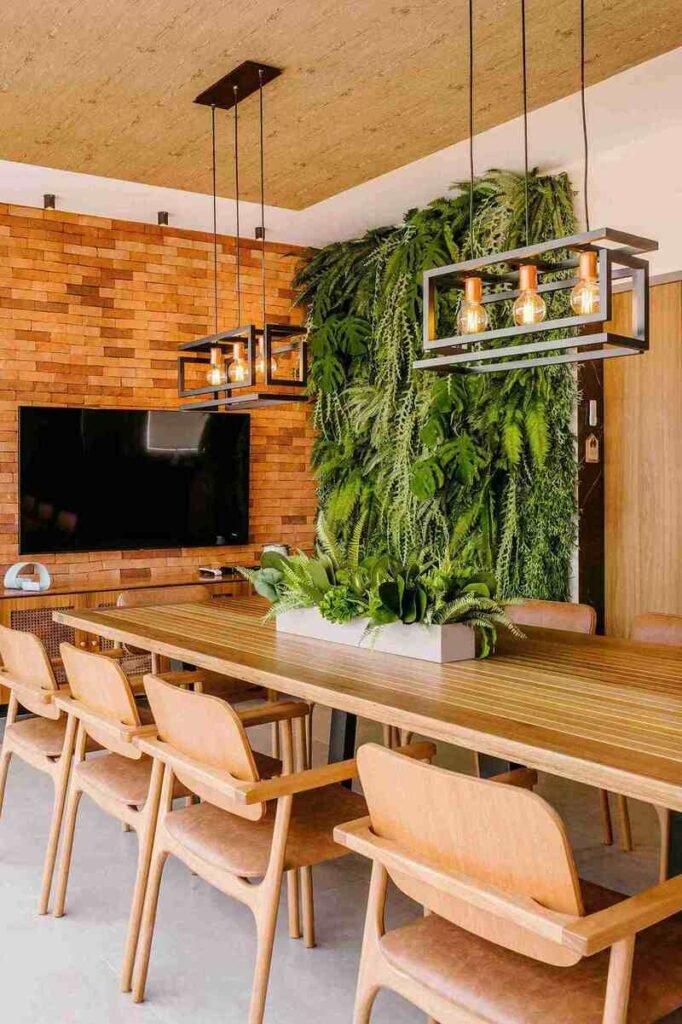
Hospitality thrives on vibe. As most restaurants have windowless corridors or small elevator banks, the only solution is to bring greenery to these small areas.
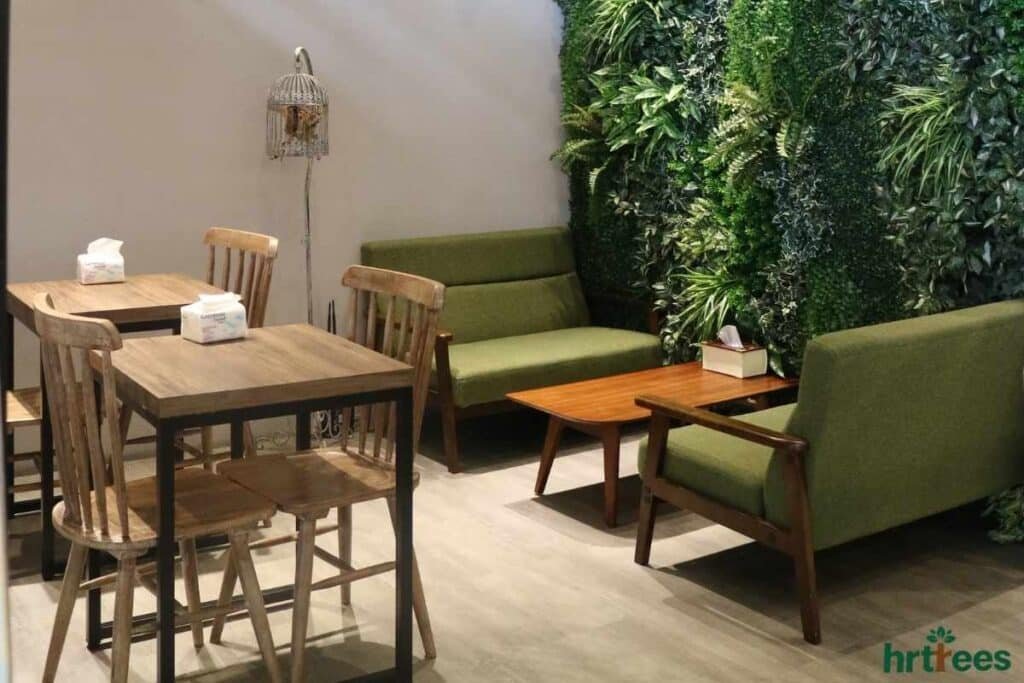
A green wall can be used in cafes to make hard surfaces such as industrial concrete or metal feel softer and create a sense of coziness and naturalness, which in fact will make customers want to spend more time and money.
Source: Pexels
4. Outdoor or Semi-Outdoor
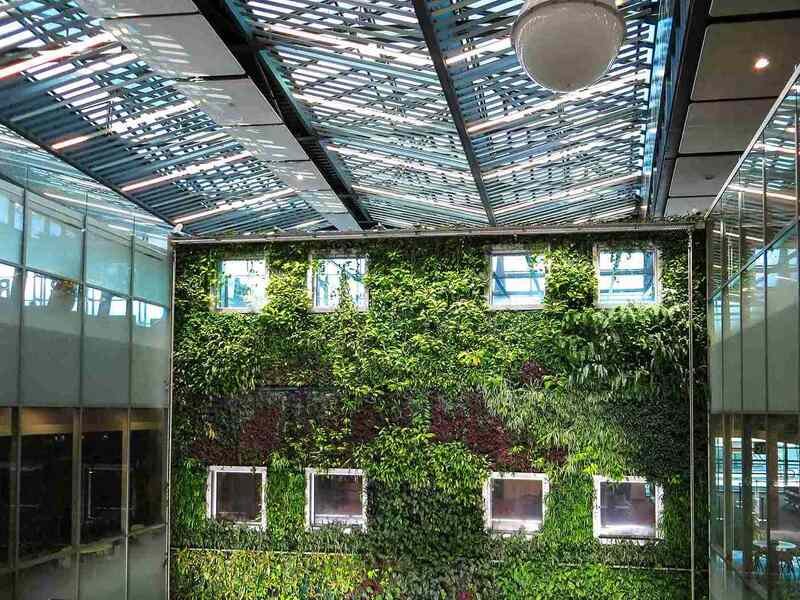
In balconies, rooftop bars or outdoor restaurants, ensure that you plant foliage that is UV resistant. These are particularly treated in order that the sun does not make the leaves blue or brittle with age. They are excellent to conceal the unsightly brick walls or to have privacy against the neighbors in crowded cities such as Mumbai or London.
Source: Pexels
How Do You Design an Artificial Green Wall as a System?
A green wall is not a commercial project where you can simply pick pretty leaves and create a green wall; it is a vertical system that will become part of your architecture. You must consider the size of the wall in the room and how it is going to be attached to the structure safely by bolts.
1. Choose the Right Wall Size and Coverage Area
First, you have to consider the scale and proportion. When you place a small panel 2 meters on a huge wall in the lobby 10 meters, it will be a sticker and not a design element. In large commercial areas, choose floor to ceiling coverage or framed living art areas that match the height of your furniture. The visual impression must not be accidental.
2. Wall Types and Structures
You must have a strong support system. Timber, drywall, or brick are used as the majority of commercial walls. In the case of a fully modular system, the panels tend to snap and are screwed directly into the wall.
But where we are dealing with large projects we frequently start with a grid or mesh frame. This provides a small air space behind the plants, which is more conducive to the breathability of the wall, and it is far easier to replace parts of the wall in the future in case you need to change the design.
3. Plant Density and Texture
Realism relies on depth and distance of view. When people are passing directly by the wall in a passage you must have vegetation of high density with much 3D effect-imagine long ferns and thick moss.
When the wall is tall behind a reception desk where people can see it 5 meters away, then flatter, more uniform panels can be used. Always combine textures; when all the leaves are of the same color of green, it will appear plastic and unnatural.
4. Integrating Lighting Affects
The faux wall is made to look alive through lighting. When there is natural light on the window, the shadows will shift throughout the day, and this is excellent. However, in windowless basements or evening nightclubs, angled spotlights (wash lighting) should be used.
The light is directed downward at the top which makes shadows between the leaves and this makes it look so natural and lush. Do not use hard, flat office lights directly facing the wall, this will make the material appear too shiny.
5. Safety and Building Codes
You cannot just hang anything in commercial buildings. You need to verify fire ratings and building permissions. The majority of malls and office towers need a Fire Certificate (BS EN 13501-1 or otherwise).
You should also consult your IT and electrical departments, too, you do not want to drill into an invisible data cable when you are trying to hang a fern!
How Much Maintenance Do Artificial Green Walls Actually Require?
While we say “zero maintenance,” that is a bit of a white lie—it is actually “very low maintenance.” In a busy commercial office, dust is your main enemy. If dust settles on the leaves, the wall loses its shine and starts looking dull.
- A quick wipe with a microfiber cloth or a light blast from a handheld “air duster” every 3 to 6 months is usually enough to keep it fresh.
- In outdoor spaces, you might need to occasionally hose it down to remove salt or pollution. Also, check for “fading.”
- Even with UV protection, if a wall is in the direct, harsh afternoon sun for 5 years, some slight color shifting is natural.
For 2026, most high-end materials are built to last 7–10 years indoors and about 3–5 years in harsh outdoor conditions before they need a “refresh.”
How Much Do Artificial Green Walls for Commercial Spaces Cost?
Commercial green walls are typically priced per square meter. A simple modular panel system may be extremely cheap, whereas a custom, hand-built wall, the cost increases due to the workforce and the thickness of the plants. There is also the cost of the “Installation Fee”- in case the wall is 5 meters high, you will need a scissor lift or scaffolding which will increase the cost.
It is typically a single investment that is recouped in 18 months as opposed to the monthly incurred cost of a “Plant Rental” service of live greens.
Conclusion: Elevating the Commercial Environment with Vertical Systems
Well-designed artificial green walls for commercial spaces are more than just decor; it’s a smart business move that boosts morale and branding without the headache of gardening. Whether it’s a sleek office lobby or a cozy café, these vertical systems bring lasting beauty.
Ready to transform your space? Contact HRTrees today for expert design and premium faux foliage solutions.