
Choosing a high-quality artificial plants manufacturer in China is the smartest way for us to get realistic, durable greenery at factory-direct prices. China really dominates the world market. They offer an incredible supply chain that ranges from the raw materials to high-tech “real-touch” molding.
Today, we share with you everything you need to know about materials, cost, and quality when it comes to these manufacturers in China.
Is China the Best Place to Find an Artificial Plants Manufacturer?
Yes, we truly believe that China is the global heart of the artificial greenery world at the moment. For any US business that wants to grow, a Chinese manufacturer offers the perfect mix of massive production power and also new, high-tech ideas.
Unlike those local shops that usually have the same old stock, working directly with a manufacturer in China gives us the freedom to customize everything. From the thickness of the leaves to the shape of the branches.
In 2026, the gap between “fake” and “real” is thankfully almost gone. These factories lead the way in biophilic design. This creates those hyper-realistic artificial trees and plants that look so good, your family will think they need watering when they do house sitting for you.
Why Do Most Artificial Plants Come from China?
China produces around 80% of all the fake foliage we see in the world. No, this isn’t just because of low prices. It’s about a massive, connected system that we can use to make our projects better.
The Huge Network of Suppliers in One Place
Most of the top factories are grouped together in places like Guangdong and Zhejiang. In these areas, we find “industrial clusters”. This is where the material suppliers, the dye experts, and the shipping ports are all just a few miles apart from each other. This keeps costs low and allows for a “vertical” supply chain. This means every little piece is made quickly and with high quality.
New Technology for Realistic-Looking Plants
We’ve moved way past those shiny, cheap-looking plastic plants from the old days. Now, our factories actually use 3D scans of real foliage to get every tiny detail right. This custom capability lets us create “Real-Touch” plants. They are made from special polymers that feel waxy and cool, just like the real deal.
What Materials Are Used to Make High-Quality Fake Plants?
The materials we use in production change everything. From how long the plant lasts to how safe it is for your building. We at HRtrees always believe in picking materials that look stunning and stand the test of time.
PE vs. Silk vs. PVC: Which One Should You Choose?
We often have to balance looking real with staying tough. Here is a quick breakdown:
| Material | Best Use Case | Pros | Cons |
| PE (Polyethylene) | Outdoor & Luxury Decor | UV-resistantMolded from real plantsWaterproof | It costs a bit more upfront |
| Silk (Polyester) | Indoor & Soft Decor | Beautiful movementHas a soft feelVery realistic | Can fray and fade in the sun |
| PVC (Vinyl) | Budget-Friendly Indoor | AffordableIt’s easy to clean Very sturdy | Can look a bit “plastic-y.” |
For most professional projects, we suggest PE foliage. The reason being, it lasts the longest and gives you the best value over time.
How UV-Protection and Fire-Safety Features Work?
Safety is a non-negotiable for us in the US market. We make sure our manufacturers use Inherent Fire Retardant (IFR) materials. This is where the fireproofing is baked right into the plastic before molding, rather than just sprayed on the surface. It is the only way to meet US building codes like ASTM E84.
We also make sure UV-stabilizers are “injected” into the material instead of just sprayed on the top. This is so they don’t turn blue or get crunchy in the sun.
Why the “Bones” of the Plant Matter?
We’ve learned that an artificial plant is only as good as what’s inside it. It’s one thing for a leaf to look pretty. But if the internal wire is too weak, the whole artificial tree will start to sag after a month in the sun.
It’s for the above reason that we use reinforced steel frames and elastic bars inside our greenery. It gives the branches ‘memory,’ so they don’t just flop over. We build them this way because we know these plants need to survive real-world use.
Without these reinforced steel frames, a 10-foot artificial palm tree becomes a “weeping willow” whether you want it to be or not!
How Much Does It Cost to Import Artificial Plants from China?
Sourcing from an artificial plants manufacturer in China is very budget-friendly. But we have to look at the “Landed Cost” rather than just the price tag.
Understanding the Total Price: From Factory to Your Door
The factory will give us an EXW or FOB price. But we have to add in the sea freight and the trucks that bring it to the warehouse. And because the plants take up a lot of space but aren’t very heavy, we usually pay for the volume (CBM). When we order a Full Container Load (FCL), it can save us up to 30% compared to smaller orders.
Hidden Fees: Customs Duties and US Import Taxes
When the shipment hits the US, we have to pay standard duties and Section 301 tariffs. In 2026, these extra taxes can be anywhere from 7.5% to 25%. We always recommend using a licensed customs broker so we can classify our plants correctly and avoid any “surprise” bills.
3 Easy Steps to Choose a Reliable Manufacturer
Picking the right factory shouldn’t weigh down your shoulders. So we follow these three simple steps to make sure we can trust our suppliers.
Step 1: How to Tell a Real Factory from a Middleman
We always check the business license first. You need to look for the “Business Scope”. A real factory will have the word “Production”. If it only says “Trade,” you are talking to a middleman. They will add a 20% markup to the price without doing any of the hard work.
Step 2: What to Look for in a Product Sample
We never skip getting a sample. When we get a “Golden Sample,” we check where the leaves meet the stem to see if they are strong. We also check the color and look for multi-toned leaves. Because real plants have a mix of greens, not that flat ‘fake’ look.
Step 3: Checking for Safety Certificates (SGS and REACH)
We insist on seeing real test reports. Papers from SGS or Intertek prove that the plants don’t have nasty chemicals like lead. This is super important for US offices and shops where the air quality has to stay clean.
How to Avoid Common Problems When Buying Artificial Plants from China?
Dealing with a messy order is a total headache. So, we use these three tricks to keep our quality high and our shipping costs down.
Why is the Bulk Order Quality Lower Than the Sample?
This is what people call “Quality Fade.” To stop this, we suggest hiring an inspector to check the factory before you send the final check. They will look at the leaves and colors to make sure the factory didn’t swap the good stuff for cheap plastic when you weren’t looking.
Smart Shipping: Using the “Nesting” Trick to Save Money
Paying for empty air in a shipping container is just a waste of money. We use a trick called “nesting”. This is where we put smaller plants inside the gaps of larger trees or tuck them into the foliage of green walls. This fills up every inch of the container and lowers our shipping costs per plant!
Keeping Quality Steady in Large Orders
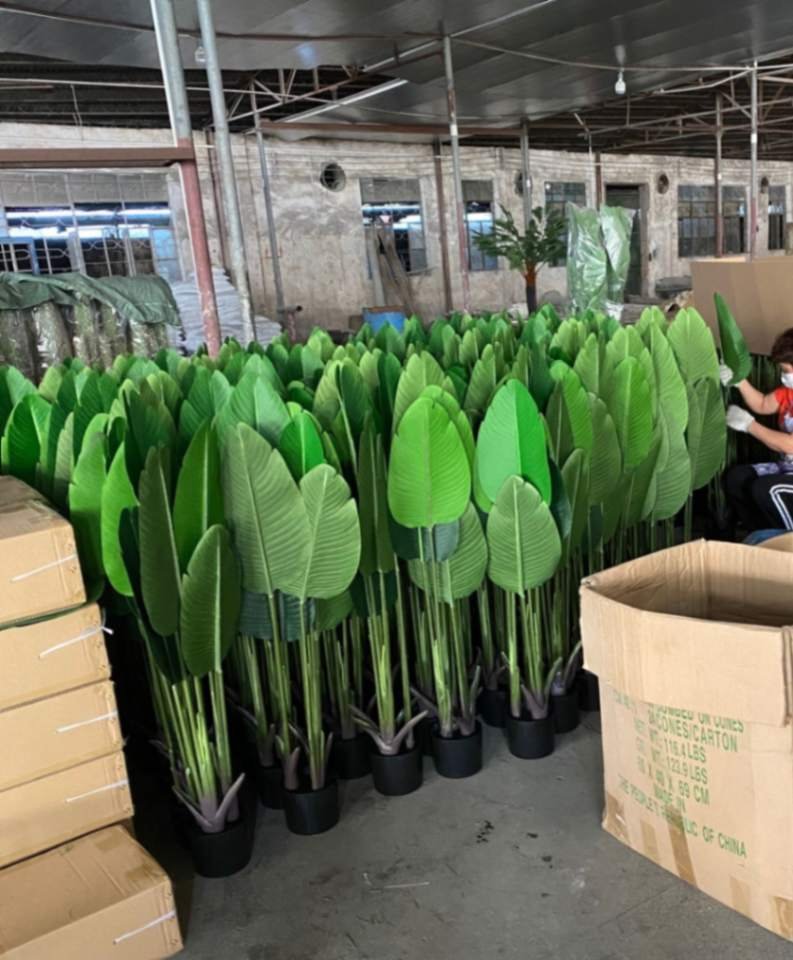
One of the biggest risks in this industry is getting a perfect sample but a messy bulk order. We hate that! So we moved to 12 automated lines to take the guesswork out of production. Machines don’t get tired, so every stem and weld stays consistent from the first box to the last. We also run every batch through ten different tests, like salt sprays and load checks.
It’s our way of making sure nothing “Leafs” the factory floor unless it looks exactly like the sample you approved.
Should You Buy from a Local US Store or a China Factory?
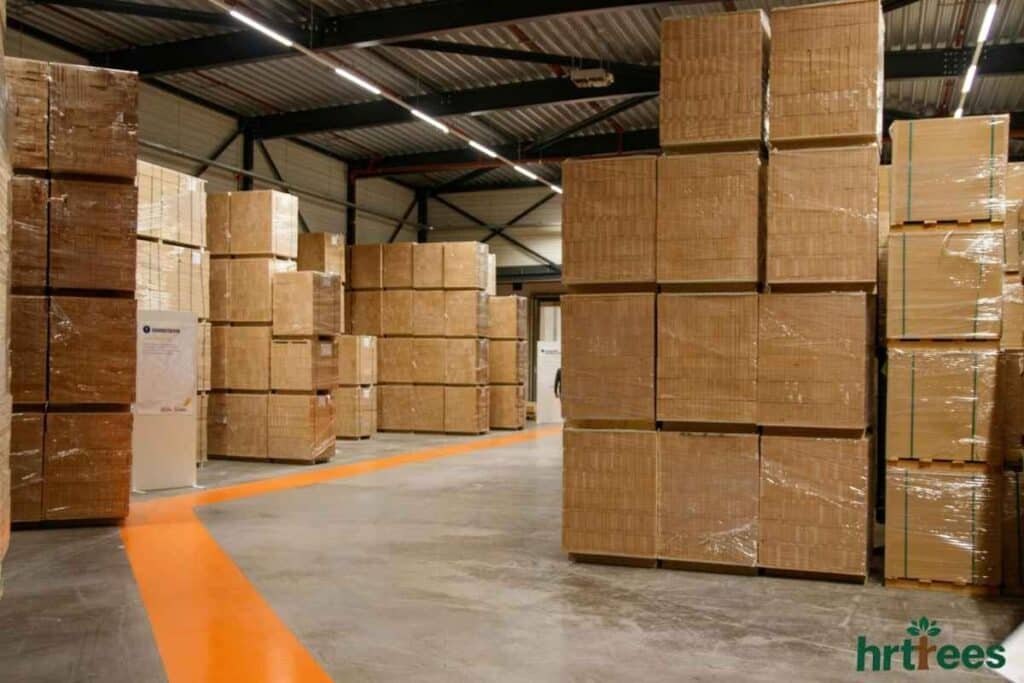
Buying locally is fast, but it’s not the best for your wallet if you need a lot of plants.
- Local US Store: It is great for getting things in a week. But the prices are high (sometimes 3 times more!) and the designs are basic.
- China Factory: It gives us the lowest price and custom designs. The only downside is the 45–60 day wait. Also the higher minimum orders.
If we are spending more than $5,000, we find that the savings from going direct to the manufacturer are way better than buying locally.
Frequently Asked Questions About Chinese Plant Manufacturers
How Can I Tell if a Supplier is a Real Factory?
Well, firstly we check their address on maps. Real factories are in big industrial zones. Traders are usually in fancy office buildings in the middle of the city. It’s usually a red flag if a supplier sells too many different things. A real factory stays focused on plants, but a trader will try to sell you everything under the sun.
What is the Minimum Amount I Have to Buy (MOQ)?
Most factories expect us to grab at least 100 to 500 of the smaller plants to meet their minimums. For big trees, they might let us order just 10 or 20. We like to mix different styles into one container to reach those numbers easily.
Do I Need Special Fire-Safety Papers for US buildings?
Yes! Most US commercial projects need an ASTM E84 Class A rating. We always ask our manufacturers for a new test report. This is so we know the plants are safe and legal for public spaces.
How Do I Stop My Outdoor Plants From Fading in the Sun?
We always ask for “UV-Injected” PE. This puts the protection inside the leaf itself. Stay away from ‘UV-Coated’ sprays. They just wash off in the first rainstorm and it leaves your plants looking blue and brittle.
How Long Does it Take for a Shipment to Reach the US?
We generally count on 30 days for production and another 25 to 35 days for the trip across the water. You’ll get your order a bit faster if you’re on the West Coast. But the East Coast adds extra time because the ships have to pass through the Panama Canal.
Partnering With a Top Artificial Plants Manufacturer in China
Sourcing your artificial plants directly doesn’t have to be a headache. If you prioritize UV-injected materials and verify production licenses, you’re already miles ahead. As a leading artificial plants manufacturer in China with 20 years of expertise and 12 automated lines, HRtrees handles the heavy lifting so you don’t have to.
Are you ready to transform your project? Explore our collection today! And let’s help your business turn around a new “leaf”.


