High-quality indoor artificial olive trees have realistic foliage and sturdy trunks (often created using real wood). But when it comes to actually finding one that you like, some may still look plasticky, others may not match the room’s height or layout, or worse, some may not be suitable indoors.
This guide simplifies your search, highlighting the 8 indoor options to elevate your décor without the maintenance of a living tree.
Why Should You Trust Us?
Creating lifelike artificial plants has a lot to do with mastering materials, textures, and production techniques. As part of the industry, we know which manufacturing methods produce realistic results and which shortcuts lead to fading, cracking, or an artificial appearance over time.
We conduct deep-dive research into material safety and environmental impact, ensuring this curated list meets international standards. As a result, you’re not just getting trendy information; it comes with expert-backed advice for your next big project.
Our Selection Criteria
All our selections are judged according to strict criteria to fit the requirements of contemporary interior design. Our team is focused on the most realistic artificial olive trees, balancing artisanal craftsmanship and functional durability to assist you in investing in the pieces that can last.
- Trunk Realism: We look for natural wood or high-detailed resin with natural, gnarled surfaces.
- Foliage Density: Leaves must feature realistic vein patterns and varied “silvery” color tones.
- Structural Stability: Bases should be weighted to the appropriate height of the tree and the spread of the canopy.
- Scale and Proportion: Every style is judged to fit in a particular room, whether it is a small apartment or a huge loft.
8 Best Artificial Olive Trees Indoors (Style Recommendations)
The size, the fashion of the leaves, and the form of the trunk all impact the air and vibe of your room radically. Here are the top 8 among the best artificial olive trees for 2026.
1. Best Tabletop Artificial Olive Tree for Indoors
The tabletop olive tree will be your friend in those little places that need a touch of greenery, and will not occupy valuable floor space. These plants range in height from 18 to 36 inches and are typically pre-potted in a decorative ceramic or terracotta pot.
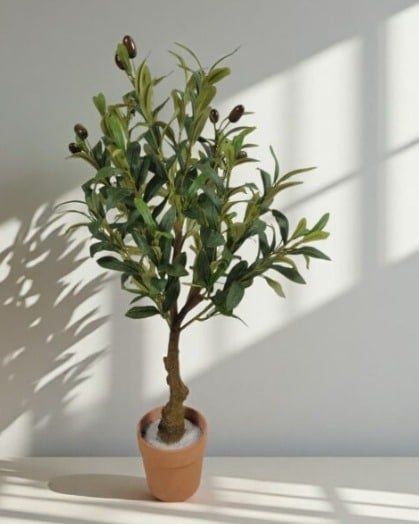
- Vibe: Subtle, chic, and versatile.
- Use Case: Adorn a bookshelf, kitchen island, or sit beside a laptop desk in the office.
- Key Feature: Good foliage with small and realistic olives as the details are overdone at that small size.
2. The “Slim” Artificial Olive Tree for Indoor Corners
The slim body olive tree is designed to occupy less space, which is ideal for placement in a small hallway, small bedrooms, or even a small space between furniture. It gives the lift and the drama of a tree without the sweeping canopy.

- Vibe: Minimal, sleek, and classy.
- Use Case: Perfect for filling an empty corner in a bedroom, flanking a console table in an entryway, or adding height between a sofa and a wall.
- Key Feature: The small spread means that the focus is on the vertical line of the trunk. A very realistic, often textured, trunk should be a priority for the model.
3. Rustic Artificial Olive Tree for Indoor Mediterranean Vibe
It is a showstopper style, which resembles the look of an ancient olive tree. It has a thick, frequently twisted, textured trunk, even with actual preserved wood pieces. The foliage tends to be denser as compared to the minimalist style.
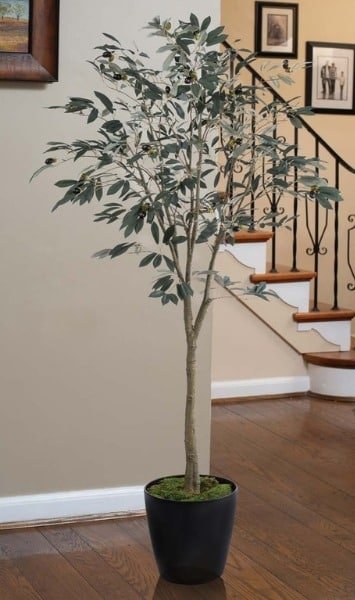
- Vibe: Rustic, warm, and authentic Mediterranean or Tuscan farmhouse.
- Use Case: Matched perfectly in large open-plan living rooms or dining rooms with exposed wood and natural textures.
- Key Feature: Invest in a model that is made of real wood or very detailed resin mould in order to capture such a beautiful, gnarled texture.
4. Ball Topiary Faux Olive Tree for Indoor Formal Spaces
The topiary style is clipped and symmetrical, unlike the natural and flowing form of the other styles, and is commonly cut into one or two balls on a straight stem.
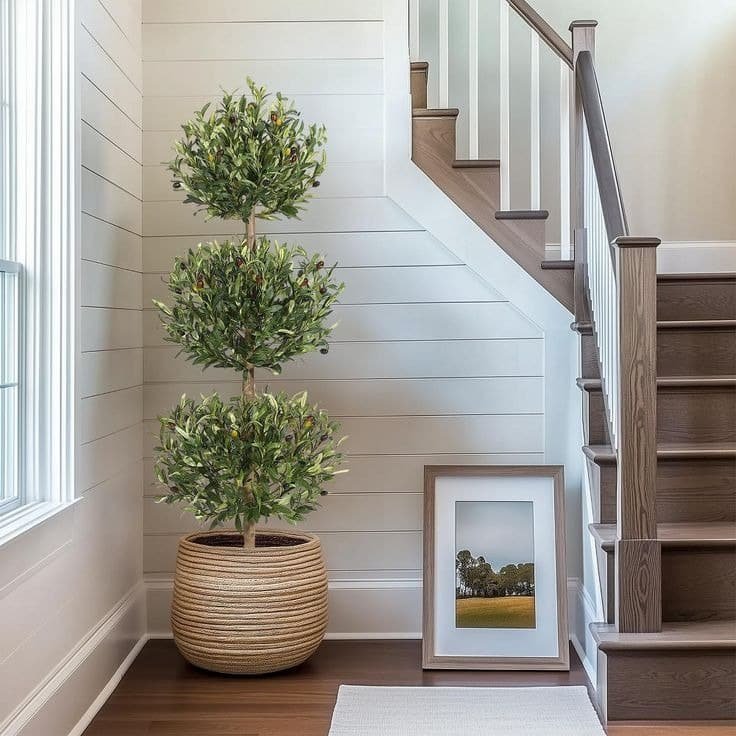
- Vibe: Formal, manicured, and traditional.
- Use Case: Excellent for creating symmetry in a formal living room, standing guard in a home office, or flanking a grand front door (if UV-rated).
- Key Feature: Examine the high density of leaves and a very clean and straight trunk. This look is determined by the quality of the shape of the clip or sphere.
5. Grand 8ft+ Artificial Olive Tree for Indoor Lofts
In houses with cathedral or double-height ceilings, a normal 6-foot tree will appear small. Instead, the more suitable choice for such a space is these Grand Statement trees that are typically 8 feet or higher and are designed to fill that vertical area and draw the eye upwards.
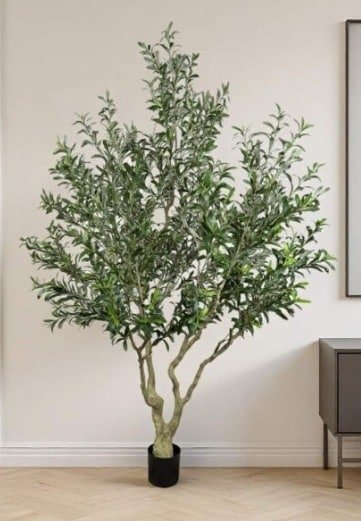
- Vibe: Dramatic, luxurious, and impactful.
- Use Case: Lofts, grand entryways, commercial lobbies, or beside very tall windows.
- Key Feature: It is not only necessary that the trunk be tall, but the width of the canopy should be large enough to correspond to the height. Make sure that the bottom is too solid to roll over.
6. Multi-Trunk Fake Olive Tree for Indoor Dividers
When you want to create a natural “room divider” without a solid wall, this multi-trunk set is a highly attractive-looking solution that is natural. They are usually sold in deep and narrow planters, so they can be put togather close to each other.
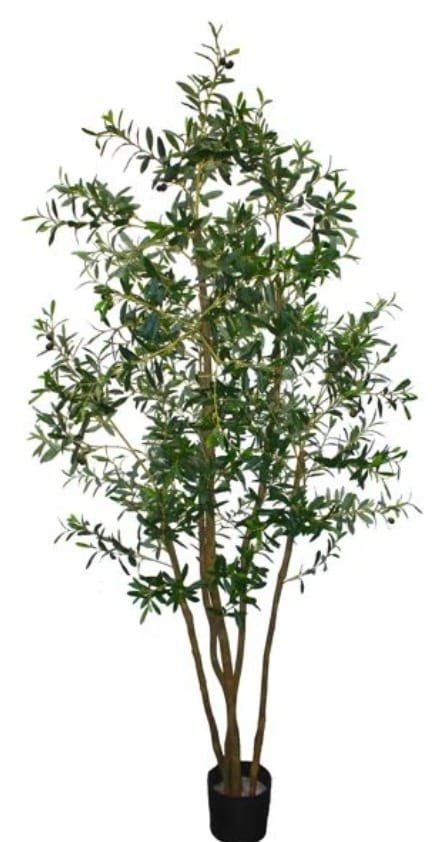
- Vibe: Secluded and European-inspired.
- Use Case: Separating a dining area from a living space in open-concept homes.
- Key Feature: Thick foliage on multi-truck stem. But overall vice is slim for easy planning and close contact.
7. Silver-Toned Fake Olive Tree for Indoor Bright Rooms
The actual olive trees are described to have the silvery-green leaves that reflect the hot sunshine in the Mediterranean climate in which they grow. The best faux replicates this feature with special pigments.
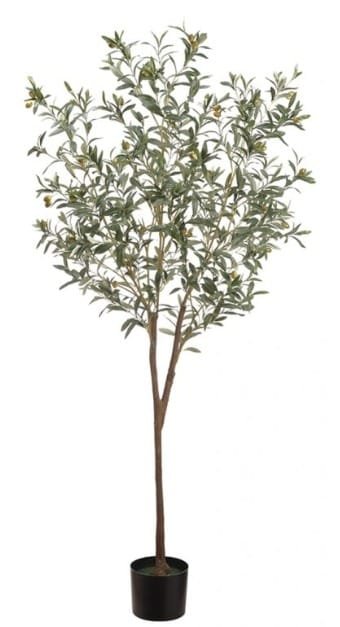
- Vibe: Authentic, luminous, and sun-drenched.
- Use Case: Sunrooms or bright, south-facing interiors with modern aesthetics.
- Key Feature: PE leaves painted with a deep silver-grey finish or bi-coloured.
8. Low-Profile Faux Olive Planter Bush for Indoor Greens
You may find that there are occasions when you do not require a tall tree, you have to make space in an existing structure. These are smaller, bushier plants that are 1-3 feet in height.
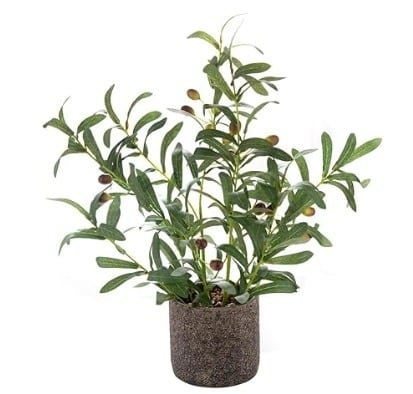
- Vibe: Integrated, foundational, and ground-level texture.
- Use Case: Planting directly into built-in stone or brick planter boxes, large troughs, or to add height variation to a flat garden bed area.
- Key Feature: The base is usually simple and small, as it is designed to be completely hidden by surrounding soil or mulch once placed inside a container. Focus on the canopy spread over height.
Indoor vs. Outdoor Artificial Olive Trees
Artificial trees are supposed to serve as a decoration in the house. However, a realistic artificial olive tree made for indoor use, will not last long outside. On the other hand, the outdoor artificial olive trees come with a claim of sun, rain, and heat resistance. The distinction between the selection of an artificial olive tree to be placed indoors or outdoors is mainly based on the following factors:
1- Leaf Material
The material of the leaves primarily determines the realism and how long your tree will look fresh.
- Silk/Polyester Leaves: Although commonly referred to as silk, this is actually fine polyester material. These leaves give a very realistic, soft, and delicate appearance with beautiful color variations. However, the material is delicate, hence can only be used for indoors artificial plants. They are also not long-lasting and will easily fade, tear, and break when they are exposed to direct sunlight or rain.
- Polyethylene (PE) / PEVA Leaves: These are high grade soft plastic polymers, which are inherently tougher and more water resistant and are the best in the outdoor artificial plant leaf. Modern injection-molded PE leaves have great texture, realistic vein patterns, and a silvery-green sheen that holds up well.
2- UV Resistance & Weatherproofing
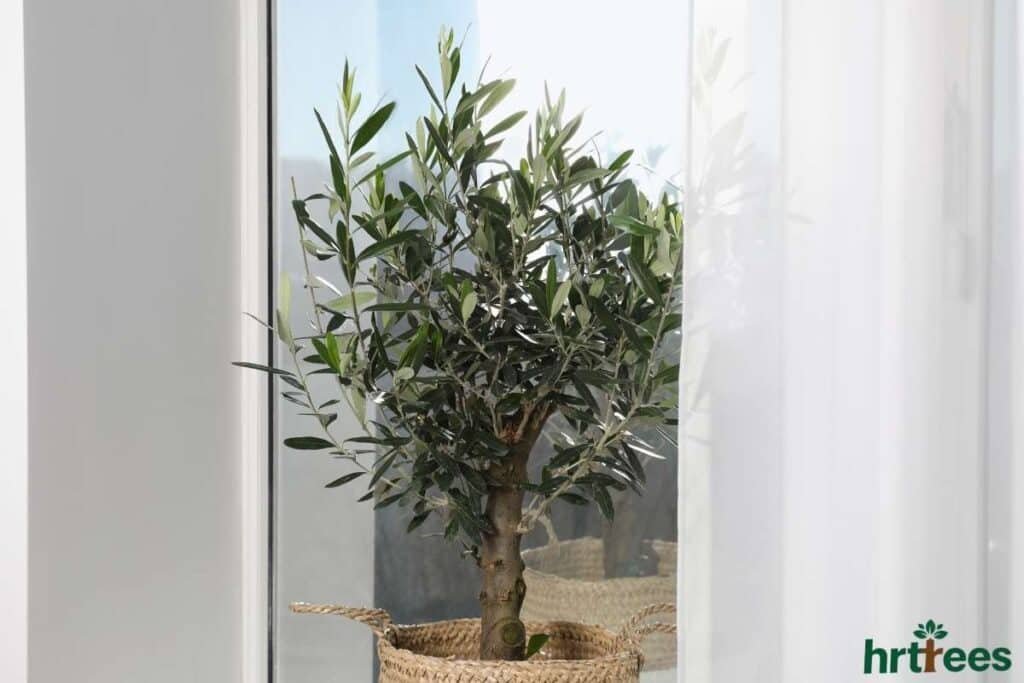
You may think only outdoor artificial trees need protection from the sun, but no. Indoor plants also need some level of protection to avoid damage from the light coming from windows. UV protection is usually classified into two types:
- “UV-Treated” (Surface Spray): These trees are sprayed with a UV protective coating after it was made. It is cheaper method, but the spray may get washed off by time or rain.
- “UV-Rated” or “UV-Stabilized” (Inherent Protection): It is mostly used for outdoor applications, wheres tree raw material is impregnated with the UV-blocking chemicals. This implies that the protection is not only on the surface but on the whole material and therefore the leaves will not fade and wear out with the years even when the sun is shining directly on the leaves.
3- Sizing Differences
It is not a hard and fast rule but artificial trees that are located outside are normally larger and heavier to accommodate in an open space like a garden or a patio.
- Indoor Trees: These are usually between 3 feet (tabletop) and 7 feet (living room corner). The trunk is normally slim to fit in.
- Outdoor Trees: These will begin at about 5-6 feet and may extend to 8-10 feet to create a spectacular impression in a yard or a business premise.
| Factor | Indoor Artificial Olive Trees | Outdoor Artificial Olive Trees |
| Leaf Material | Silk / polyester leaves with soft, delicate, realistic appearance | PE / PEVA leaves made from durable, water-resistant polymers |
| Durability | Not long-lasting when exposed to sunlight or rain | Designed to withstand sun, rain, and heat |
| UV Protection Type | Usually UV-treated surface spray for light protection | UV-rated / UV-stabilised material with built-in protection |
| UV Protection Longevity | Temporary; coating may fade or wash away | Long-term; protection embedded into material |
| Typical Size | Usually 3–7 feet, with slender trunk | Usually 5–10 feet, with larger overall structure |
| Pot / Base Weight | Lighter base for indoor placement | Heavier base to handle outdoor conditions |
Final Thoughts
Choose a tree style that matches your room decor and the indoor environment. Make sure to pair it with a nice planter and do occasional TLC for maximum impact.
In case you are seeking truly crafted artificial potted plants, especially the ones made with a commercial-grade durability and realism in mind, check out what HRtrees has to offer.