What do you actually think is the difference between a 500 tree and a $50 one you’d buy at a local discount shop? The difference isn’t in the name, and it certainly isn’t in the packaging. The difference is in the details, in the way the branches droop, in the turn of the trunk, in how much it looks “alive.”
If you want that Mediterranean vibe without the disappointment of fallen leaves, here’s your guide to the 10 best luxury artificial olive trees.
What Makes a “Luxury” Artificial Olive Tree ?
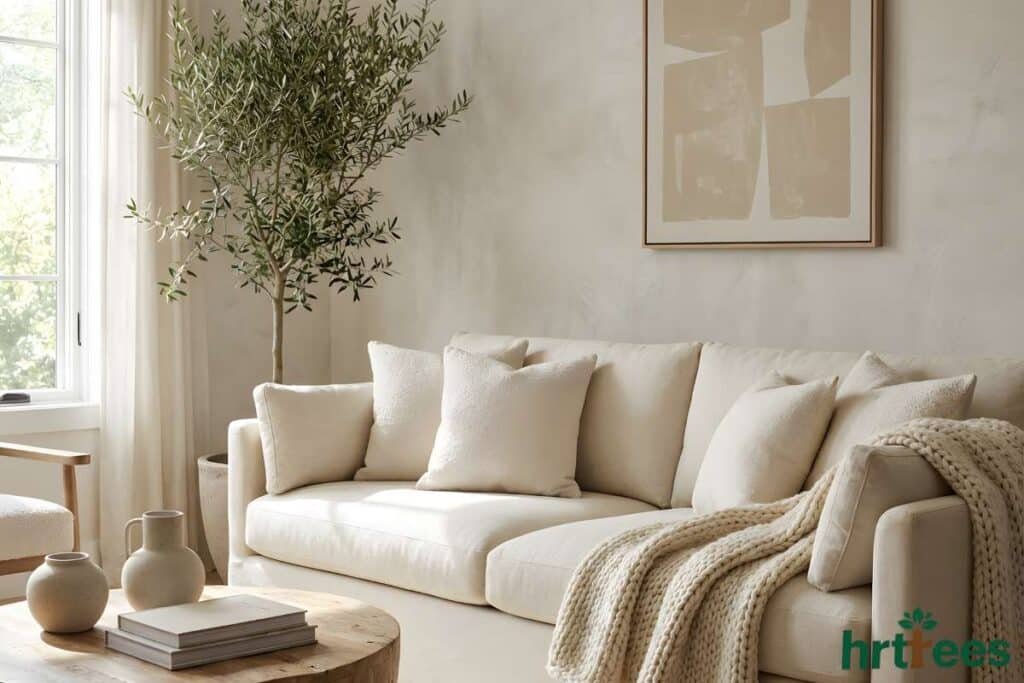
Mainly, when you say “luxury” for “artificial tree”, it means three things. The trunk will be made by hand, you will have a range of colors and designs on the leaves, and the fruit on it will be toned to various degrees of ripeness.
Following are some of the things that you ought to pay close attention to:
- Real Wood vs. Molded Resin Trunks: When a tree is made with actual treated wood trunks, every single piece becomes unique. Conversely, trees made from plastic or resin molds in factories are only repetitive designs that render them inexpensive.
- Leaf Material: Silk or PE (Polyethylene) in a matte finish offers the best, most realistic look. Latex-coated leaves are also excellent in that they touch like wax and not like paper.
- Fruit Detail: Pure black olives appear unnatural and inexpensive. The under-ripe olives with burgundy, plum, and dusty green shade are more preferred in the luxury trees.
- Branching & Leaf Density: Expensive trees have an “airy” look. Which means they should not be dense, like a hedge. Rather, you can see through parts of the canopy like a real tree.
- Pot/Base Quality: The luxury speaks in all elements, even in the starter pot that comes along with the tree. It must be weighted in order to avoid wobbling of the tree and must be of good material.
- Durability & UV-Resistance: Premium brands apply a UV-resistant coating to leaves to ensure they do not turn blue or yellow when exposed to sunlight.
The Curated List: 10 Best Luxury Artificial Olive Trees
To make the choice easy for you, below are luxury artificial olive trees even an interior designer would find hard to call fake at first glance.
1. Grand 9-Foot Potted Olive Tree for Vaulted Ceilings
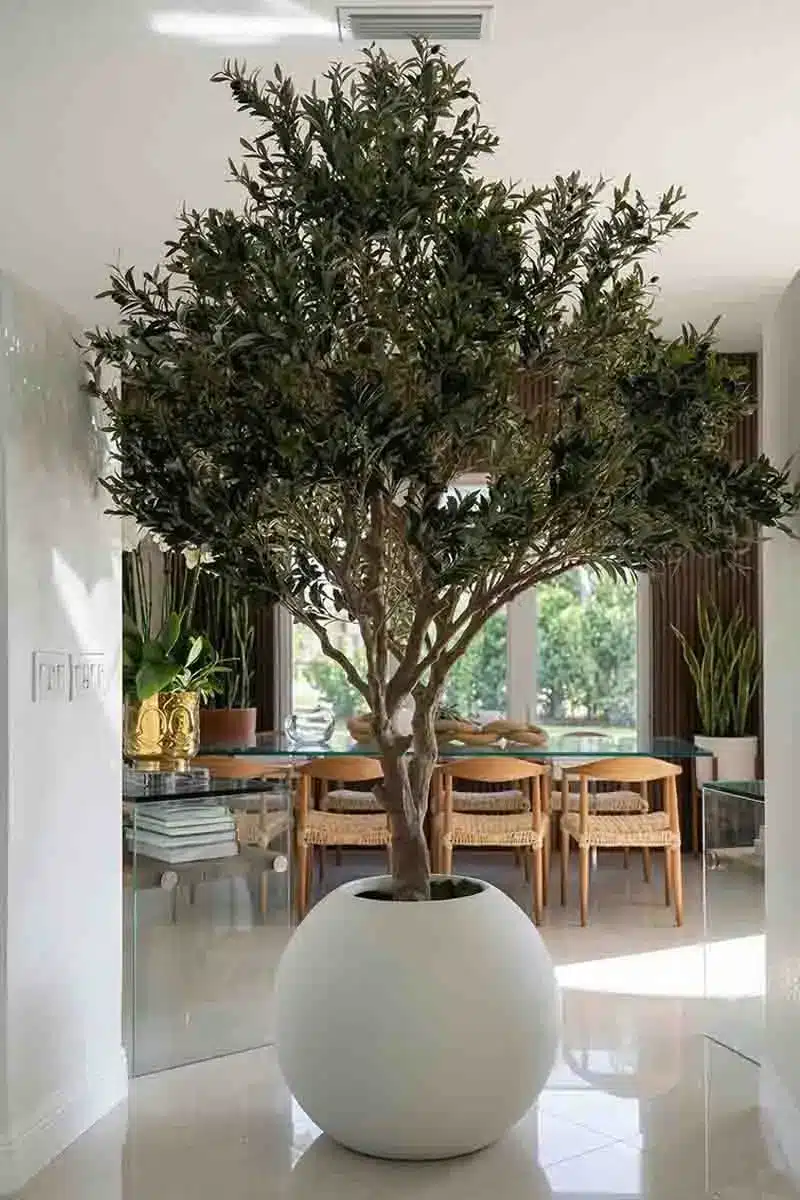
A small tree will be a toy on high ceilings. This 9-footer is a beast. It has height, but is not so wide that it will consume your floor space. It is the type of piece that makes a room feel finished instantly.
2. Wispy Mediterranean Olive Tree for Organic Modern Interiors
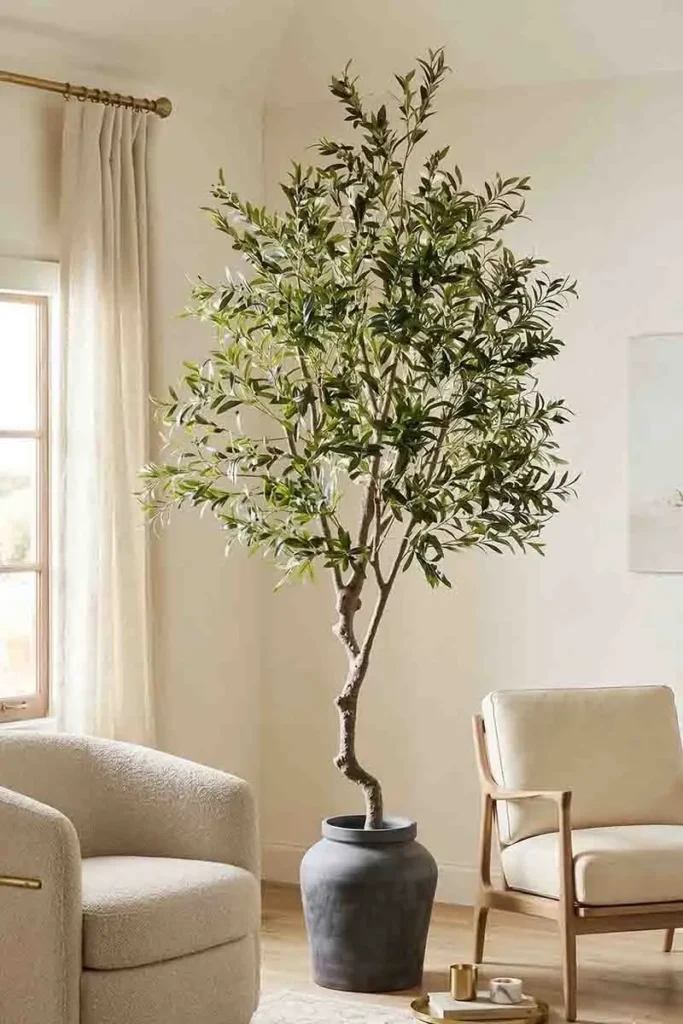
This model is extremely flowy. The branches are also bendable, and therefore, you can make them appear to be leaning towards a window. It is very casual, unscripted, as though it has been growing in a terracotta pot in Tuscany.
3. Luxury Hotel-Lobby Style Silk Olive Tree
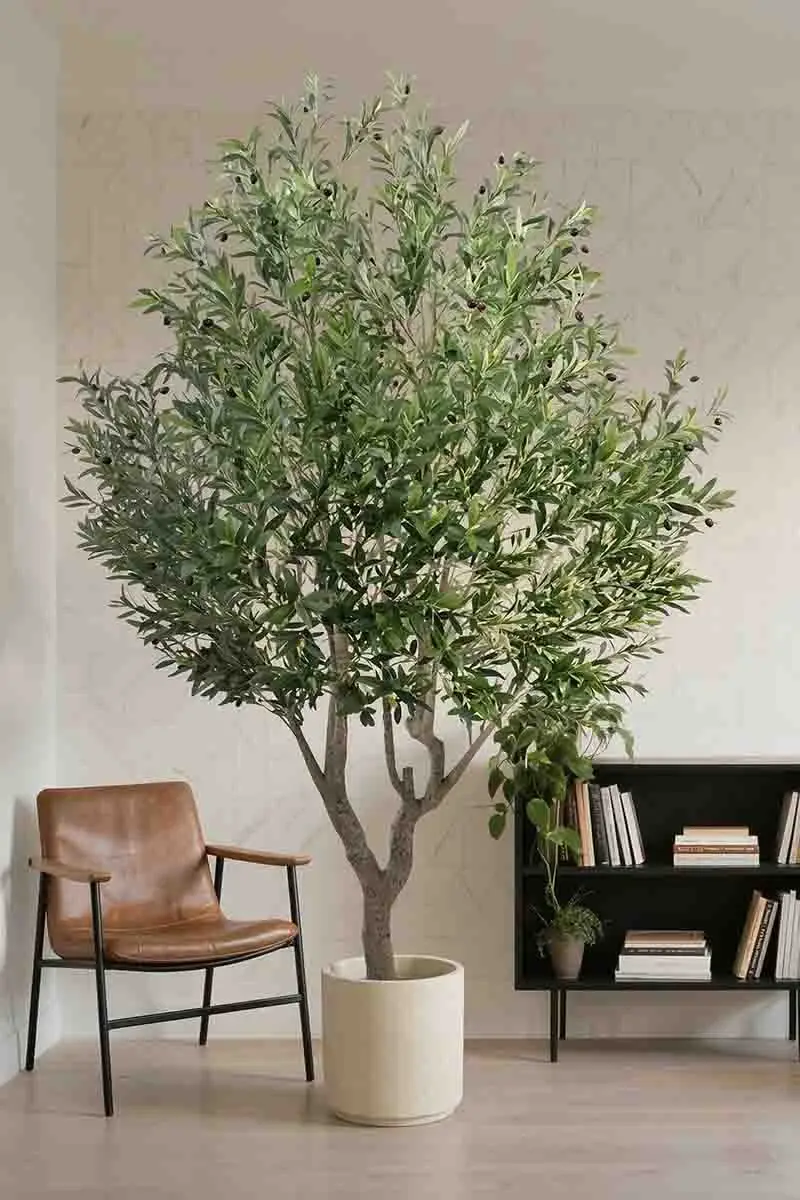
You know those 7ft artificial olive trees in premium hotels that look too perfect? This is that one. The leaves are thick and the fruit (the olives) is painted by hand so that it does not appear to be plastic beads. It is a very costly looking tree, perfect for sitting in a formal sitting room.
4. UV-Resistant Artificial Olive Tree for Sun-Drenched Sunrooms
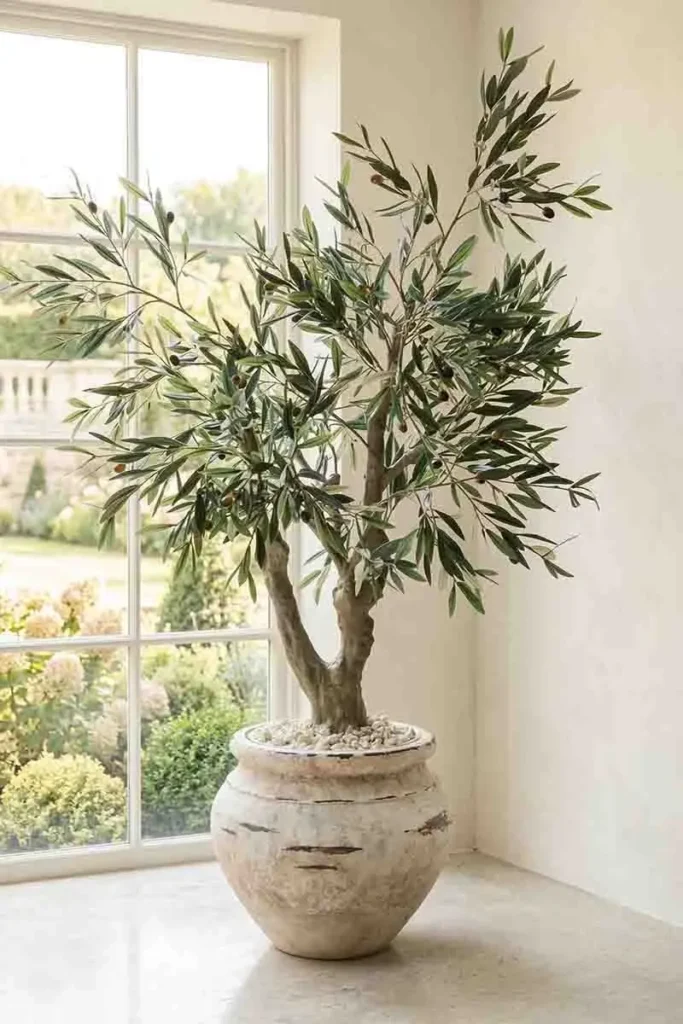
Standard faux plants turn blue or yellow when they are exposed to the sun too long. This is an expensive model with UV filters built into the leaves. It is perfect in those sunny glass rooms where a real tree would literally burn, but this one is forever green.
5. Sculptural Mediterranean Olive Tree with Real Timber Texture
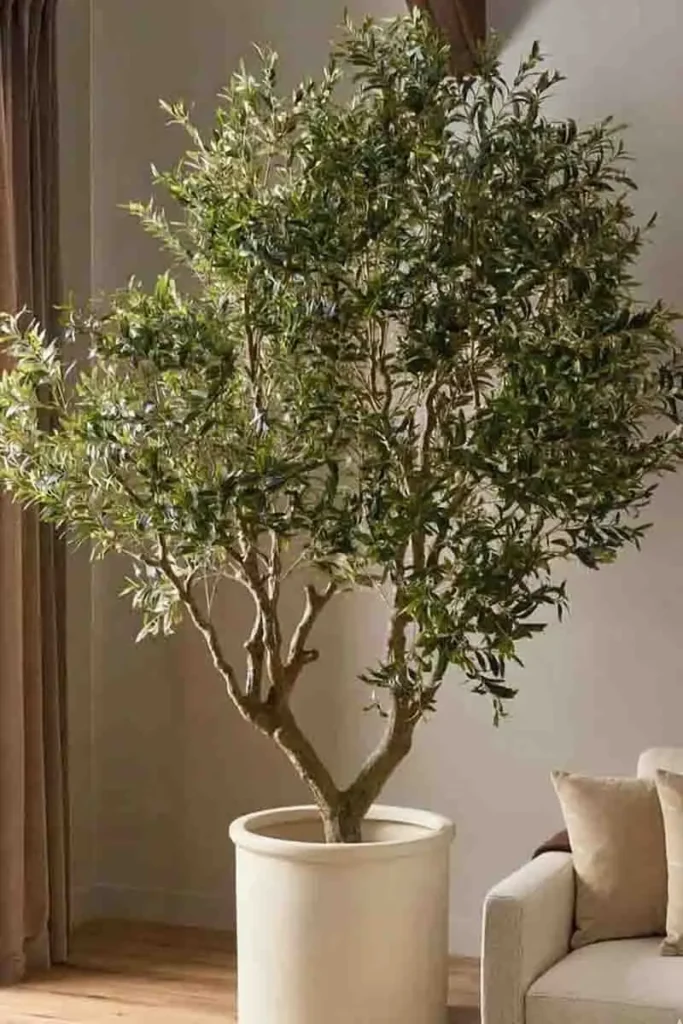
This is not a stick in a pot. There are knots, grooves and even a small amount of faux moss in the bottom of the trunk. It looks like a piece of art. When you have a very simple room, then this tree serves as the central point.
6. Slender Faux Olive Tree for Small Luxury Apartments
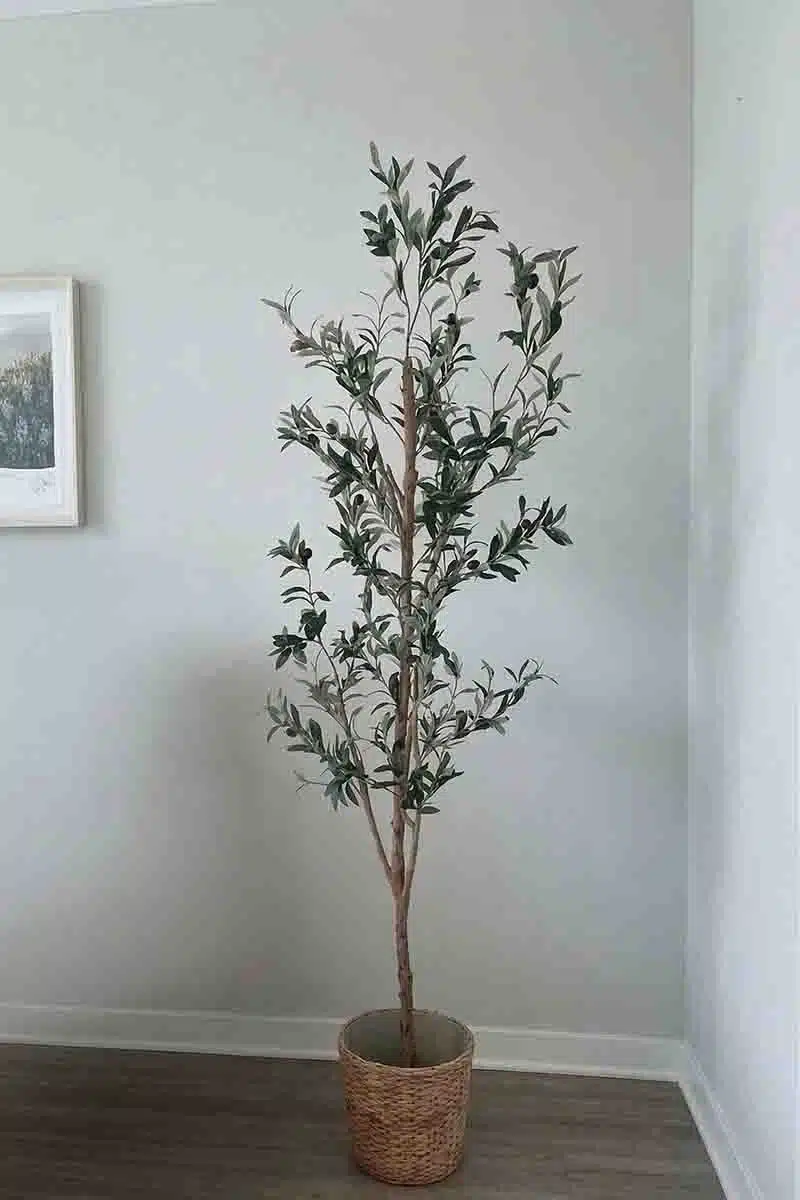
Just because you live in a flat doesn’t mean you can’t have a tree. This model is pencil-thin and yet tall. It will fit into those narrow spaces between the TV unit and the wall without obstructing the walking path.
7. European-Style Potted Olive Tree for Rustic Entryways
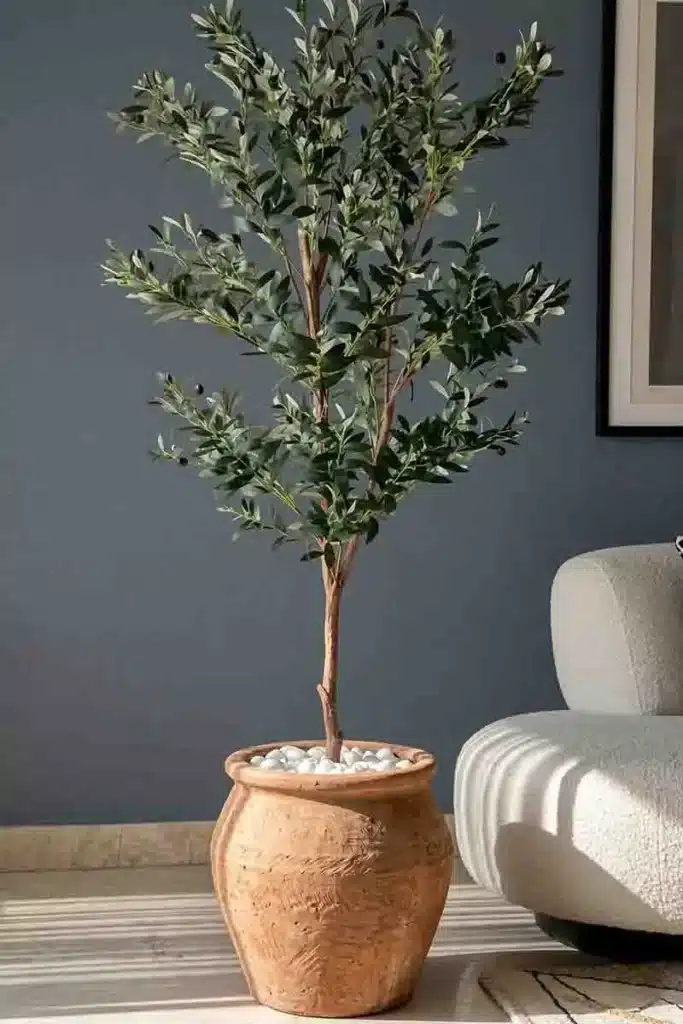
This comes in a heavy, aged-stone look pot. The tree itself has a more “wild” growth pattern, which looks great near a front door. It gives off a very warm, welcoming vibe the moment you walk into the house.
8. Miniature Faux Olive Tree for Kitchen Islands and Consoles
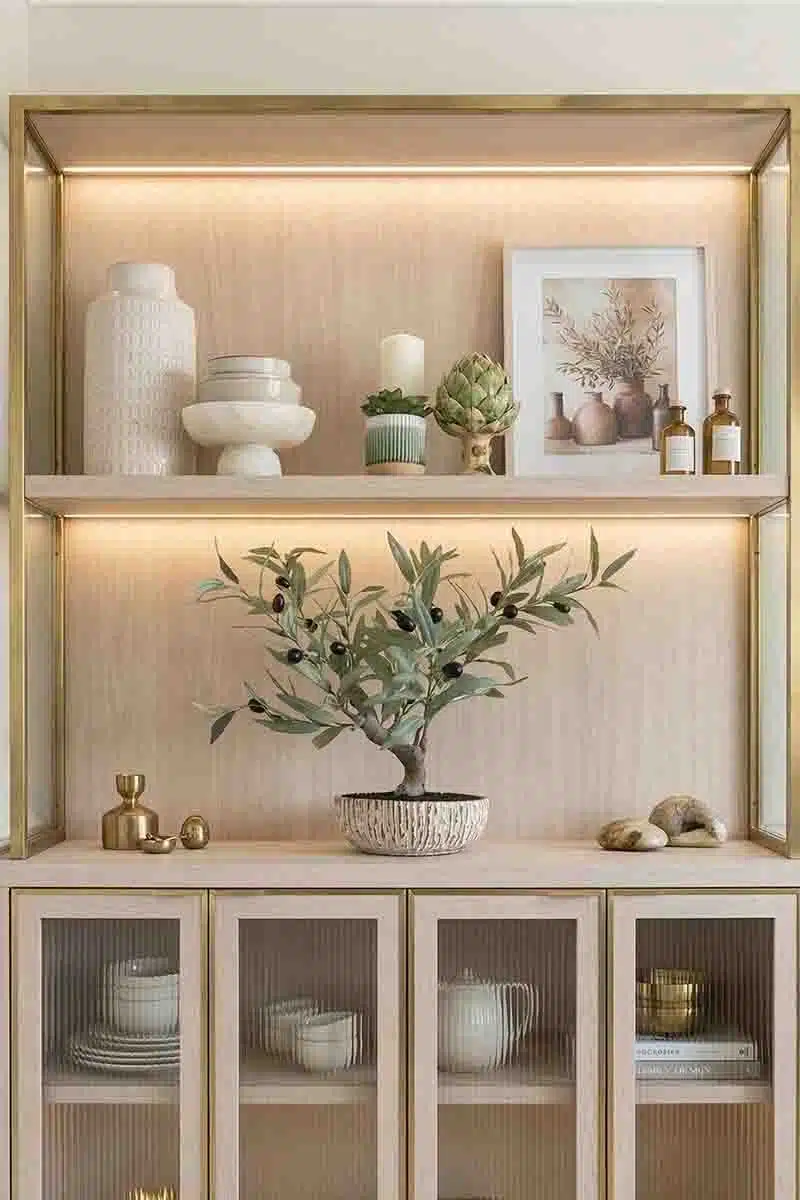
Not all of them have to be six feet tall. This is a mini olive artificial bonsai tree that fits in the kitchen counter or a table in the hallway. You can trust the leaves are the same high quality as the big statement trees, so even if someone’s sitting right next to it won’t be able to call it faux.
9. Custom artificial Olive Tree to Home Libraries and Dens
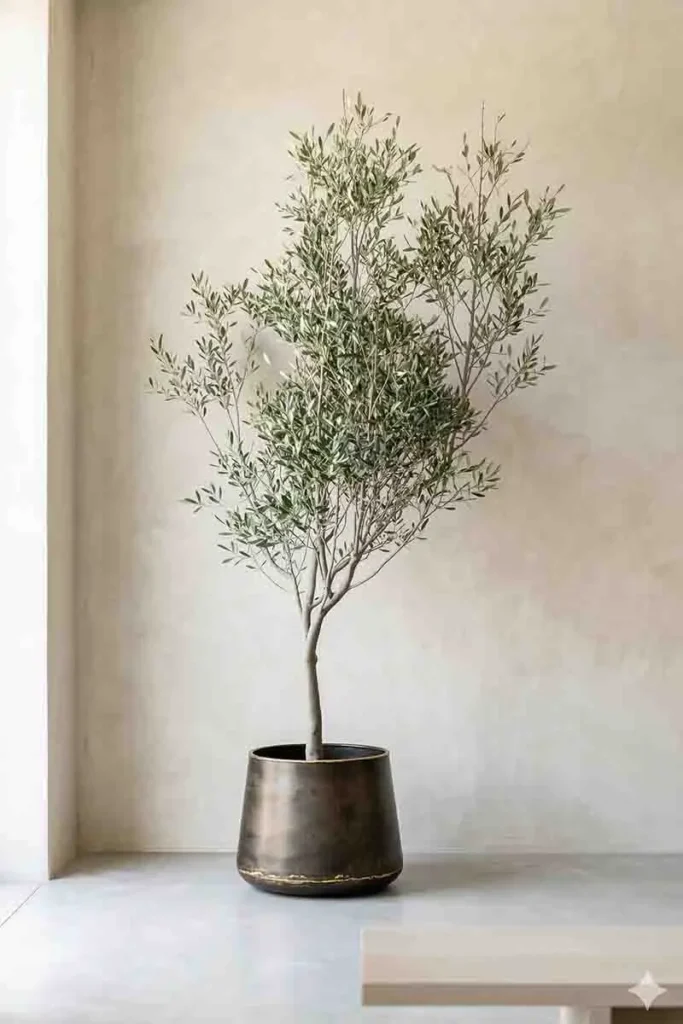
This tree is darker, more upscale kind of tree. It is very scholarly and would fit in bookshelves and leather armchairs. It is not too flashy and yet you can imagine that the quality is top-notch just by looking at the leaf attachment.
10. Matching Pair Designer Olive Trees
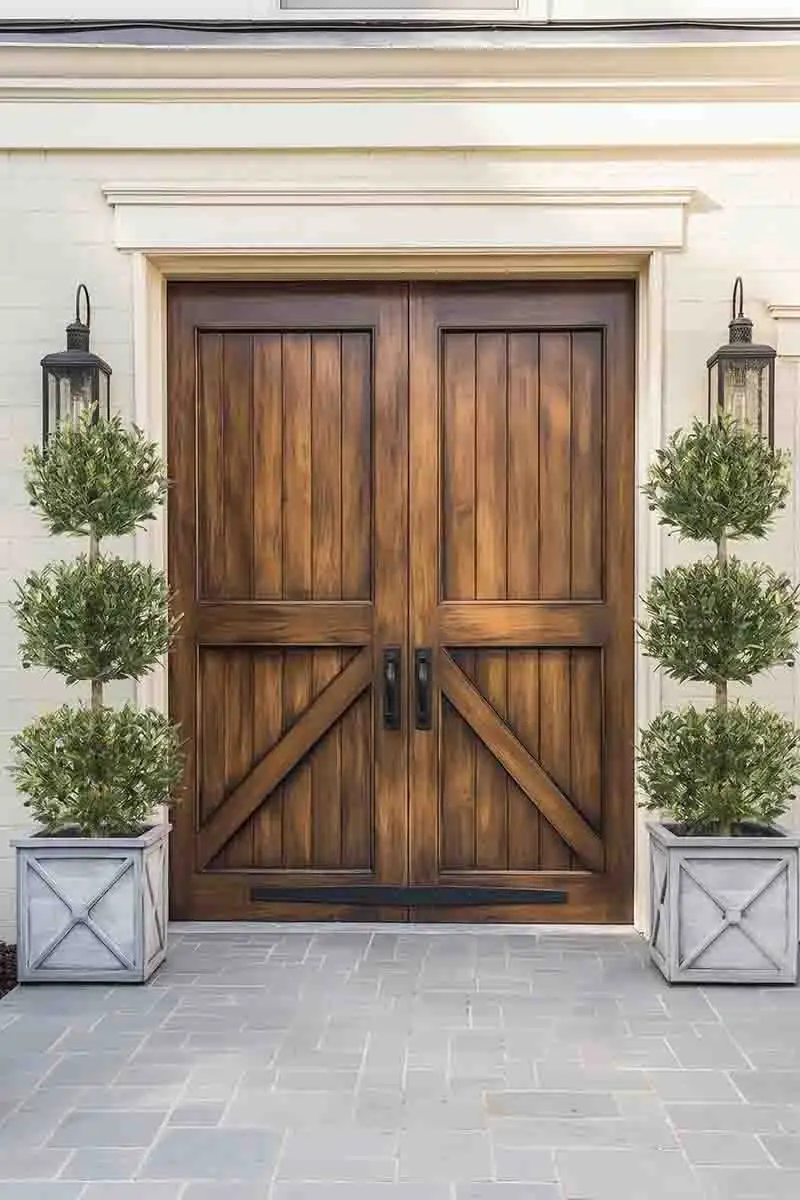
Symmetry is a classic designer trick. These trees are sold as a matched set, so they are the same height and density. Putting one on each side of a large doorway or fireplace gives your home that “estate” feel immediately.
How to Choose an Artificial Olive Tree for Your Home?: Step-by-Step
You don’t just want to guesstimate the $$$ artificial tree purchase. Here’s how to ensure that it fits the style and the space of your location.
Step 1 – Appropriate Height for Your Space
The scale and presence of your tree are determined by its height. A typical rule is that the tree must be at least 1 foot shorter than the height of the ceiling.
- 7 ft ceilings → 5–6 ft tree
- 8–9 ft ceilings → 6–7.5 ft tree
- Tall ceilings or entryways → 8–10 ft trees
And then there is the style of canopy:
- A slender or pencil olive tree: This one is best used in tight spaces, bedrooms, and along a doorway.
- A large, broad canopy olive tree (typically 30-40 inches wide, 8ft high): Required in living rooms, dining areas, or other open plan areas.
Step 2 – Materials & Realism Levels
The luxury tier in artificial trees is actually paying for “Tactile Realism.” Which means the tree is not just supposed to appear real to the eyes but also to touch. The characteristics that make that difference are:
| Realism Factor | What to Look For | Why it Matters |
| Trunk Junction | Seamless “grown-in” look | Cheap trees have ugly plastic “sockets” where branches plug in. |
| Leaf Veining | Printed or embossed veins | Gives the leaves a three-dimensional appearance like real biology. |
| Branch Movement | Internal wire “memory.” | Let you pose the branches without breaking them. |
| Fruit Placement | Random, clustered groups | Like real olives that grow in small bunches. |
Step 3 – Evaluate Brand Credibility, Reviews & Certifications
Good brands will almost always offer to show close-ups of the leaves and video showing the tree being moved or “fluffed” so you can better see how the light hits the leaves. Additionally, look for customer-shared photos in the reviews to get the most authentic look.
In terms of official quality checks:
- Fire Retardant (FR) certifications are valuable, particularly if you intend to install the tree in a fireplace or in a business area.
- Besides, watch out for the reviews that refer to a chemical/plastic smell. It must be smell-free on the first day, or it is likely to be a cheaply made unit with a mere luxury price tag attached to it.
Step 4 – Check Shipping, Packaging & Return Policies
Artificial trees are large and cumbersome and may be fragile when mishandled. Ensure that the company has reinforced boxes to ensure that the branches are not crushed.
One thing is the “Fluffing Factor.” An excellent brand will have a tutorial video on how to use the branches to get the desired designer appearance. Also, be sure whether the tree is ready to go or if it needs hours of shaping
And lastly, make sure that there is a good return window—a tree that you may see on the internet may simply be too large to fit in your particular corner.
Conclusion
The premium artificial trees are always the ones with the most realistic look. You can expect matte-finished, double-toned silvery leaves, a trunk with all the natural textures, and a subtle yet healthy growth pattern. With the 10 best luxury tree ideas we shared, you should now have a very good idea.
Once you have the right inspiration, do check the range of artisan-quality artificial trees offered by HRtrees. We are a leading artificial potted plant manufacturer in China with excellent curated options, and we also offer custom solutions.