
Finding a reliable custom artificial plants manufacturer is the ultimate “growth hack” for businesses looking to turn unique concepts into market-ready greenery. We suggest partnering with a manufacturer that handles everything from 3D rendering to UV-rated materials for your OEM or private label projects.
In today’s article, we share with you everything you need to know about custom artificial plants manufacturers for OEM and your private label projects. Let’s get into it.
Why Work with a Specialized Custom Artificial Plants Manufacturer?
When you partner with a custom artificial plants manufacturer it ensures your products aren’t just “off-the-shelf” items that can be found in every big-box store. You want your brand to stand out. And not blend into the background.
A dedicated factory provides the technical “roots” needed to balance botanical realism with structural integrity. Let’s have a further look at why it’s a good choice to partner with them.
- Design Exclusivity: Launch proprietary designs that competitors can’t easily “leaf” through or copy.
- Technical Compliance: Specialized custom artificial plants manufacturers understand safety standards like fire retardancy. Because “lit” should only describe your aesthetic, not your decor.
- Cost Efficiency: Working directly with the source prunes away those pesky middleman markups.
- Material Innovation: Get access to “Real-Touch” polymers that make people ask, “Wait, is that actually fake?”

What is the Difference Between OEM, ODM, and Private Label for Faux Plants?
Choosing the right manufacturing model depends on whether you want to design a plant from scratch or simply put your “stamp” on a high-quality existing product. Let’s share with you the difference between the manufacturing models:
| Feature | OEM (Original Equipment Mfg) | ODM (Original Design Mfg) | Private Label |
| Design Ownership | You’re the boss. You provide the design. | The manufacturer provides the “blueprints.” | Straight from the factory catalog. |
| Customization | Total control. The sky’s the limit! | Tweak the specs to fit your vibe. | Mostly branding and packaging. |
| Speed to Market | Slower (great things take time). | Moderate. It’s a happy medium. | Fast. You grow immediately! |
| Best For | Unique, patented concepts. | Brands needing an expert hand. | Scaling a trendy e-commerce shop. |
Step-by-Step: The Customization Process from Concept to Canopy
We turn your initial sketch into a finished artificial tree through four main phases. This process makes sure the final result looks truly alive. We focus on every detail. This is so you don’t have to worry about the technical side. Let’s take a look at the 4 phases.
Phase 1: Design Brief & 3D Rendering
Everything begins with your detailed brief. We use 3D modeling to visualize leaf density and branch architecture. This digital “seed” ensures we are on the same page before production starts.
Phase 2: Mold Development and Prototype Creation
We create a physical mold and something we call the “Golden Sample” once you approve the 3D design. This prototype is your chance to feel the texture and check the color. Think of it as the “first date” with your new product.
Phase 3: Material Selection (PE, Silk, or Real-Touch?)
The environment usually dictates the material choice. We use PE for outdoor plants because it stays tough against the elements. Silk or polyester works best for indoor foliage to give it a soft and traditional look. Real-Touch coatings are a great choice for plants that need to feel spooky-real.
Phase 4: Mass Production and Quality Control (QC) Protocols
Production kicks off as soon as you approve the sample. We conduct multi-stage QC to check “pull-strength” so leaves do not fall off. Our team ensures the color stays consistent across your entire batch.
Customization Levels: Which Option Is Best for Your Business?
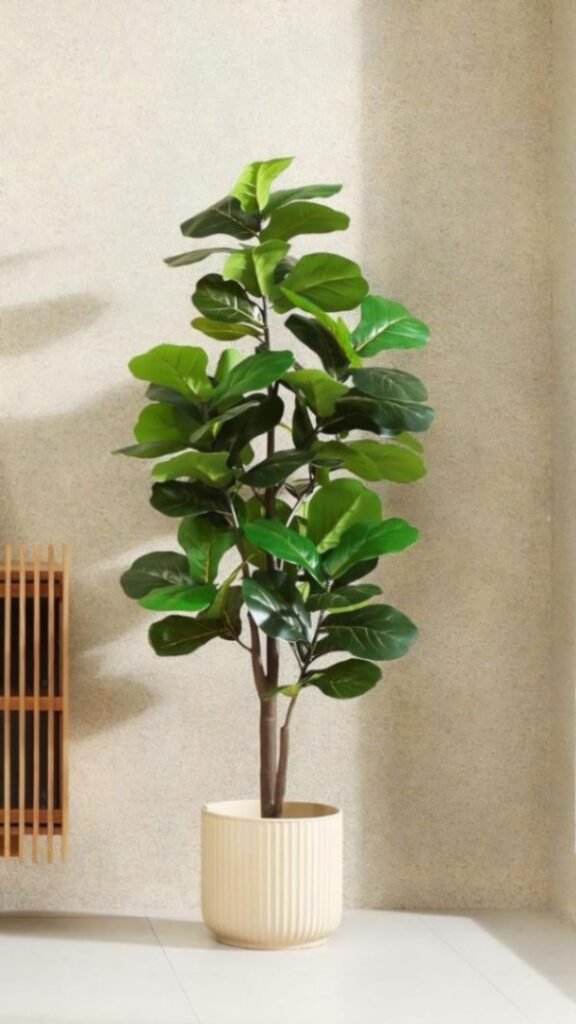
Your choice should align with your budget and target market. Full-scale OEM is perfect for large retailers looking for a signature “look” that defines their space. ODM services allow you to take a factory’s best-selling base, like a Fiddle Leaf Fig, and then customize the variegation to make it yours.
For startups, we usually recommend Private Labeling as the easiest entry point. This option focuses on high-end packaging rather than changing the plant structure. We make sure you find the right “fit” for your brand’s pot.
Essential Private Label Branding Options
Branding is the difference between a basic product and a premium one. It makes your brand the “main character” so customers remember you. We believe branding should feel like a natural part of the product, not something just stuck on at the end.
Logo Integration
You have a few ways to get your logo on the product:
- Pots & Tags: You can emboss your logo directly into the pots or use high-quality hangtags.
- The “Designer” Touch: For a high-end feel, we suggest subtle silk-screening on the underside of a leaf of the artificial plant. Customers love this small, sophisticated detail.
Custom Packaging: Retail Boxes vs. KD Mailers
We recommend choosing your packaging based on how you sell:
- For Retail Stores: Use Full-Color Retail Boxes. These are glossy and designed to stand out on a shelf.
- For Online Sales: We suggest KD (Knock-Down) Mailers. These allow the artificial trees to be taken apart for shipping. It “prunes” your shipping costs because, let’s face it, no one wants to pay to ship “air!”

Custom Branding and Shipping Made Easy
Getting your plants is only half the job. You also need them branded and delivered without a headache. HRtrees handles your private labeling and custom packaging right on the factory floor.
We are a full OEM and ODM manufacturer. This means your branding is part of the production process from the start. You don’t have to worry about adding labels later.
We also take care of the shipping process for you. Our team offers Door-to-Door logistics to over 120 countries. We handle the customs clearance and deliver straight to your site.
This setup cuts out the middlemen and lowers your “landed costs.” You save money and get your project finished much faster. It is the smartest way to move from a factory order to a finished space.
Understanding MOQs and Sample Costs
Custom projects require a specific setup. This affects your Minimum Order Quantity (MOQ)as well as your fees. We want to help you navigate these costs so there’s no surprises and you can plan effectively.
Sample and Mold Fees
Expect to pay more for a one-off custom sample. We recommend this step because each piece is hand-crafted just for you. If you want unique leaf shapes, mold fees usually cost between $500 and $2,000. We suggest viewing this as an investment in your brand’s DNA.
MOQ Requirements
To make the factory machines hum, custom runs typically start at 100 to 300 units. We recommend meeting these minimums to keep your production cost-effective. These requirements ensure the process stays professional for everyone that is involved. Smaller orders often lead to much higher prices per unit.
Safety & Compliance: US Market Standards You Can’t Ignore
Compliance isn’t just the “boring legal stuff”. It’s a safety net not only for your business, but for your customers too. We believe you cannot afford to ignore these essential safety standards below.
Fire Retardancy: Meeting NFPA 701 & CA Title 19
In public spaces, artificial plants must be fire-rated. We recommend looking for NFPA 701 and CA Title 19 certifications. These are the essential requirements for fire safety in the US.
You should look for IFR (Inherently Fire Retardant) materials, where the safety is baked right into the resin. This is much safer than treatments that are simply sprayed on like hairspray.
UV-Stability: Ensuring 3+ Years of Outdoor Life
Standard plastic will often turn a sad shade of old lawn furniture blue after a couple of months in the sun. UV-rated greenery uses inhibitors to keep your artificial plants vibrant and sun-kissed for years. We recommend this for any outdoor project that you want to last longer than 3 years for.
Eco-Friendly Materials: REACH and RoHS Compliance
Modern consumers want green products in every sense. We suggest checking if your manufacturer follows REACH and RoHS standards. These prevent toxic off-gassing. Fresh air is always in style! These certifications prove your brand cares about the environment.
5 Common Pitfalls to Avoid When Sourcing Custom Artificial Greenery
Sourcing custom greenery should be an exciting process. However, small mistakes can quickly lead to big headaches for your brand. We want to help you avoid these five common traps.
- Ignoring the Smell Factor Low-grade plastics often smell like a chemistry lab. We suggest giving your samples a sniff test before you commit. Your nose usually knows when a material is of poor quality!
- Underestimating Shipping Volume Plants are naturally bulky and take up a lot of room. We recommend using knock-down designs to keep your shipping budget from bloating. This simple change keeps your costs much lower.
- Vague Color Specs Never just tell a factory to make it green. We recommend using Pantone chips to match your specific brand shades. This will ensure your order looks exactly how you pictured it.
- Skipping Third-Party Inspections Never trust a batch until a second set of eyes sees it. We suggest hiring an inspector to check the quality before the goods leave the factory. This prevents nasty surprises when the container arrives.
- Forgetting Lead Times Custom projects take a lot of time and never happen overnight. We recommend that you plan your seasonal launches at least six months ahead of time. When you start early it gives you plenty of breathing room.
Frequently Asked Questions
What is the Typical MOQ for a Custom Artificial Tree?
This is one of those questions we get all the time. For a fully custom design, you should plan for a start of 50 to 100 units. If you only want to change a small detail like the pot, we can usually help you start even lower than that.
Can I Customize the Density of the Leaves?
Absolutely. You can choose exactly how full or thin your trees look. If you want a thick rainforest style, just let the factory know. You can also go with a sparse, minimalist look for a desert vibe. It is easy to adjust the leaf count to match your specific design.
How Much Does a Custom Mold Fee Cost?
You can usually expect to pay between $500 and $2,500. It is a one-time cost to get your specific design right. Keep in mind that high-volume orders can change this. Many factories will actually drop the fee if you buy enough units. It is a good idea to ask about this before you pay anything upfront.
Do You Offer Drop-testing for E-Commerce Packaging?
Yes, this is a great way to protect your investment. We suggest using ISTA drop tests to make sure your products stay safe during shipping. These tests mimic the rough handling that happens during delivery.
How Long Does International Shipping Take for Bulk Orders?
Sea freight will usually take around 30 to 45 days to arrive. However, you also have to account for the time it takes to actually make your custom artificial plants.
When you add production time to the shipping schedule, the whole process is about a 75 to 90 day journey. We suggest planning your orders well in advance. This ensures your stock arrives exactly when you need it without any last-minute stress.
Scaling with a Custom Artificial Plants Manufacturer
Finding the right custom artificial plants manufacturer is the most important step for your brand. High-quality materials and a touch of personality will help you provide “evergreen” value to your customers.
Ready to bring your botanical visions to life? At HRtrees, we specialize in bespoke greenery that looks so real, you’ll have to remind guests not to water them! Don’t be a wallflower! Reach out to HRtrees today and let’s help you grow your business.


