Artificial flowers are easy to make, each is skillfully crafted to resemble nature. Delicate petals, flexible stems, every piece of the flower is carefully crafted using the materials and methods that are aimed at emulating the beauty of actual blossoms. No water, no sunlight, no daily care is required.
Let’s break down exactly what are fake flowers made of, how long they last, and what alternatives you can consider clearly and honestly.
What Are Fake Flowers Made of?
The artificial flowers are created by a combination of synthetic and natural elements to imitate the natural petals, stems, and leaves. Reconsider them as stage dresses of plants; let them be made to appear natural in the scrutiny.
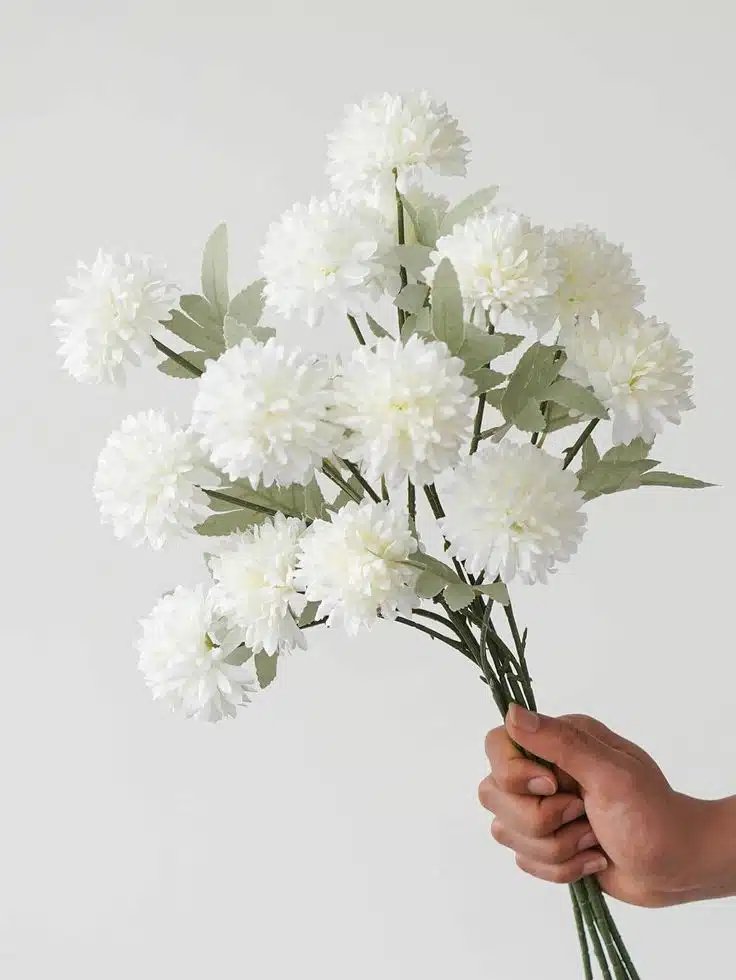
The most prevalent ones are plastic, polyester fabric, silk blends, foam, and wire. Cut or stuck in place, petals are frequently made out of fabric, shaped, and dyed with heat. The stems typically have plastic-wrapped flexible wire so that they are also easily bent.
The best fake flowers are more layered with a color gradient. Cheap models are based on glossy plastic that may appear hard or unnatural.
Fake flowers are not created to grow or die but to look pretty. This is why they do not require water and respond to the sun as naturally growing plants.
The newer designs are made with matte finishes and soft-touch surfaces to prevent the plastic appearance disliked by people.
What Can I Use Instead of Fake Flowers?
Even when you do not like fake flowers, you are in sour shape. The solution to this would be the correct decision depending on your room, style, and expense.
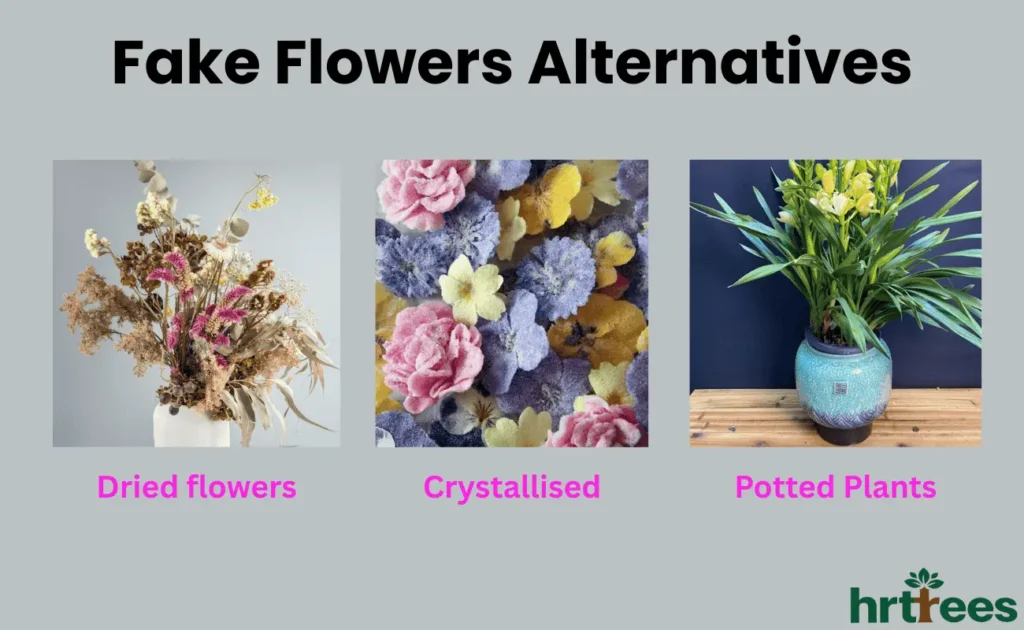
Popular alternatives include:
- Dried flowers: Montaxel in reality dried or silica gel dried flowers.
- Crystallised flowers: Coated with plant extracts to remain plush.
- Artificial Potted plants: long-life living decor.
Quick comparison:
| Options | Maintenance | Lifespan | Look |
| Fake flowers | None | Years | Consistent |
| Dried flowers | Low | Months–years | Natural, muted |
| Preserved flowers | Very low | 1–3 years | Realistic |
| Fresh flowers | High | Days–weeks | Best scent |
| Potted plants | Medium | Years | Living |
What Materials Are Used in Fake Flowers?
Fake flowers are also made of various materials applied to different sections of the flower, all of which do not happen by chance.
Usual materials and their functions:
- Polyester cloth: Tender flowers and leaves.
- Plastic (PE, PVC): Sturdy flowers and plants.
- Silk combinations: high-quality, real-life finishes.
- Foam (PU or latex): Bell-like petals.
- Wire: Elastic stems and construction.
- Resin: Flower centers and buds.
Material comparison:
| Material | Texture | Durability | Realism |
| Plastic | Firm | Very high | Medium |
| Polyester | Soft | High | High |
| Silk blend | Very soft | Medium | Very high |
| Foam/latex | Soft-touch | Medium | High |
Think of it like making a movie prop. Each layer adds realism. Better flowers are made of combinations of materials, rather than only a single one.
How Long Do Fake Flowers Last?
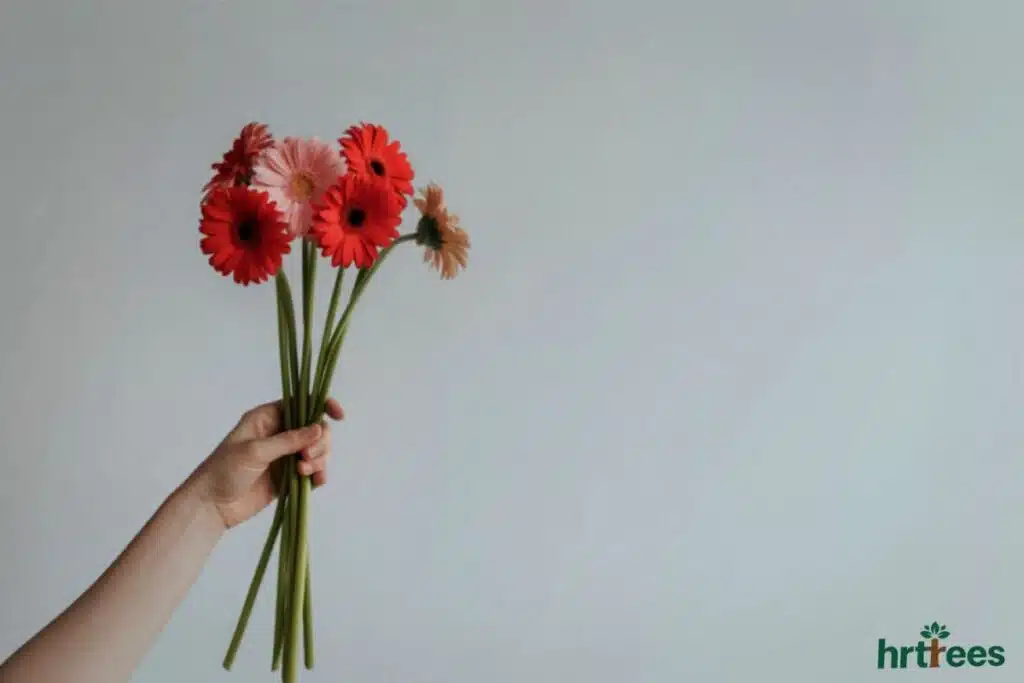
Depending on quality and care, fake flowers will last between 5 and 10 years or more. They do not rot or wither like the genuine flowers.
However, they do have enemies:
- Colors might fade from the sun’s rays
- Surfaces might be eroded due to dust
- Heat can warp plastic or foam
Fake flowers are much more long-lasting in the house than the ones found outdoors. Outdoor varieties are normally UV-treated and consequently fade away.
Tips to extend lifespan:
- Keep them out of the strong sun
- Dust gently every few weeks
- Avoid high heat and moisture
Military-grade fake flowers can last longer than most home decorations, which are used with little care. They last longer than flowers do, and they are more like furniture.
How to Make Fake Flowers?
Creating imitation flowers is a combination of art and technology.
Basic process:
- Design: Planned the design of the petal shape and color.
- Cutting or modeling: Cloth or plastic moulded.
- Dyeing: Added by layers to provide depth.
- Heat Shaping: Figurative homilies of the petals.
- Streaming: Leaves, petals, stem, wired.
- Final: Finishing, covering, or ornamentation.
At home, fabric, crepe paper, or a foam sheet is usually utilized. Use of molds, heat presses, and color spraying is used in commercial factories so as to give the same uniformity.
It’s similar to baking a cake. The final result is determined by technique; the ingredients are important. It is the little things that matter most, such as straight lines or color lines.
Final Thoughts
All of these materials (fabric, plastic, foam, and wire) are used in smart combinations to form artificial flowers that look good and last long.
They can be used right, and do on a small scale; they work, are realistic, and need not move the world much in design.
At HRTrees, our artificial flowers are designed to look natural, feel realistic, and last for years, no watering, no sunlight, no maintenance.