
Ever wonder how people get those perfectly round shrubs or cool leafy animals in their gardens? Well, this art is called topiary.
Today, we share everything you need to know on the topic, “what is topiary?” Whether you decide to go with real plants or fake ones, by the end of this guide you will know exactly how to create the garden of your dreams.
What is Topiary in Simple Terms?
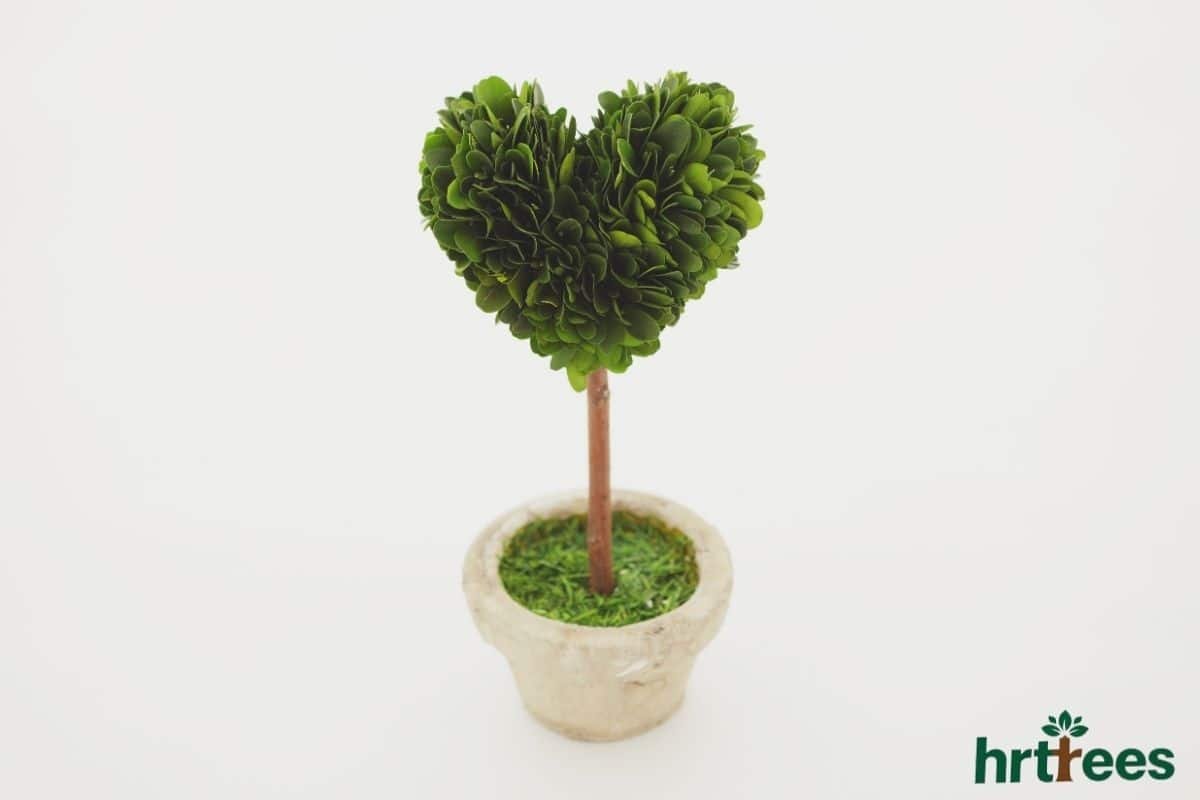
“What is Topiary?” It is basically pruning. But it is just on a decorative level. You aren’t just trimming a bush to keep it tidy. You are clipping it into a specific shape. You shear the leaves to make things like cones, spirals, or even birds or other cute animals.
What is Topiary Gardening and How Does It Work?
Topiary works by basically training a plant to grow thick. You do this by snipping the branch tips which then sends energy to the side buds. This fills in the gaps over time. The plant eventually becomes a solid wall of green.
You need a few things for your topiary to be successful:
- Evergreen plants – Look for species that will keep their leaves year-round. This is so they can provide you with a permanent structure.
- Small leaves – Plants with small, dense foliage will create the smoothest surfaces.
- Lots of patience – Getting a topiary to look perfect sadly doesn’t happen overnight. It takes a few years of steady trimming to reach your goal.
- Artificial alternatives – If you just don’t want to wait. Or if you live in an area that just doesn’t have the right climate, high-quality faux options will give you the look instantly.
The History of Topiary: From Ancient Rome to Modern Gardens
What’s crazy is that the topiary goes all the way back to Ancient Rome. It was a guy named Gaius Matius who was actually the first one to come up with the idea. The style vanished for a bit after Rome fell. And it eventually blew up again hundreds of years later.

Best Plants for Your First Topiary Project
Starting your first topiary project is super exciting! Let’s have a look at the best plants for the project:
| Plant Name | Growth Rate | Best For | Why Choose It? |
| Boxwood | Slow | Balls and Cubes | The classic pick for any shape. |
| Japanese Holly | Medium | Low Hedges | Looks like Boxwood but grows faster. |
| Yew | Slow | Tall Pyramids | It’s tough and lives for decades. |
| Privet | Fast | Large Hedges | Best choice if you’re in a big hurry. |
| Rosemary | Medium | Small Pots | Smells great and looks awesome on a patio. |
| Artificial | None | Any Shape | Instant results with zero pruning or watering. |
Modern vs. Traditional: Choosing Your Topiary Style
There are three main ways to bring this sculpted look to your garden:
- Freehand: Trimming by eye. This requires a steady hand, sharp shears, and of course a lot of focus.
- Wire Frames: A metal cage acts as a guide; you simply snip whatever grows past the wire. This is the best way for beginners to attempt complex animals.
- Pre-Sculpted Artificial: The modern choice. These come perfectly shaped right out of the box, requiring zero skill, tools, or growth time to look professional.
How to Start Your First Topiary in 5 Easy Steps?
To make your first living sculpture you just need to follow these steps. Tip: If these steps seem way too difficult, you can skip straight to a pre-shaped artificial topiary tree. It will save you the work and the tools.
- Pick a healthy plant: Choose a thick Boxwood or Holly; avoid brown spots or thin branches.
- Stick to easy shapes: Master a ball or pyramid before attempting a bunny or even a monster.
- Grab sharp shears: Use bypass pruners for stems and topiary shears for leaves. Dull blades chew up plants.
- Use a guide: Never wing it. Use string or cardboard to keep your sculpture from looking lopsided.
- Start from the top: Prune downward, clipping tiny bits at a time. You can’t put a branch back once it’s gone!
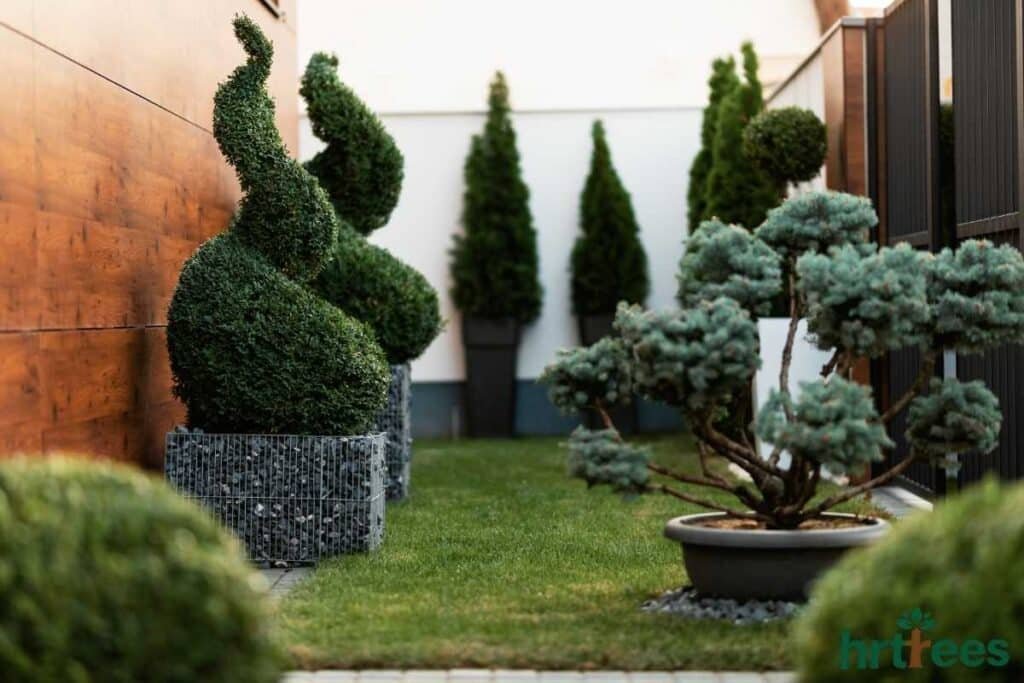
Common Mistakes to Avoid When Shaping Your Plants
Even the topiary pros can mess things up from time to time. You can stick to these tips below:
- Do not overdo it
You should never cut off more than a quarter of the leaves at once. Taking too much off stresses the plant. And it can even kill it or leave ugly bare spots.
- Watch the calendar
Stop the heavy trimming once autumn hits. Pruning makes the plant grow new, soft stems. These tiny sprouts will just freeze and die when winter arrives.
- Keep your tools sharp
Dull shears are the worst. They crush the stems instead of giving them a clean cut. This leaves the edges brown. And it also invites nasty diseases to move in.
Don’t have a lot of time? If “patience” is not in your vocabulary and “sharp shears” aren’t for you, artificial topiary offers the same sculptural elegance instantly.
Tips for Maintaining Your Topiary
By giving your topiary a bit of extra TLC, it will help it stay in great shape. You can follow these tips to keep your topiary happy:
- Water the soil: Don’t spray the leaves. The trapped water will cause mold and rot. Instead, aim your hose at the base to keep the plant healthy.
- Feed potted plants: Potted soil loses nutrients fast. Toss in slow-release fertilizer every spring to give your sculpture the energy to grow back thick.
- Take a walk: Step back ten feet every five minutes. It’s hard to see mistakes up close, and this helps you spot flat spots early.
- Go faux: Unlike live plants, artificial topiary only needs a quick dust or hose-down to stay bright and happy!
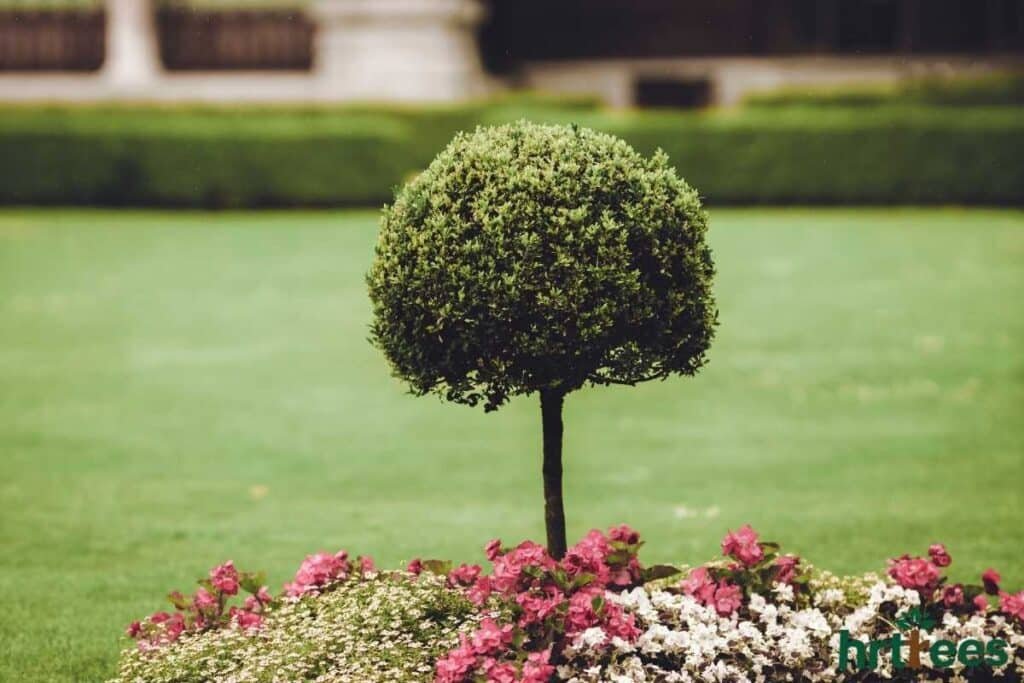
Why Topiary is the Perfect Addition to Your Yard?
So, what is topiary? It is a fun way for you to show off your personality but through your plants by shaping them. You can start small with a single pot on your porch to give your garden a unique look.
If you love the style but hate the maintenance, artificial topiary is a great shortcut. It gives you that perfect, hand-carved look instantly without the years of waiting or constant trimming.
If you want your landscape to look its best without the DIY stress, check out HRtrees. Our artificial plants and tree options give you that perfect, hand-carved look without all the pruning. Stop beating around the bush. Let us help you leaf your worries behind!


