
When you’re asking where to buy artificial olive trees, the answer would really depend on how you plan to use them. If you’re after large-scale purchases, like for a building interior or resort, you could go directly to the manufacturer. If you’re just a casual one time buyer, you can find plenty of options in Target, Amazon, or West Elm.
We’ll cover more about these options, what’s more suitable for you and how you can budget it, in the article below.
Top Places to Buy Artificial Olive Trees in 2025
Whether you want a premium 8-foot artificial olive tree or a mini artificial olive bonsai, below we cover all the options available to you today.
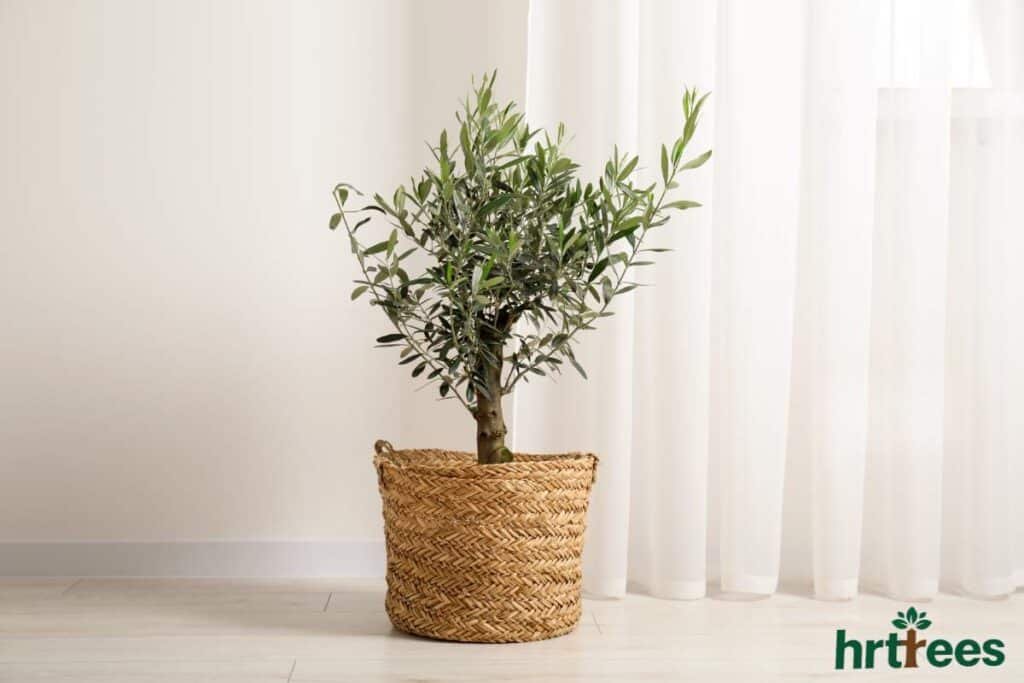
1. Buying Direct from an Artificial Tree Manufacturer (Best for Businesses)
Among other things, a very significant consideration here is that you get full quality and material control when you go directly to the factory. Even big, you can practically get this at an almost 200 percent slashed markup that the local stores would normally charge on professional-grade materials.
However, large-scale manufacturers have a minimum order quantity requirement, so they may not be an option if you require just one tree. Usually, they cater to hotels, malls, offices, restaurants, and designers, but many also work with homeowners doing premium interior projects.
For example, HRTrees is a leading artificial tree manufacturer in China, and they directly work with both commercial and residential customers.
Since most big names in industry have complete in-house production, which let them offer a lot of variety when it comes to material and quality choice.
What they offer:
- Artificial olive trees in multiple heights, including large statement trees
- Varying levels of realism characteristics (often fiberglass or real-wood-inspired finishes)
- Foliage customization as per season and style
- Themed trees for large projects
Pros & Cons of Buying Direct from Manufacturers
| Pros | Cons |
| Much cheaper for bulk or high-end units. | Shipping can take longer because the order is prepared on demand |
| Commercial-grade durability and realism. | Minimum order quantities may apply |
| Often allows for custom sizes and leaf densities. | Not ideal for small one or two piece purchases. |
| Direct communication for specs and timelines |
2- Buying from Online Marketplaces (Amazon, Wayfair, Walmart)
The very accessible mass market alternatives are online sites Amazon or Wayfair. Their biggest plus point is fast shipping and an enormous variety in terms of look and price since the product is coming from so many suppliers. If you are on a tight budget or need a tree delivered by tomorrow, these platforms are your best bet.
A lot of people also like these because you can read hundreds of customer reviews and get to see how the tree would look in a typical living room.
- Amazon: Great for finding budget-friendly trees.
- Wayfair: Offers a more “curated” feel with better filters for height and pot style.
- Walmart: Best for very low-cost options if you just want to fill a corner quickly.
Pros & Cons of Online Marketplaces
| Pros | Cons |
| Fast delivery and easy returns | Quality can be inconsistent between sellers |
| Wide price range for different budgets | Many trees look good online but feel fake in person |
| Helpful reviews and photos from buyers | Limited customization options |
3- Buying from Home Décor & Furniture Brands

If you want that magazine worthy look, the safest bet for you is to buy from high-end décor brands. West Elm, Pottery Barn, CB2, and Nearly Natural all pay close attention to the aesthetics and design of the tree.
Additionally, these places typically add very fashionable, heavy pots (like cement or ceramic) with the trees, so you don’t have to fetch and match them yourself later on. You can also expect either actual wood or a good-quality resin trunks, closely replicated to the original, with all the twists and gnarls.
Pros & Cons of Décor Brands
| Pros | Cons |
| On-trend, styled designs | Limited sizes and styles |
| Better-than-average realism compared to budget options | Much more expensive (often $300 to $600) |
| Good fit for modern homes | Not suitable for bulk or commercial orders |
4- Buying from Local Garden Centers
If you want to be super sure about how the tree would look closely and feel to touch before paying, then your local brick-and-mortar store is the way to go. Usually, local garden centers or home stores like HomeGoods carry seasonal stock of artificial greenery, so you can try them.
The benefit in this case is that you the color or height will not come as a surprise to you when you get it home. However, these places have very limited stock and often not of the realistic standard.
Pros & Cons of Local Stores
| Pros | Cons |
| See the tree physically before purchase | Very limited variety |
| No waiting for shipping | Often outdated designs |
| Easier returns or exchanges | Rarely suitable for large or custom needs |
Buying for Business: Commercial-Grade Considerations
If you’re buying artificial olive trees for offices, hotels, or public spaces, looks alone are not enough. Such commercial applications often need to meet extra safety and reliability standards.
Are Your Artificial Trees Fire Retardant (FR)?
In many regions, especially in the USA, fire marshals require decorations in public spaces to be “Inherently Fire Retardant” (IFR). Which obviously includes trees.
However, most cheap trees bought online are highly flammable. So if you’re buying from retail or marketplace, make sure they do comply with local codes. Or better, get certified fireproof artificial trees from special commercial manufacturers. They achieve this by adding specific chemicals to the material of the leaves and branches during the manufacturing process, so it doesn’t easily wash off.
UV-Resistance for Outdoor and Sunlit Placements
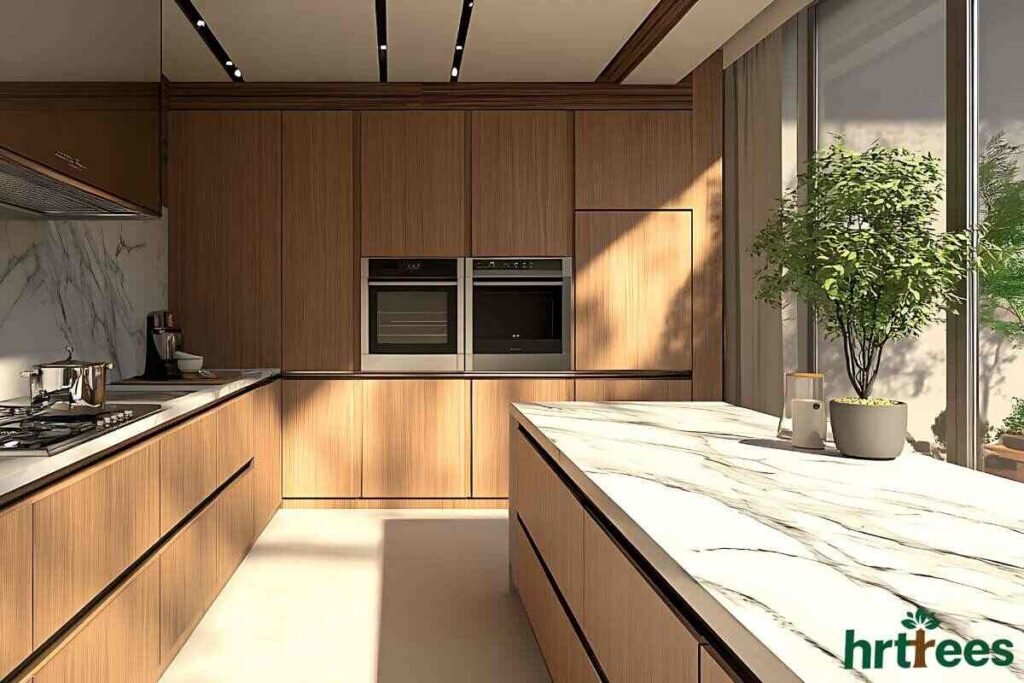
When you intend to place your artificial olive tree close to a big window, in a sunny lobby or on an outdoor patio you need to make sure it is UV-rated. Normal artificial trees will become blue or brittle in a few months of being exposed to sunlight.
Outdoor-rated trees are impregnated with UV inhibitors to keep the plastic and silk safe against the harsh rays of the sun. This helps the leaves to look a dark, natural green over several years.
Can You Get a Tree Tailored to Your Space?
This is an important headache if you’re a designer or just someone with very specific ideas about your decor. For example, retail stores only sell standard sizes (like 4ft or 6ft), so if you want something outside it, you’d have to go towards customization, which is mostly only offered by direct manufacturers.
HRTrees, for example, can make:
- Exact height and spread
- Multi-stem or single-trunk designs
- Custom planters or base integration
- Adjusted density for tighter or open spaces
So whether you need a massive 14ft large olive tree to fill a grand hotel atrium or a very slender one to fit a small hallway, a direct factory can construct it according to the blueprint of your project. But of course, there will be premiums on it and they might need a bigger order than just one piece.
Conclusion: What is the Best Place to Buy Artificial Olive Trees For You?
Well, it all comes down to balancing realism, durability, and purpose.
- Online stores and decor brands are good when purchasing items quickly in the house. But they tend to fail when it comes to consistent quality or long-term applications.
- If you’re working with large projects, it is preferable to deal directly with a manufacturers that offer customization and better value for money.
If you’re sourcing artificial olive trees and need consistent, commercial-grade results, we highly recommend checking out HRTrees. We offer the perfect mix of factory-direct pricing and premium craftsmanship that retail stores simply can’t match.


