Unlike basic home decor, professional greenery solutions are built for durability in retail, hospitality, and office spaces. Choosing a commercial artificial plants supplier ensures you get “biophilic infrastructure” that meets strict building safety codes while offering a zero-maintenance and realistic aesthetic without any watering or sunlight.
Below, we’ll explore strategic portfolio choices and industry-specific tips for high-impact commercial installations that actually last.
Why Are Businesses Choosing Engineered Artificial Greenery?
Commercial artificial plants are purpose-built to be used in the public and professional areas. This implies the utilization of greenery not only to appear beautiful, but also to address spatial issues and enhance the well-being of people. It differs from residential décor plants in materials, construction quality, fire safety treatment, and long-term performance expectations.
Terms like “UV-stabilised foliage,” “fire-retardant (FR) rated plants,” and “modular green systems” are commonly used in the commercial segment, as these address real operational requirements. The main driver behind this shift is what many designers now call “bio-hacking” of spaces.
The “Bio-Hacking” of Business Spaces
Bio-Hacking is a notion that entails the application of nature-based aspects to fool our brains into being more at ease and attentive. Live plants in an office or retail environment usually end up dead because of bad light or air conditioning, which sends a brown thumb impression that is actually demoralizing. Engineered greenery allows businesses to:
- Improve Mood: Constant exposure to green textures reduces cortisol levels in both staff and shoppers.
- Zero Overhead: You get the psychological benefits of a “jungle office” without a monthly $500 maintenance bill for specialized plant technicians.
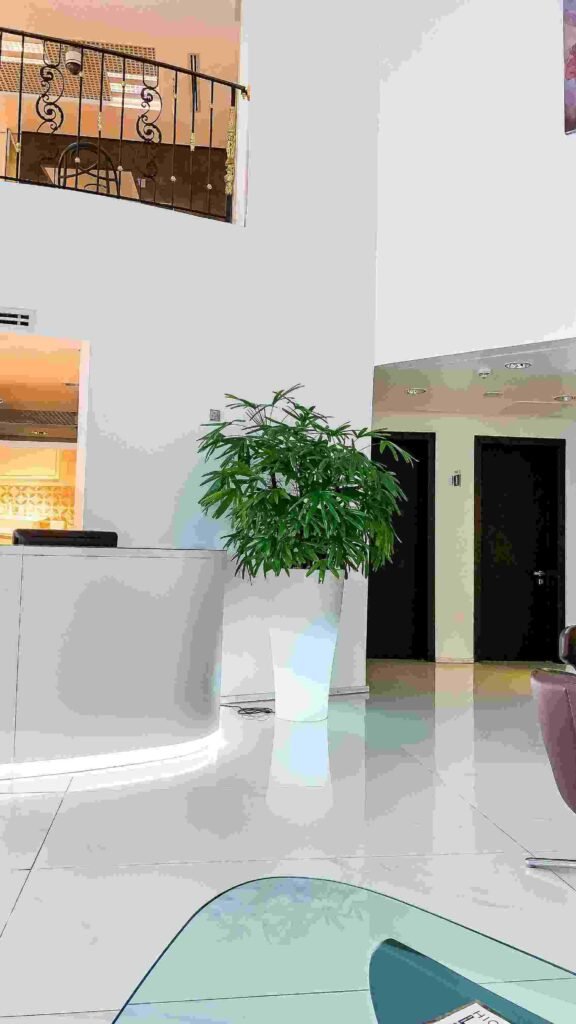
- Acoustic Control: High-density artificial moss walls or leafy partitions act as natural sound diffusers in echoey lobbies.
Source: Unsplash
The Core Value Prepositions of Commercial Requirements
Business customers tend to judge artificial plants in a much different way compared to consumers. The move is more tactical and strategic:
- Low Maintenance and Cleaning: Commercial plants are made to be anti-static i.e. they do not attract dust as cheap polyester ones do. A quick wipe or a light air-spray after every few months is all that is normally required.
- Visual Consistency for Franchises: For a restaurant chain with 50 locations, the “look” must be identical in San Francisco as it is in London. Artificial plants ensure a stable and all-year-round appearance that does not vary with the seasons.
- Lifecycle Cost Benefits: The initial cost may be more than that of purchasing small live plants, but the Total Cost of Ownership (TCO) is significantly less. Dead plants do not need to be replaced, there is no fertilizer to buy, and there are no irrigation systems to install.
- Compliance for Building Codes: Professional suppliers offer fire safety and non-toxicity certificates that are frequently required by insurance and building inspections in public malls or high-rise offices.
- Warranty and Service: Commercial artificial plants suppliers are better placed to provide warranty and replacement of large installations.
Product Portfolio Strategy for Commercial Artificial Plants Supplier
A successful commercial installation is not about selecting random SKUs, but rather developing a portfolio strategy. In HRTrees projects, we consider the way various kinds of greenery interact to occupy a three-dimensional space.
- Core Signature Pieces: These are your anchors, like a 8-foot tall artificial Ficus or a custom-built olive tree. They determine the nature of the room.
- Supporting Accents: Mid-sized floor plants or desk-top succulents that occupy the spaces and give the appearance of visual flow between the larger objects.
- Standard vs. Customized Elements: Lots of suppliers provide off-the-shelf products that can be shipped quickly, however, in high-end projects, you can ask the supplier to make heights custom or certain leaf densities to fit your branding.
- Alignment to Branding: In case your brand is Eco- Tech, you may select smooth, minimalistic grass designs. In case you are a luxury boutique, say, lush, broad-leaf tropicals are preferable.
Branding and spatial requirements should always be in line with the overall portfolio. The greenery language required in a luxury hotel lobby, say, would be very different than the greenery language required in a fast-fashion retail store or a corporate office floor.
Industry-Specific Solutions: Designing for Function and Brand
There are various pain points in every industry. We do not simply sell you a plant as a supplier, but offer a solution to your particular functional requirements.
A. Retail Environments:
In the retail industry, greenery is used to manage the movement of people in a store. It assists in making islands of interest that slows down the customer so that they can spend more time browsing.
- Window Displays: Greenery with UV rating can be placed in the open sun, and even after several years, it will not turn blue or brittle, which makes your storefront look fresh.
- Guiding Foot Traffic: Long, modular planters with tall grasses can be used to form natural foot traffic to high-margin product areas or to the checkout counter.
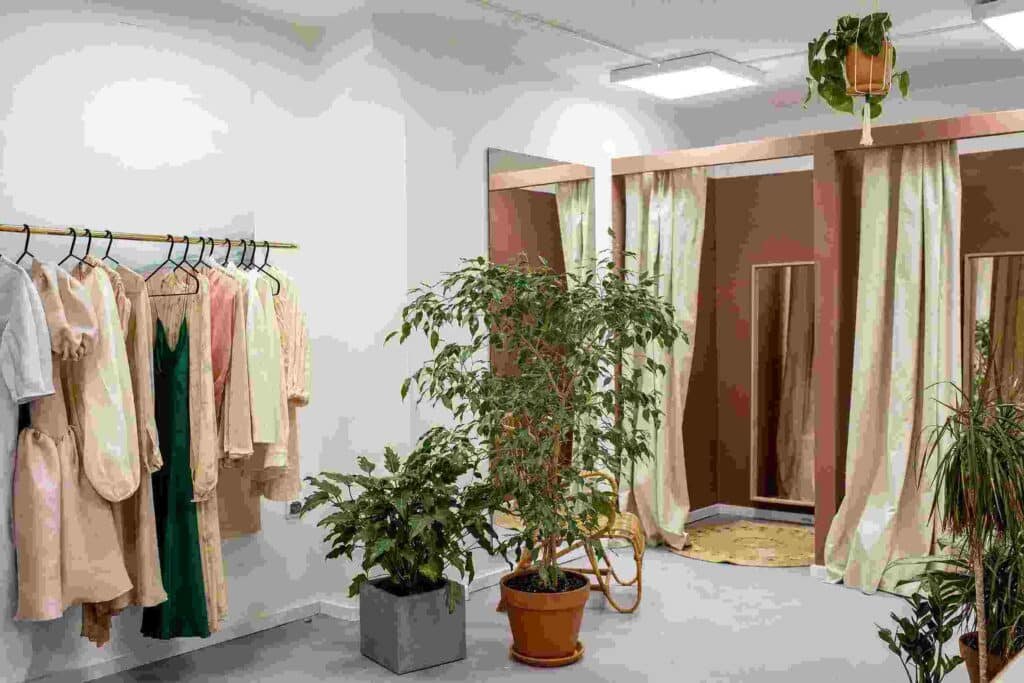
- Modular Green Walls: This is applicable as the background of clothing racks, and the merchandise will stand out on a natural-textured surface.
Source: Pexels
B. Hospitality & Dining
The Instagram world makes the appearance of a restaurant as significant as the food. But restaurants with heavy traffic are hostile to plants.
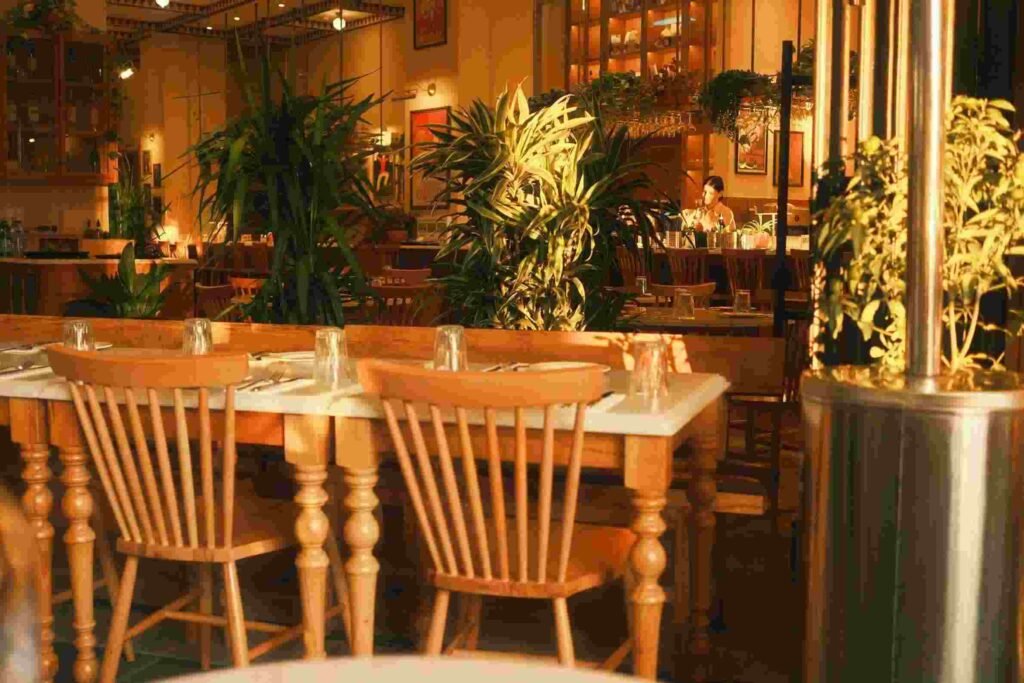
- Statement Trees: Having a huge, custom-made fake tree in the middle of a dining hall will instantly give the impression of closeness and wow factor that will be photographed and shared by the guests.
- Fire Safety First: Candles are used in most restaurants, or the kitchen is close by, so the use of IFR (Inherently Fire Retardant) materials is not a choice, it is a necessity.
- Space Zoning: Use hanging foliage or green clouds on the ceiling to make a homey impression in a large, high ceiling hotel lobby without consuming a lot of floor space.
Source: Pexels
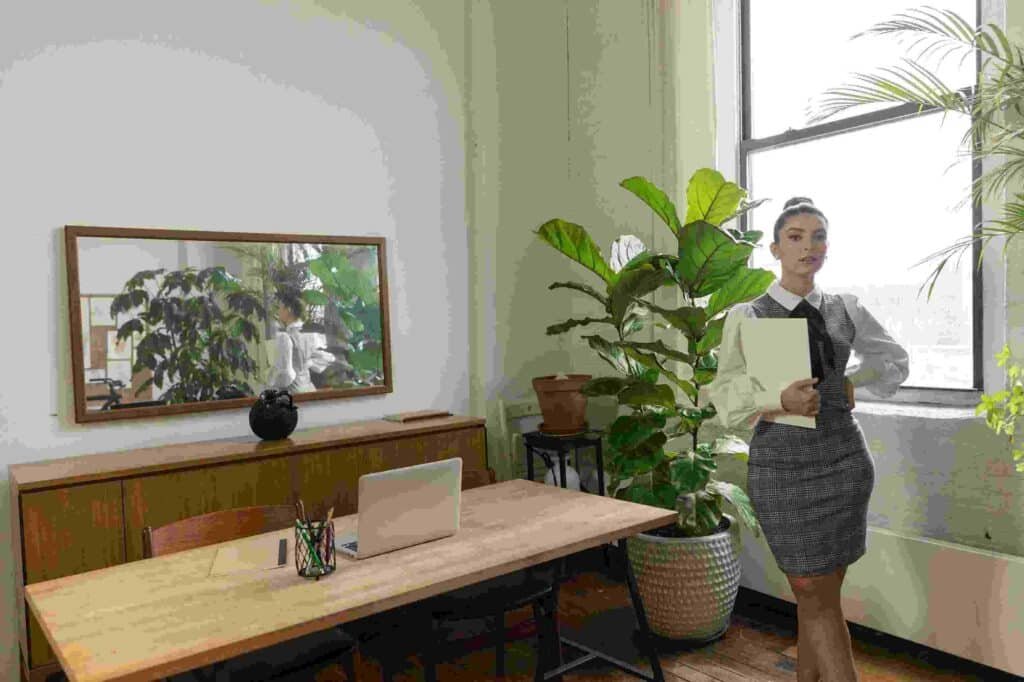
C. Corporate Offices
Modern offices are often too open and too loud. Artificial greenery can solve these architectural issues while making the workspace feel less “sterile.”
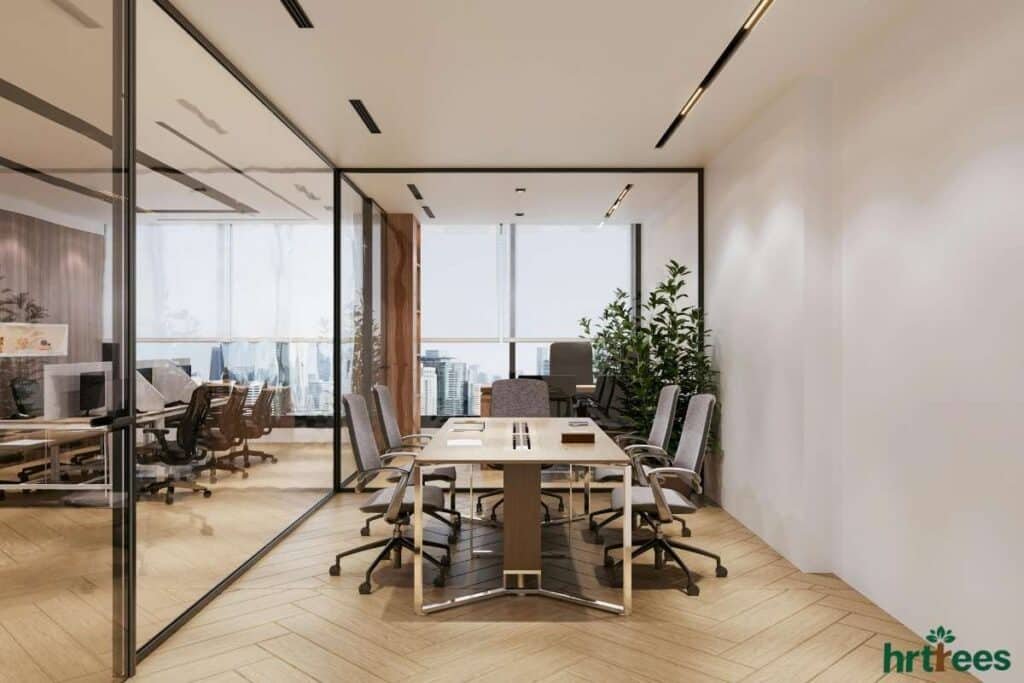
- Soft Partitions: Tall artificial hedges can be used to separate teams instead of boring glass or fabric partitions. This gives visual privacy and maintains the openness.
- Sound Absorption: Moss walls or high density foliage panels are very effective in absorbing the noise of keyboards and telephone conversations.
- Wellness Aesthetics: Greenery will be planted in the breakout areas, enabling employees to turn off their screens, which will reduce eye strain and boost productivity overall.
Source: Pexels
Standardization vs. Customization: Optimizing Your Commercial Project
The trick of staying within the budget and still having a high-end appearance is to find the right balance between off-the-shelf products and a design that is tailor-made. The majority of the successful commercial projects utilize a 70/30 rule – standardized products in bulk spaces and custom products in high-impact spaces.
This will give you the optimal value of your investment without transforming the space into a generic showroom.
- Standardized Modules for Cost and Consistency: Standardized modules are most appropriate in large scale rollouts, such as placing a potted plant next to each desk, or using hedge panels to make a long perimeter fence. They are economical, replaceable in case of damages, and provide a standardized appearance in various floors or branches.
- Custom Elements for Brand Identity: Your main reception or a central courtyard area are the places where your hero should be. Branded moss walls or natural wood trunk trees that are custom-built give that wow factor that makes your brand physically known.
Expert Tips for Long-Lasting, High-Impact Installations
You have to consider the environment even though the plants may not be alive in order to maximize your investment. The professional installers are concerned with the sightlines and the interaction with humans to make the greenery appear as natural as possible.
- Mind the Sightlines: Do not put a poor quality joint or a plastic-appearing base at eye level. Cover the technical bits with use of top-dressing such as real river stones, preserved moss or wood chips in the planters.
- Match Plant to Function: In busy corridors, do not use airy plants with fine thin leaves which people can snag their bags on. Rather, opt to use sturdy and broad-leaf types such as Sansevieria or Ficus Elastica.
- Lighting is Key: Even artificial plants become more attractive with the help of spotlighting. Direct warm LEDs at the leaves to provide a natural shadow effect that gives the greenery a three dimensional appearance to the layman.
Finally, access to plan cleaning on the first day. Easy to access and maintain installations will remain in a fresh appearance far longer and minimize the long-term maintenance problems.
Summary: Scaling Your Greenery Strategy
Commercial artificial greenery is an excellent investment that a business should consider in order to enhance its environment without the hassle of taking care of it. When you view plants as a strategic resource and not a last-minute show, you will have places where people will enjoy spending more time.
When you are about to undertake a commercial project and require a scalable and reliable commercial artificial plants supplier, HRTrees can take you through the whole process, concept to installation.
FAQs
Q: How long do commercial artificial plants last?
High quality commercial plants in an indoor environment normally have a lifespan of between 5-10 years. Their life span is largely determined by the traffic of the region and the accessibility to direct sunlight. In outdoor applications, UV-resistant products tend to remain colorful between 3 and 5 years before the onset of any fading effects. Frequent dusting and avoiding them coming in contact with harsh chemical cleaners will go a long way in prolonging their life.
Q: Do artificial green walls require special installation?
Yes, particularly large-scale living walls. Although small panels may be a DIY project, commercial green walls may need a strong support frame or cleat system to be securely attached to the wall. When you are installing drywall, you should make sure that the wall has the capacity to hold the weight. In places with heavy traffic, we will always suggest that the panels be professionally installed so that they are smooth and firmly fixed.
Q: How do you secure large artificial trees in high-traffic retail areas?
To ensure the safety of the population, big trees should be weighted or bolted. The majority of the commercial trees are sold with a weighted nursery pot that is then placed in a larger ornamental planter. The gap is then filled with heavy materials such as concrete or heavy stones. In extremely busy malls or to use concealed steel plates to ensure the tree does not tip over in case someone leans on it, we can also drill the base of the tree to the floor.
Q: Can artificial plants really help with office acoustics?
Absolutely. Artificial vegetation, particularly moss walls and dense leafy hedges are great sound diffusers. The irregular shapes of the leaves break the sound waves unlike flat glass or concrete walls that reflect sound and cause echoes. This is an acoustic dampening that is highly effective in open-plan offices to dampen the background noise of the conversation and machines.
Q: How do you clean and maintain large-scale artificial green walls?
Maintenance is not zero but very low. In the case of large walls, a specialized tool known as a static duster or a low-pressure air blower is the most appropriate tool to use every few months to remove dust on the surface. A damp cloth with a very mild solution of soap-water is sufficient in the case of spots or spills. It is best not to use heavy oils or leaf shine sprays that are designed to be used on real plants, as they will only attract more dust to the plastic/fabric surfaces.