
Picking fake vs real plants depends on how much time you want to spend holding a watering can. Real plants give you growth and fresh air but they demand your constant attention. Fake plants look great in dark rooms and they stay green even if you forget they exist.
Today, we find out whether fake or real is better for you. Let’s get into it.
Fake vs Real Plants: Picking the Right One for Your Lifestyle
The best choice depends on how much “plant parent” energy you actually have. If you enjoy a weekend routine of watering and pruning, real plants are a living investment. However, if you travel often or simply want a “set it and forget it” decor piece, high-quality artificial greenery is the smarter lifestyle fit.
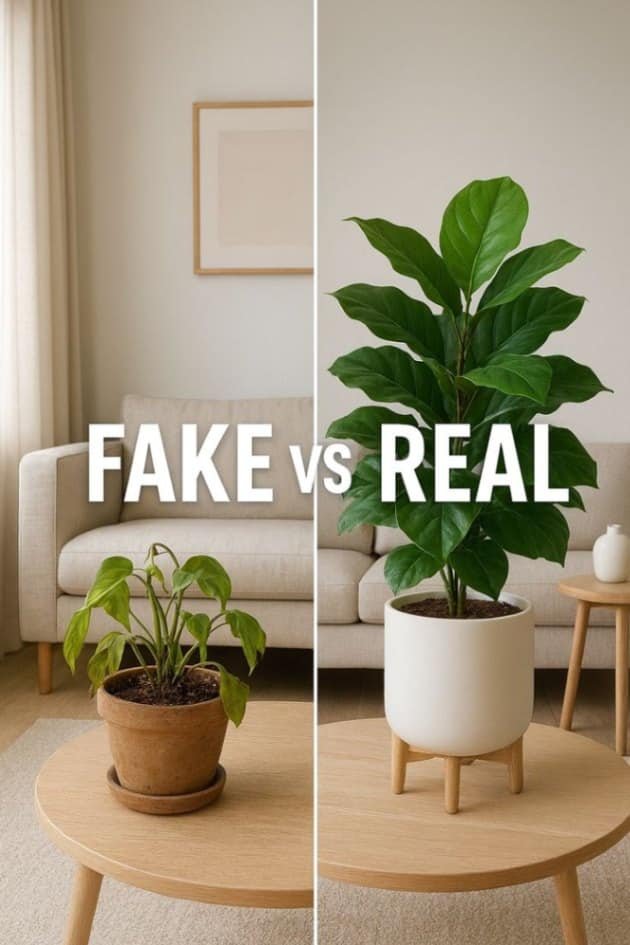
(Image Source: Pinterest)
The Main Trade-offs: What You’re Actually Trading for Greenery
When you choose a plant, you are trading either time or money. Real plants are cheaper upfront but demand your time and attention to stay alive. Fake plants cost more at the store but “give back” time because they require zero daily maintenance.
The Money Talk: Initial Price vs. Long-Term Cost
The financial impact of fake vs real plants is surprising: real plants are a “subscription” to ongoing costs, while fake plants are a one-time “buy-it-for-life” investment.
Buying the Plant: Why Quality Faux is a Bigger Upfront Cost
A high-end silk or poly-molded tree can cost three to five times more than a living one of the same size. This is because you are paying for the artistry, UV-resistant materials, and the fact that it will never die. You can see why our plants are different and how we focus on realism.
Cheap plastic plants are affordable but often look “tacky,” so quality faux usually requires a larger initial budget.
The Monthly Bill: Soil, Food, and “Replacement” Costs for Live Plants
Living plants have hidden “subscription” fees. You need to keep in mind that you are going to need high-quality soil, fertilizers, decorative pots with drainage, and pest control sprays.
When you take in consideration these costs over several years it is much more than one high quality fake plant.
Maintenance Realities: Watering and Pruning vs. Cleaning
Real plants act like pets. Fake plants act like furniture. Let’s have a look at the difference when it comes to maintenance with fake vs real plants.
Living Plants: The Skill and Schedule Needed to Keep Them Green
Keeping real plants alive requires a learning curve. You need to understand:
- Watering cycles: Not too much water, but also not too little. A happy medium.
- Pruning: Removing the dead leaves so you can encourage growth.
- Repotting: Moving the plant to a bigger home every 1–2 years.
Fake Plants: How to Keep Them from Looking Like Dust Magnets
Fake plants are low maintenance, but they aren’t “no” maintenance. Their biggest enemy is dust. To keep them looking realistic, you should do the following:
- Wipe the leaves with a damp microfiber cloth at least once a month.
- You can use a specialized silk plant cleaner spray. This is to maintain the fresh and bright look.
- Occasionally “fluff” or bend the wired stems to keep a natural shape.
Lighting and Climate: Dealing with Your Space’s Limitations
Your home’s architecture often decides the fake vs real plants debate for you. Without the right “food” (sunlight), a real plant is biologically destined to fail.
When Low Light Makes Artificial the Only Choice
If you have a windowless bathroom, a dark hallway, or maybe a basement office, real plants will likely stretch and turn yellow. In these cases artificial plants are your go to if you’re looking to add a pop of color to your space.
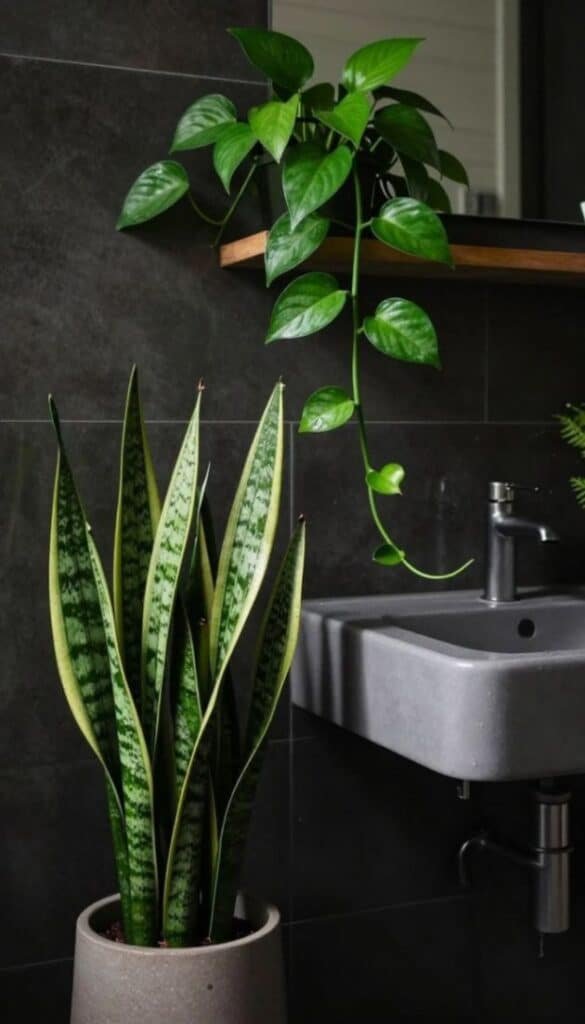
(Image Source: Pinterest)
Using Real Plants to Improve Your Home’s Climate
Real plants act as natural humidifiers. They release moisture into the air. This process is called transpiration. If you feel like your home feels dry during the winter, get a bunch of real plants. It can actually make the air feel more comfortable and “fresh”.
Durability and Lifespan: How Long Will They Actually Last?
Let’s have a look at the comparison of fake plants vs real plants when it comes to how long they will last.
| Feature | Real Plants | Fake Plants |
| Lifespan | Decades (with proper care) | 5–10+ years (until faded) |
| Durability | Fragile; leaves can tear or drop | High; can survive knocks and pets |
| Growth | Increases in size over time | Stays the exact same size |
| Resilience | Can die from one week of neglect | Can be stored in a closet and look perfect later |
Health and Hygiene: Allergies, Pests, and Clean Air
The impact on your health is one of the most debated topics when comparing fake vs real plants. While real plants are often praised, they come with a few “roommates” you might not want.
Do Real Plants Actually Clean Your Air? (The Truth)
While plants do absorb CO2 and release oxygen, you would need literally hundreds of plants. This is to significantly filter the air in your modern living room. They do help slightly, but their biggest health benefit is actually mental. This means reducing stress and boosting your mood.
Dealing with Gnats and Pet Safety
Real plants can bring in “fungus gnats” or mold in the soil if you over water them. More importantly, many popular real plants (like Lilies or Sago Palms) are toxic to cats and dogs. Fake plants eliminate the bug problem and are generally safer for curious pets.
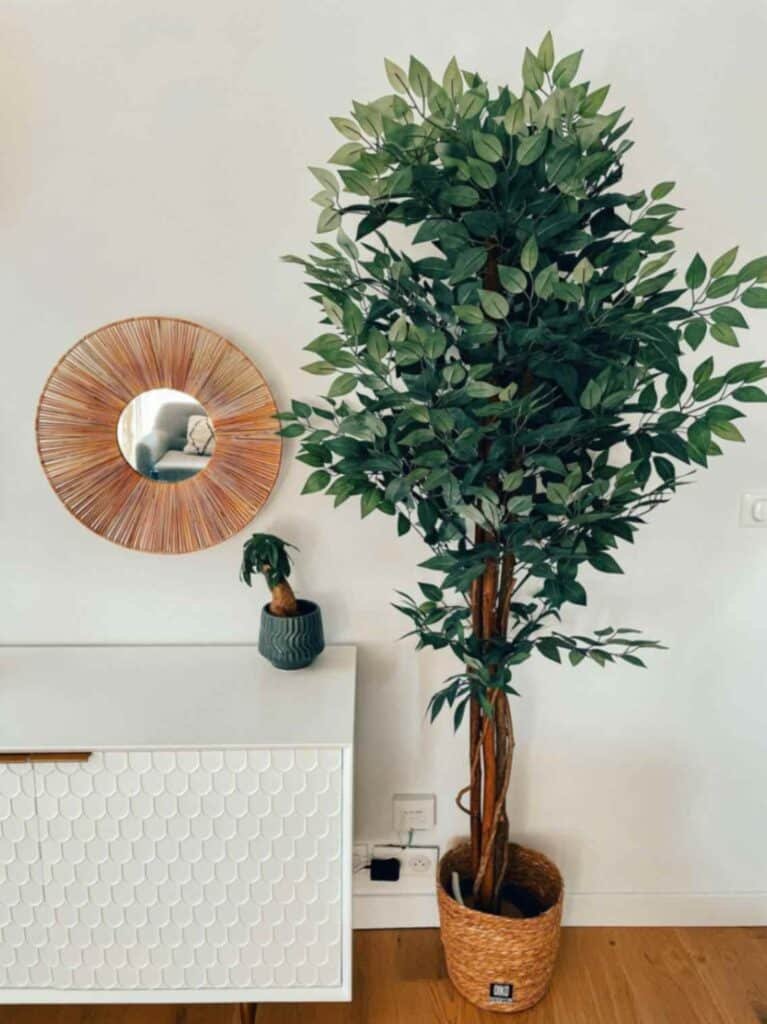
(Image Source: Photo by Yomi Ajilore on Pexels )
Being Eco-Friendly: Water Waste vs. Plastic Materials
There is an environmental trade-off when it comes to both options.
- Real Plants: They are biodegradable and carbon-absorbing. But they require constant water. And unfortunately the plastic “nursery pots” that they are transported in often end up in landfills.
- Fake Plants: These are made of plastics and polyesters. They are petroleum-based. This means they don’t biodegrade. However, because they last for a decade or more, they don’t need the water, pesticides, or constant transportation that a revolving door of dying real plants requires.
Best Use Cases: Which One Should You Buy for Each Room?
Where you decide to put your plants will make all the difference. Some rooms need the real deal, while others are perfect for a high-quality fake.
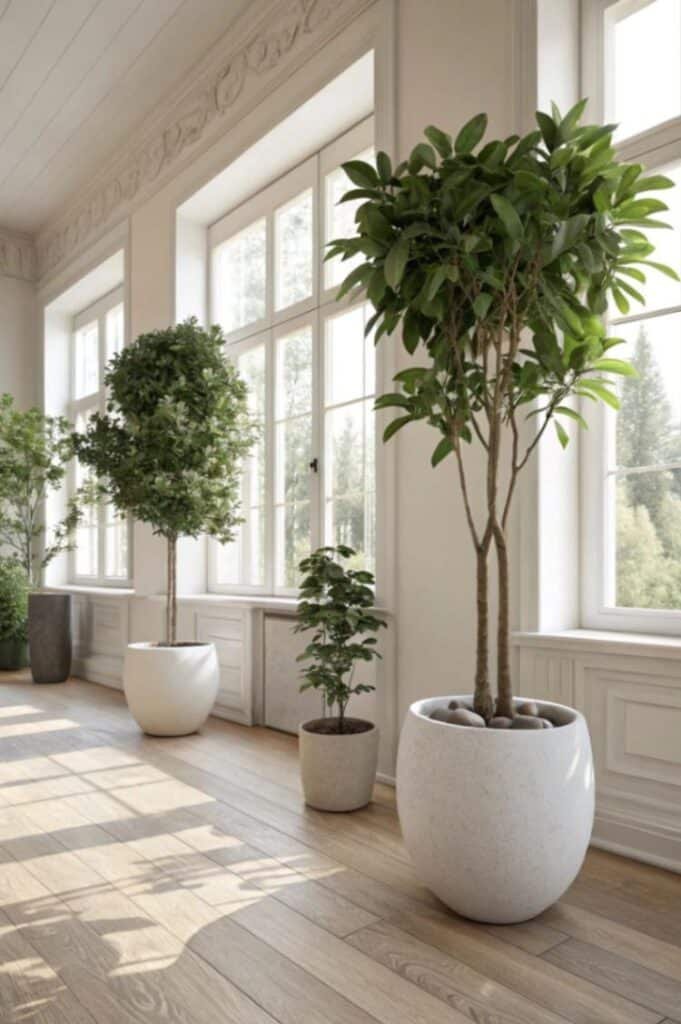
(Image Source: Pinterest)
- Living Room: Try to mix things up. You can put a real floor plant by the window. And then take fake vines and place them on high shelves.
- Bedroom: Go real here. Living plants create a chill, natural vibe that helps you get some shut-eye.
- Bathroom: Use fakes. Real plants often get moldy in the dark, steamy air of a bathroom.
- Office: Stick to faux greenery. These plants won’t die on you when work gets crazy and you forget to water.
5 Tips to Stop Your Fake Plants from Looking Cheap
Stop letting your fake plants look like cheap plastic. You can fool anyone with a few easy tricks. Use these tips to make your faux greenery look expensive.
- Mess Up the Stems: Real plants aren’t perfect. So make sure to bend a few branches. This is so they don’t look like they just came out of a mold.
- Add Real Dirt: Cover the plastic base with some dried moss or a few rocks. Using actual soil hides the fake roots.
- Upgrade the Pot: Toss the thin plastic container. Put your plant in a heavy ceramic or stone planter.
- Find a Window: Put your fake plant like the artificial ficus tree, near a sunny spot. This tricks the brain into thinking the sun keeps it alive.
- Clean the Leaves: Dust your plants often. A layer of grey fuzz is a dead giveaway that the plant is plastic.
Frequently Asked Questions
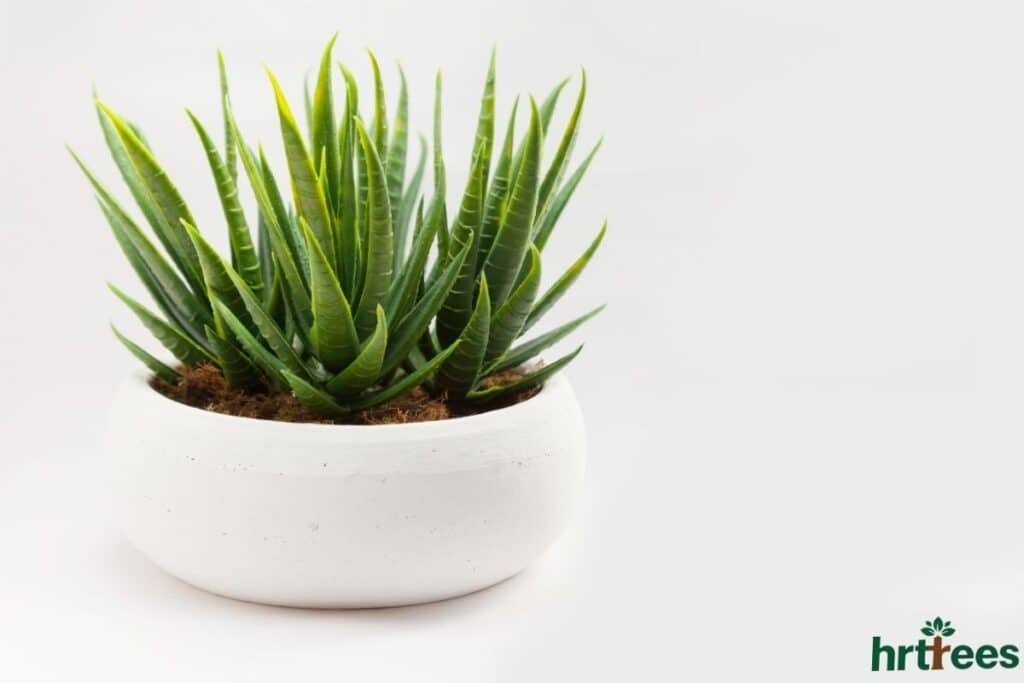
Is it Okay to Have Fake Plants in Your House?
Oh, yes it is a great choice. Professional decorators use fake plants like artificial olive trees, to fill dark corners. They add color to your home without adding any extra work.
Do Fake Plants Collect More Dust Than Real Ones?
They collect about the same amount of dust as anything else. Real plants get a bath when you water them. Give your fake plants a quick wipe once a month.
Why Do My Real Indoor Plants Keep Dying?
Most people’s plants don’t survive because they give them too much water. This causes the roots to rot and turn mushy. Always check if the soil is dry before you add more.
Can You Tell a Fake Plant is Fake From a Distance?
Well, the high quality versions look very real from across the room. Only when you have a close look you will see that they are plastic. If you want the best results, look for real touch materials.
Are Fake Plants Bad for the Environment?
Most faux plants consist of plastic and polyester. Buying one high-quality piece that lasts ten years beats buying a new one every month. Spend a little more now on something that actually stays green.
Do Fake Plants Have a Smell?
Fake plants sometimes smell a bit funky when you first pull them out of the box. That “new plastic” scent usually fades away after a day or two. You won’t get that fresh dirt smell. But you also won’t have to deal with the stinkiness of rotting leaves.
(Image Source: Photo by Liliana Drew on Pexels)
Pick the Best Plants for Your Space
Deciding between fake vs real plants is about making your home a happy place. You should enjoy your greenery instead of worrying about it. If you want a plant that stays perfect forever, check out the collection at HRtrees.
Don’t let your decor wilt. Pick the right plant and you’ll be set for years!


