Large artificial trees for indoor commercial use are high-impact greenery systems that are used to fill large vertical spaces and offer biophilic advantages without maintaining living plants. These large-sized installations act as visual aids in the lobby, atriums, and retail centers, which provide a welcoming ambiance that enhances foot traffic and well-being.
This guide discusses the process of choosing, scaling and locating such grandiose features to transform your professional setting.
Why Choose Large-Scale Artificial Trees for Commercial Interiors?
Commercial interiors are using large-scale artificial trees due to their immediate architectural presence and emotional appeal without the logistical nightmare associated with soil, water or sunlight needs.
A. Visual anchoring in large open interiors
Human-scale furniture can seem lost in large areas as airport terminals or hotel lobbies. A big artificial tree here instead, can act as a visual anchor that attracts the eye and stabilizes the design of the room. It disintegrates large horizontal planes and gives a sense of location, so a cold, echoing hall becomes far more personal and ordered.
B. Low-maintenance greenery for high-traffic environments
Faux trees are set and forget properties compared to real trees which fall off, release water and are infested by pests. The ROI is much greater since you do not have to enter into costly interior landscaping agreements to prune or to control pests. In the case of a business that has a lot of traffic, it translates to no dirty soil on the carpets and no chance of allergies to your visitors.
How Do You Choose the Right Size Artificial Tree for a Commercial Interior?
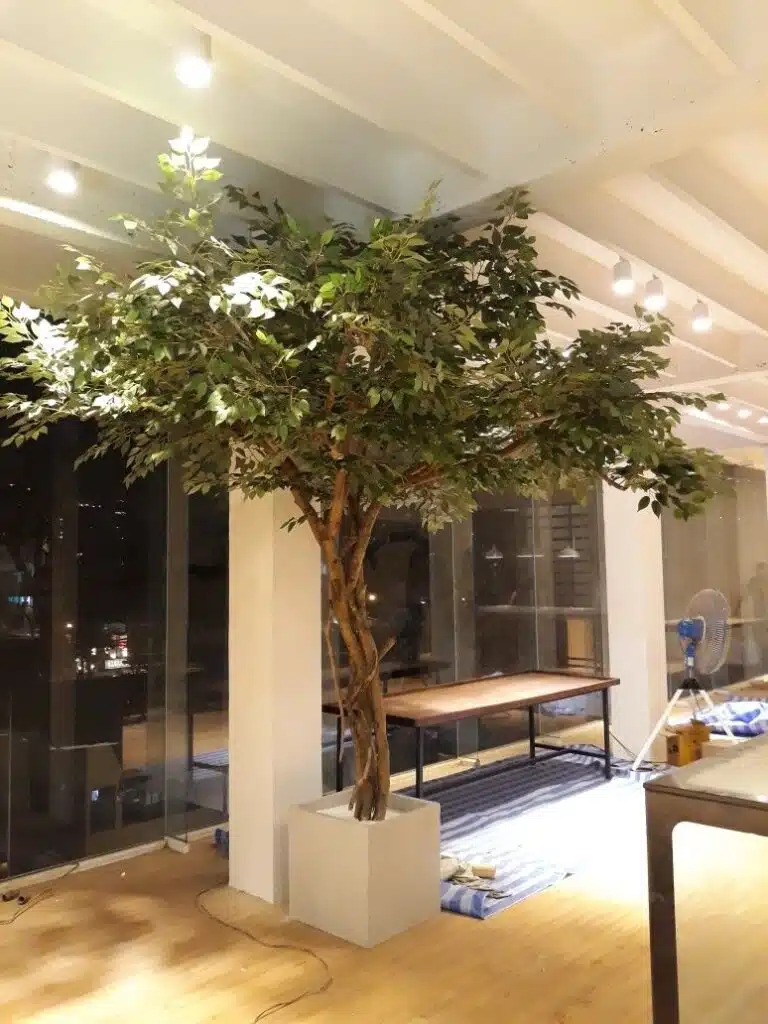
The choice of the correct size is determined by the spatial ratio.
Source: Pinterest
How tall should an artificial tree be for your ceiling height?
The golden rule of designers is the two-thirds height rule. Artificial trees should take about two-thirds of the vertical distance between the floor and the ceiling to make the space look even. As an illustration, with a 15-foot ceiling, a 10-foot tree is typically the sweet spot that occupies the air and does not contact the rafters.
What crown width works best?
The width of the crown or the spread of the branches should be in harmony with the floor space and circulation requirements. You desire a canopy that is green without blocking the views or the light.
- Canopy Balance: The spread should be equal to the thickness of the trunk; a skinny trunk and huge head is unnatural.
- Circulation Clearance: The clearance should always be 36-48 inches around the base and under low-hanging branches.
This makes it ADA compliant in terms of wheelchair access and it also keeps the pedestrian traffic flowing without individuals colliding with plants.
Matching Large Artificial Trees with Different Commercial Space Types
The atmosphere of your plants must be in line with the purpose of your company. Different species of trees evoke different emotions, from the formal structure of a Ficus to the relaxed, tropical feel of a massive Palm.
1- Office lobbies and reception areas
For corporate lobbies, the goal is often prestige and calm. Large Ficus or Olive trees are excellent choices here. They offer a high-end, refined appearance that makes marble and glass soft. A big focal tree close to the reception desk can create a strong initial impression on the clients and new employees.
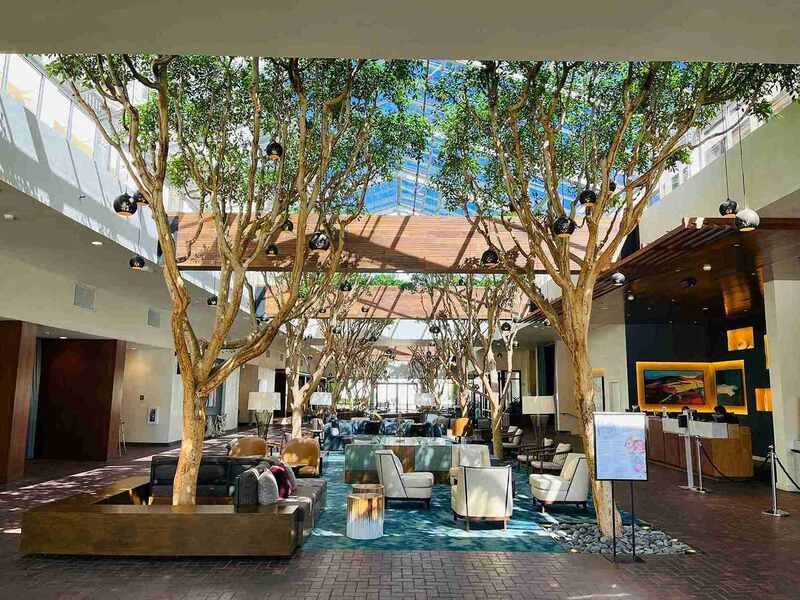
Source: Unsplash
2- Retail stores and shopping centers
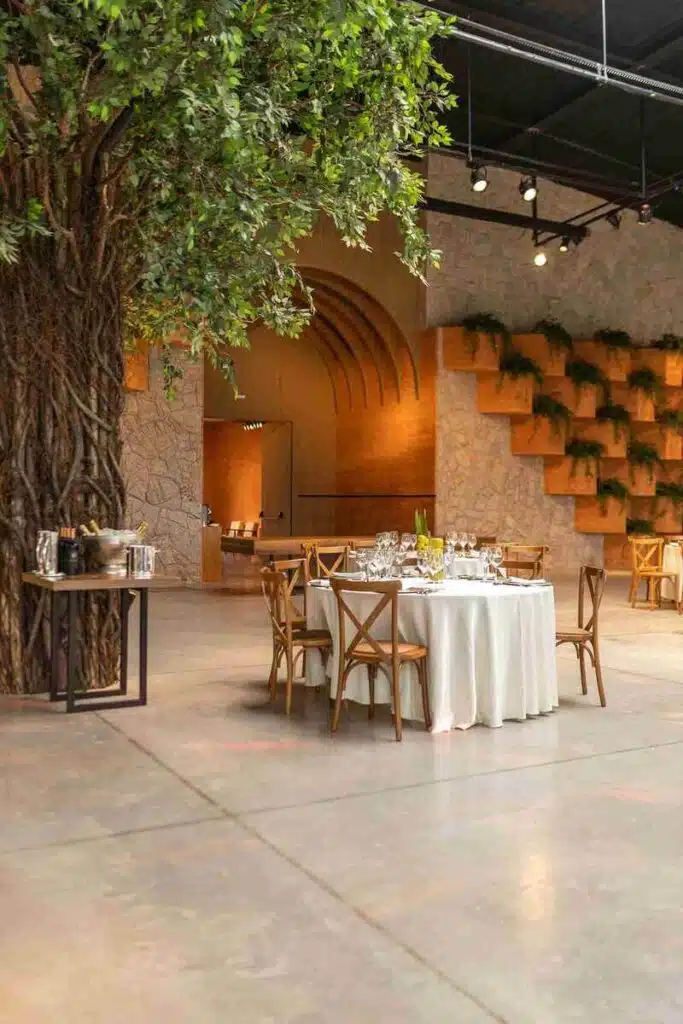
Retailers use trees to decelerate the customer path and promote window shopping. In big malls, they can be grouped into different heights to form an island for seating.
Flowering trees like Cherry Blossoms are popular in fashion retail due to the burst of color and the photo-op experience they can provide to customers to share on social media.
Source: Pexels
3- Hotels, resorts, and hospitality interiors
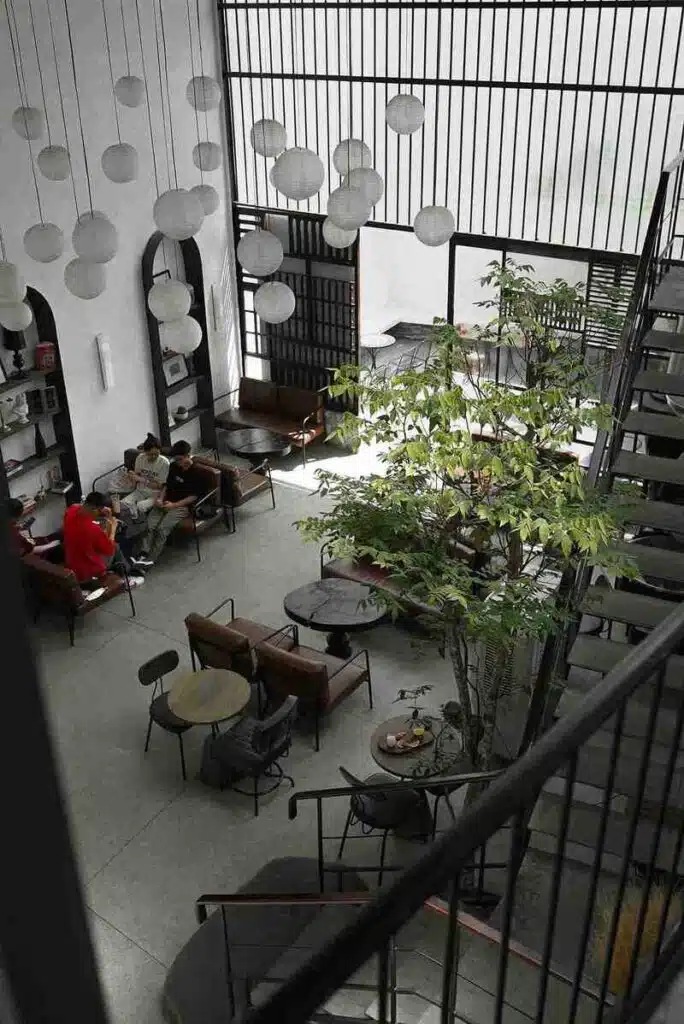
Hospitality thrives on the vacation feel. Large Artificial Palms or lush, leafy Monstera trees contribute to the resort-like ambiance. This can be done in the dining areas of the hotels where you can use trees with high and wide canopy and place your tables under it to give the customers the special experience of alfresco dining whilst being inside the hotels.
Source: Pexels
4- Corporate atriums and public buildings
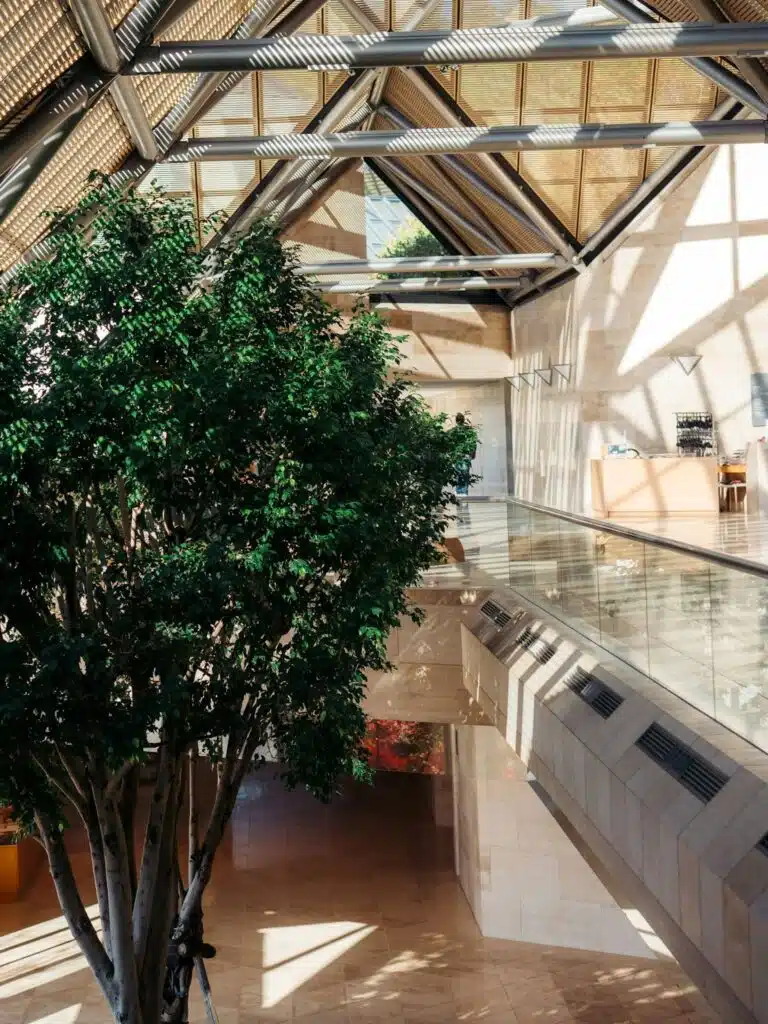
These are the spaces that are likely to have the most dead air. In this case, you require trees that are very high- 15 to 25 feet in height. These are open spaces hence durability is important. The selection of trees with real wood trunks (preserved stems) and high-grade silk leaves will make the installation look real even at a distance.
Source: Unsplash
Artificial Trees in Atriums and Double-Height Spaces
The use of vertical design strategy is necessary in atriums and double-height spaces to connect the ground floor with the upper levels. In the absence of greenery, these volumes may seem sterile and intimidating; a gigantic tree imparts life even to the building.
- Filling Vertical Dead Space: Large trees attract the eye upwards, emphasizing the building height. This helps to avoid the empty box feeling and makes the architecture seem deliberate.
- Creating Wayfinding Landmarks: In large buildings, a giant, one-of-a-kind tree is a natural landmark. Visitors will say, “Meet me at the big Oak tree” so it will be easy to navigate.
- Design Logic for Volume: Narrow and tall species are best in very tall spaces. Plants such as Columnar Ficus or tall Bamboo enable you to go very high without consuming a lot of valuable floor space. This pencil like shape catches the eye directly to the ceiling, highlighting the massive size of the building.
Pro Tip: In designing atriums, you should think about uplighting the tree at the base. This produces dramatic shadows on the ceiling when there is no light and makes the artificial foliage look so real.
Safety and Structural Stability of Large artificial trees for indoor commercial use
The most important consideration during the installation of oversized objects in the open space is safety. The artificial trees in the commercial setting are required to comply with the local building codes and safety standards unlike in the home setting, which is to protect the business and the people visiting the business.
These are some of the key safety checklist that you should go through before finalizing your order:
- Fire Retardant Certification: The foliage of commercial buildings must be of NFPA 701 (US) or BS 5867 (UK) standard. Find leaves with Inherently Fire Retardant (IFR) instead of topical sprays that fade away.
- Base Stability and Bolting: Large trees are top heavy. They need to be fixed on a weighted steel base or nailed directly on the subfloor to avoid falling in the busy areas.
- Clearance and Pathways: This is to ensure that the lowest branches do not block emergency exit signs or sprinkler heads. Keep walkways clear of wheelchairs and strollers.
- Liability Awareness: It is advisable to hire professional installers to guarantee the structural integrity of the trunk and branch attachments to reduce the occurrence of falling parts.
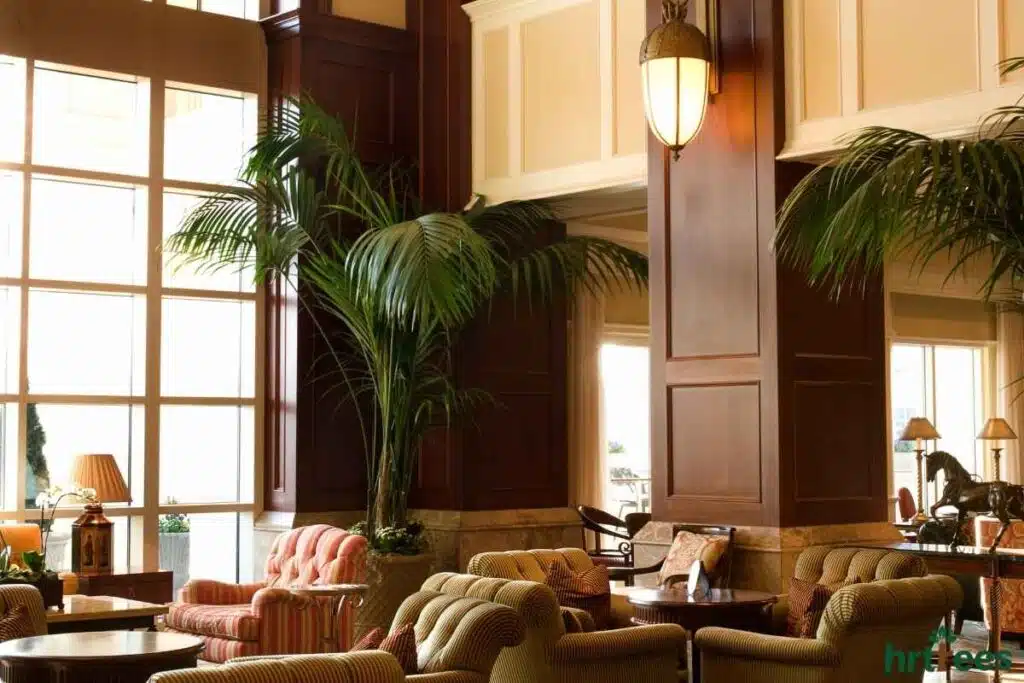
Common Design Errors: Why Do Large Trees Sometimes Look “Off”?
Even costly trees may appear to be clumsy unless the positioning and size are done properly. It does take a certain artistic eye and knowledge of the growth of real trees in the wild to make it look natural.
A- Choosing a tree that’s too small for the space
This is the most common error. A 7-foot tree in a room that has 20-foot ceilings will appear as a toy. It becomes a cliche and it is no longer a wow factor but a piece of clutter. When you have a tight budget, it is better to have one big and good quality tree than three medium sized trees which appear to be too small in the room.
B- Overcrowding or excessive density
Natural trees have holes in between their leaves that allow light to pass through. When an artificial tree is too bushy, or too dense, it becomes unrealistic and appears to be a solid block of green plastic. Some negative space in the canopy actually makes the tree appear more real and high-end.
C- Lack of harmony with interior style and materials
Tropical Palm trees may not fit in a minimalist, industrial office with raw concrete and cold steel. You need to align the personality of the tree to the architecture. An example of this is an Olive tree with its silver-green leaves that is more fitting in a Mediterranean or modern organic style, and Ficus that is more fitting in a traditional corporate environment.
D- Density vs. Harmony: Avoiding the “Plastic Jungle” effect
The Plastic Jungle effect occurs when you stuff too many varieties of faux plants into a single corner. Keep the theme constant to achieve harmony. Take one large statement tree as the hero and in case you need more greenery take smaller plants of the same species or plants that naturally grow in the same climate.
Top 5 Tree Species for Modern Commercial Aesthetics
The selection of species defines the atmosphere of your whole work. The five most popular options of modern commercial interiors today are:
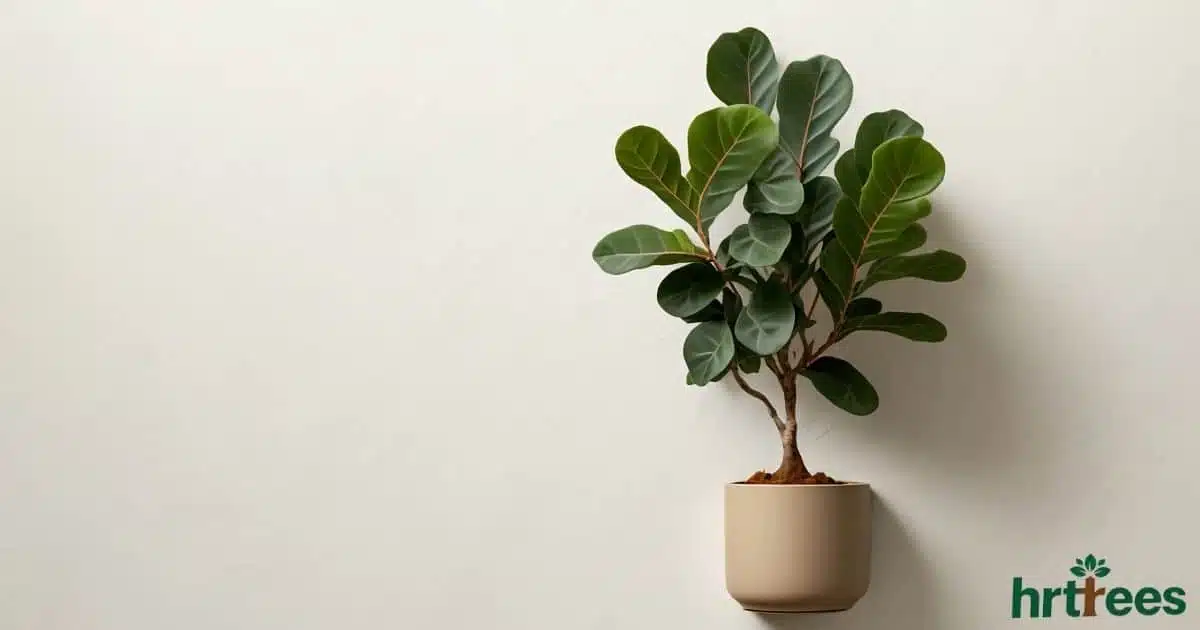
- Ficus Lyrata (Fiddle Leaf Fig): This tree has huge, waxy leaves and is popular in up-scale retail and contemporary offices. It is sculptural in appearance and bold to use at corners or as a free standing item.
- Olive Tree (Olea Europaea): The it tree of designers at the moment. Its light canopy and thin leaves add a feeling of relaxation and rustic elegance to the hotel lobbies and restaurants.
- Black Olive (Shady Lady): That is no olive, as the name would suggest. It has fine, horizontal branching designs that form a beautiful, stratified appearance that is ideal to fill wide atriums.
- Bamboo (Phyllostachys): This is best suited to small areas or as a natural privacy screen. The tall bamboo is a clean and Zen-like design that can be used in the spa rooms or in the modern corporate corridors.
- Preserved Palm Trees: For that tropical, high-end resort feel, there is nothing like a palm. Large-scale hospitality projects offer the most natural appearance with the use of real and preserved trunks with quality faux fronds.
Making a Lasting Impression with Biophilic Design
Integrating large artificial trees for indoor commercial use is not merely a decoration option, but a promise to the well-being of the visitors and architectural quality. You fill the space between nature and the built environment and make spaces that people would love to linger. Are you prepared to remodel your business interior?
Contact HRTrees today to see our past projects and have the expert advice on which oversized greenery to use in your next project.