The majority of artificial plants are not toxic in the conventional sense of the word since they are not filled with organic poisons as many real indoor plants are. The safety however relies heavily on the materials used, such as PVC or lead-based dyes in cheaper versions. Modern, high-quality faux greenery is generally quite safe for homes.
In this guide, we will deconstruct precisely what they are composed of and where actual risks may (or may not) be found.
What Are Artificial Plants Made Of?
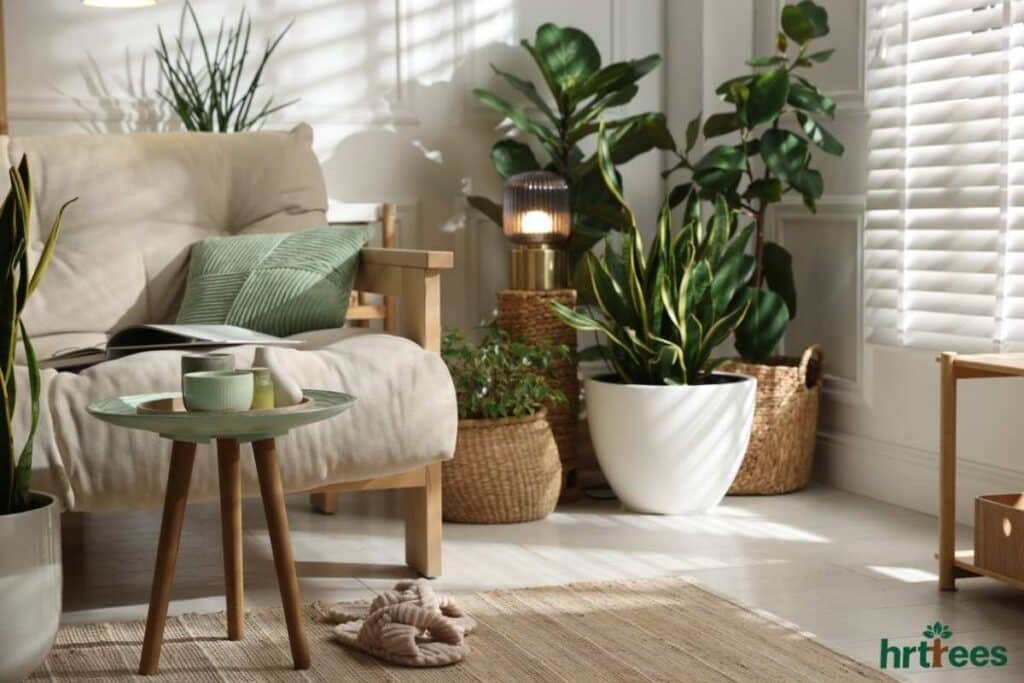
The majority of the artificially created greenery today is produced by using a mixture of plastics, fabrics, and some coatings to make it appear as a real life. Although the high-end models are highly stable, certain cost-efficient models may adopt materials that may need a slight consideration on indoor air quality.
1- Plastic (PVC, PE, Polyethylene)
The most popular material in artificial plants is plastic. The most frequently used ones are:
- PVC (polyvinyl chloride)
- PE (polyethylene)
- General molded plastics
The reason behind the popularity of PVC is that it is flexible and maintains shape. PE is more pliable and more realistic leaves are made with it. Both these plastics are stable in good quality products and do not actively release harmful substances at normal indoor temperatures.
The issue, most of the time, is the plasticizers (such as phthalates) that are occasionally used in old or low-grade PVC. PE is usually viewed as the less harmful, more environmentally friendly option because it is usually BPA-free and does not smell so strong.
2- Polyester & Silk Fabric Plants
If you have a “silk” plant, it is almost certainly made of polyester. Authentic silk is too delicate and costly for mass-produced decor.
Polyester in itself is usually non-reactive, i.e. does not readily react or give off toxic chemicals. Manufacturers are however concerned about:
- Dyes used for coloring
- Flame-retardant treatments in some commercial products
While these are great for preventing fire, sometimes, newly purchased fabric plants may have a mild factory smell due to packaging or finishing treatments. Like plastic plants, simple ventilation usually solves this.
3- Foam, Latex & Adhesives
Succulents have stems and thick leaves that are commonly manufactured with foam or latex. This makes them feel that squishy, realistic. The manufacturers also apply heavy-duty adhesive or glues to affix the leaves on the plastic stems. Typically, after these glues have completely dried (cured) they are completely inert and safe.
However, low-quality adhesives may become soft and emit a slight smell in very hot rooms or in direct sunlight.

Source: Unsplash
4- Decorative Additions (Paints, Coatings, Artificial Moss)
The finishing touches are where you have to be careful. Some factories use lead-based paints to get that perfect shade of forest green like in artificial olive trees, though this is becoming very rare in the US market.
Also, the “dirt” or artificial moss at the base of the pot is often held together by resins. If you see a lot of “dust” coming off the moss, it is better to give it a quick wipe or choose a brand that uses preserved natural moss instead.
| Material | Safety Profile | Common Use |
| PE (Polyethylene) | High / Very Safe | Premium “Real-Touch” leaves |
| PVC | Moderate | Budget stems and garlands |
| Polyester | High | Large “Silk” trees and flowers |
| Latex | Moderate | Succulents and thick-leaf plants |
Are Artificial Plants Toxic to Humans? (Off-Gassing)
Artificial plants are not harmful to humans, but new products can sometimes release Volatile Organic Compounds (VOCs), a phenomenon referred to as off-gassing. This is that new car smell that you get when you open a cheap plastic plant. This is a mere inconvenience to the majority of the population but to the individuals with a sensitive respiratory system, it may cause a day or two of irritation.
It is not so much long-term poisoning but allergies. Unless you clean the leaves, the dust and mold spores may build up and lead to sneezing or asthma attacks.
On the safer side, you need only to wash up your plants and leave new plants to dry in a garage or a balcony and after 24 hours, you can put them inside.
Source: Unsplash
Are Artificial Plants Safe for Children and Pets?
Yes, artificial plants are safer in comparison to many real plants as they do not have any biological toxins, but they do pose a physical choking hazard. If a toddler or a puppy chews off a small plastic berry or a leaf, they won’t get “poisoned,” but they could choke or have an upset stomach.
Interestingly, many real plants are genuinely toxic. For example:
- Lily – highly toxic to cats
- Sago Palm – toxic to dogs
- Dieffenbachia – can irritate mouth and throat
To keep your home 100% safe:
- Check for “bits”: Ensure berries and small leaves are glued on tight.
- Go for “Heavy” bases: Make sure the pot is heavy so a playful dog can’t knock it over.
- Check that decorative gravel is glued securely

Source: Unsplash
Warning Signs: When Should Artificial Plants Cause Concern?
Although the majority of faux greenery is of good quality, you must be aware of some of the red flags that indicate low quality of manufacturing.
- Plants should not be stinking of a chemical factory or sticky to the touch when you rub your fingers on the leaves.
- In case your plant is losing dust or paint flakes, then it may be having low grade heavy dyes, which are not very good in your indoor air.
- Most new plastic smells disappear in 24 hours of airing. When the chemical odor is strong and pungent and lasts longer than a week, it is an indication of high VOC (Volatile Organic Compounds).
- Moreover, in case you observe that your allergies are on the rise, it may not be the plant but the dust that has accumulated on it.
How to Buy Non-Toxic Artificial Plants (Buyer Checklist)
Materials, certifications and practical inspection can be the key when purchasing artificial plants. Here’s a step-by-step guide
1# Look for These Materials
When you are shopping, always prioritize PE (Polyethylene) over PVC. PE is much more stable, usually BPA-free, and doesn’t require those nasty phthalate softeners that PVC often does.
In the case of fabric plants, seek out real-touch polyester as opposed to extremely cheap, thin, plastic-coated fabrics. Quality fabrics also have safer and more stable dyes, which will not bleed or rub off.
2# Certifications to Check (US Market)
In the US, find brands that state SGS certification or meet the requirements of the REACH standards (although that is European, most global brands use it).
Make sure the product is labeled as “Lead-Free” or “Non-Toxic.”
When purchasing to use in a commercial area or in a school, you should get Inherently Fire Retardant (IFR) plants which utilize safer chemicals embedded in the fabric, not a cheap spray-on coating. Check our guide on where to buy artificial plants, for more info.
3# Avoid These Red Flags
- Persistent “Plastic” Smell: If it smells like a pool floaty after three days, return it.
- Sticky or Oily Leaves: This often means the plasticizers are leaching out of the material.
- Flaking Paint: Small green flakes are a major choking hazard and could contain low-grade pigments.
- No Brand Information: Do not buy no-name ultra-cheap imports, which do not specify what they are made of.
4# Best Choices for Nurseries, Schools, and Pet Homes
In the nursery of a baby or a classroom, use unscented PE-based succulents or high-grade silk trees. It is best not to have flocked plants (the ones with fake snow or fuzzy feels) in these rooms because the minuscule fibers can be easily inhaled or rubbed into the eyes by the inquisitive little hands.
Summary: Enjoying a Green Home Without the Risk
So are artificial plants toxic? Nay, they are a wonderful, low-stress method of making your space pretty, without having to worry about pet-toxic pollen or messy soil. Just choose high-quality PE materials and keeping them dust-free, for a safe, beautiful environment for everyone.
Ready to upgrade your home decor with premium, safe greenery? Check out our latest Projects at HRTrees for inspiration of beautiful, family-friendly artificial plants that last a lifetime!