When it comes to Artificial Plants for Home vs Commercial Use, the distinction is in the safety certifications and durability. Home plants are more concerned with personal style and real-touch textures, whereas commercial versions will have to comply with rigorous fire-safety standards (such as NFPA 701), and be able to withstand heavy foot traffic.
Making the wrong selection may cause legal problems to the business or decor that does not look good and last. In this article, we’ll look at why these specs matter so much.
What are the Main Differences Between Home and Commercial Artificial Plants?
To put it simply, home artificial plants are concerned with individual preferences and home comfort, whereas commercial artificial plants are concerned with safety, size, and sustainability. Companies cannot afford to think only about decoration, they have legal and practical obligations.
You may select a statement tree of 4 feet artificial olive tree for home decor for the corner of your living room at home. It just has to be attractive and fit in with your sofa or curtains.
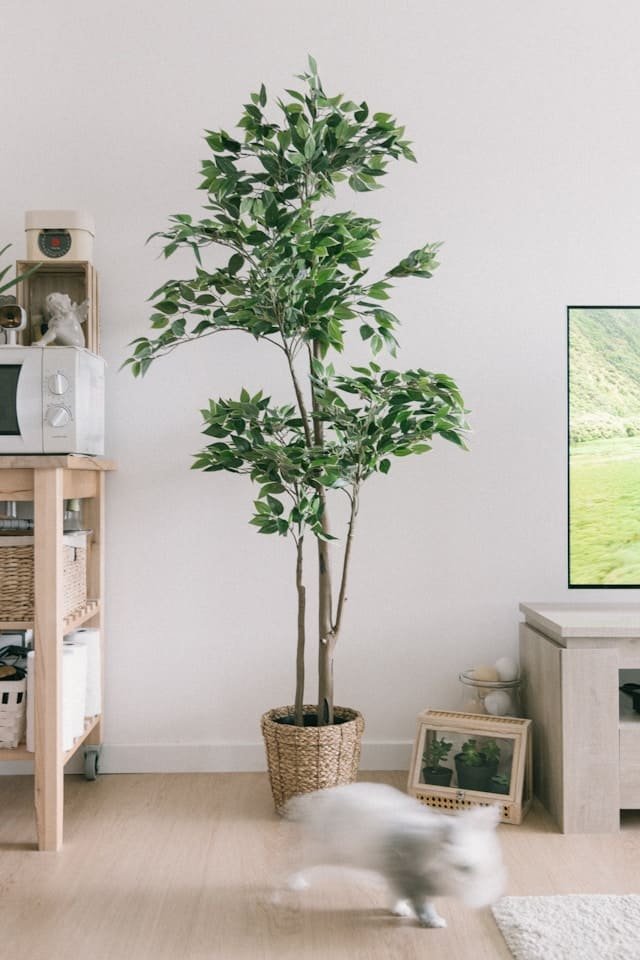
Source: Unsplash
However in a hotel atrium or shopping mall the need may extend to 15 feet or more. The scale must be in line with the architecture, otherwise it will appear clumsy and petite. Besides, you require something that will not be caught by fire and can be viewed at the other end of the room.
Here’s a detailed side-by-side comparison:
| Feature | Home Artificial Plants | Commercial Artificial Plants |
| Primary Goal | Enhance personal décor and comfort | Support brand image, safety, and long-term performance |
| Fire Certification | Usually none; standard “silk” or plastic is highly flammable. | IFR (Inherent Flame Retardant); meets NFPA 701 or local fire codes. |
| UV Resistance | Rare; mostly for indoor use. Will fade or turn blue/yellow in sun. | High UV-Rating; formulated to resist fading and cracking in direct sun. |
| Typical Height | 2–6 ft common | 8–20 ft+ for atriums, malls, hotels |
| Trunk/Stem Build | Thin plastic or natural wood (often untreated). | Steel-reinforced or heavy-duty resin for high-traffic durability. |
| Potting/Base | Decorative lightweight pots | Weighted/Steel Bases; often bolted or cemented for public stability. |
| Customization | Flexible mix-and-match styling | Standardized selections for brand consistency |
| Tactile Feel | “Real-Touch” focus; designed to look good from 1–2 feet away. | Visual Impact focus; designed for long-range “wow” factor and durability. |
| Longevity | 2–5 years (depending on light and dust). | 10+ years; engineered for heavy industrial cleaning and wear. |
Choosing the Right Artificial Plants: Personal Expression vs. Brand Consistency
The greatest distinction here is freedom. You design for yourself at home. You plan to look good and have a brand image in business.
1# Designing for the Home: Matching Personal Decor and Comfort
For your home, you want the “imperfect” realism. Real plants have brown tips or slightly wonky leaves sometimes, and high-end home artificials mimic this to look more authentic.
You can completely combine a boho-style hanging plant and a modern minimalist pine tree. You can always transfer it to the bedroom in case you are bored next year. It is all about where you feel good when you are drinking your morning coffee.
2# Designing for Business: Enhancing Brand Identity and UX
In a business setting, you can’t have “wonky” plants. If you have ten branches, you may want to integrate the same kind of artificial pine tree for restaurant decor everywhere to keep the brand identity consistent.
Many offices now use biophilic design—which is just a fancy way of saying “putting plants everywhere to make workers less stressed”—but they use standardized layouts. You’re also looking for “Instagrammable” moments; a big green wall with a neon sign is a classic retail trick to get customers to take photos and tag the business.
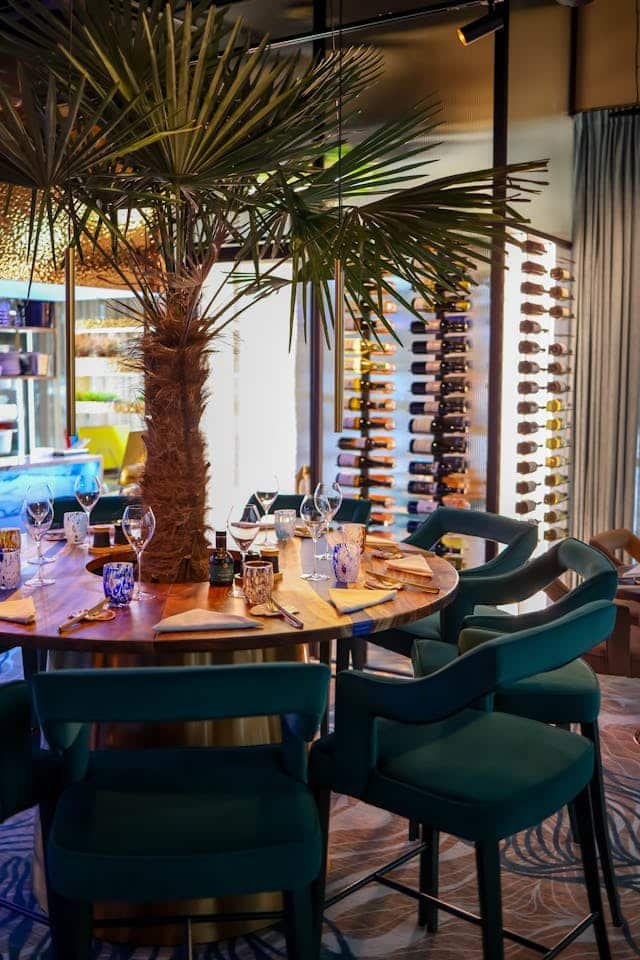
Source: Pexels
How Does Maintenance Differ for Home and Commercial Artificial Plants?
While both are low-maintenance compared to real ones, the standard of cleanliness at home is casual. In commercial spaces, it becomes a routine responsibility.
At home, cleaning might mean wiping dust once every few weeks. That’s it. If a leaf bends slightly, no one complains.
But in commercial environments:
- Regular dusting schedules are often fixed.
- Visual inspections are done to maintain professional appearance.
- Damaged stems are replaced quickly.
Businesses also think about image cycles. A house owner can store the same artificial plant over a long period. A retail store may have to change the plants earlier due to the change in design or branding.
Home vs. Commercial Artificial Plants: Cost Comparison
Plants of commercial quality tend to be 2x to 5x more expensive than home models. This isn’t just a “brand tax”—you are actually paying for legal compliance, heavy-duty engineering, and specialized materials that simply don’t exist in standard home decor shops.
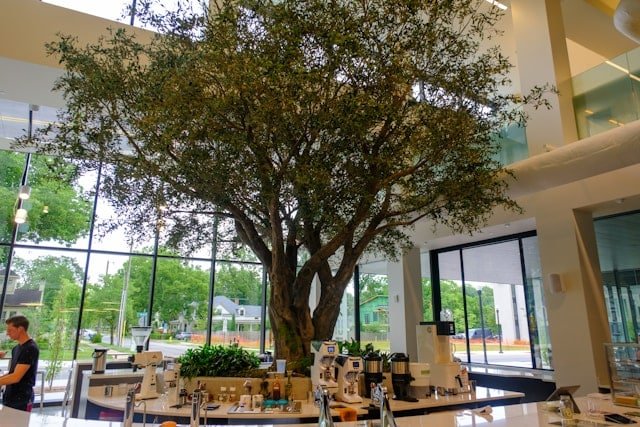
Source: Unsplash
Which means, if you try to save money by putting a cheap home plant in a high-traffic mall, it will break or fade so fast that you’ll end up spending double to replace it anyway. It is always better to invest once in proper quality.
| Investment Factor | Buying for the Home | Buying for Business/Commercial |
| Initial Purchase | Budget-friendly ($20 – $150 retail) | Capital Expenditure ($200 – $1000+ B2B/Wholesale rates) |
| Compliance Fees | 0 (No legal requirements) | Fire Safety Certification (B1/NFPA 701) |
| Installation | DIY (Just unbox and fluff) | Professional Labor (Securing & Staging) |
| Maintenance Cost | DIY (0 – just occasional dusting) | Service Contracts (Scheduled deep cleans) |
| Replacement ROI | Long-term (Keep until you’re bored) | Mid-term (Refresh every 3–5 years for brand) |
| Shipping & Handling | Standard courier | Freight/Pallet (due to weight and scale) |
Final Takeaway: Why One Solution Rarely Fits Both Home and Commercial Use
Home plants are very good in the cozy corners, but commercial grade is a necessity in businesses to prevent legal fines. In fact, for a very sunny patio or a high-end rental house, it is a good idea to purchase commercial UV-rated plants, as they do not fade or break so easily.Ready to upgrade your space with the best quality? Check out the latest projects by HRTrees for all types of domestic and commercial spaces!