Large artificial plants for commercial projects offer a long lasting and maintenance free system of adding greenery to high traffic areas such as hotels, offices and shopping centers. They address the issue of poor lighting and high maintenance expenses and increase brand recognition by using biophilic design.
In this guide, we will look at how to select the right plants, the technical steps for a safe installation,and the styles that are most appropriate in various business spaces.
Why Are Large Artificial Plants Your Commercial Asset?
Big artificial plants are not merely decorations; they are design tools that help to create customer perception and efficiency in operations simultaneously. When selected well, they enhance brand identity, better space planning, and minimizing the risk of maintenance.
In commercial settings, live plants often create issues; logistics of watering, pest control, unequal growth, and replacement. Artificial substitutes eliminate these uncertainties and still have a lush and high-end appearance throughout the year.
They also address several practical challenges:
- Retail stores: Create areas of focus and photo spots without obstructing merchandise.
- Hospitality spaces: Introduce drama to lobbies without any concern about the presence of natural light.
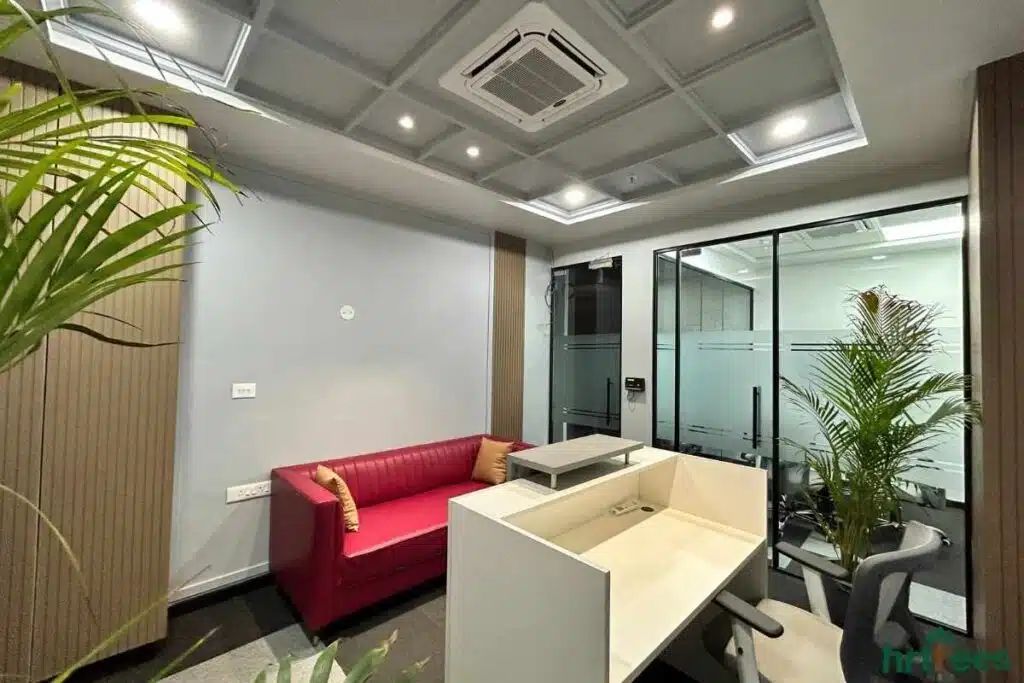
- Corporate offices: Plant greenery in windowless places and high ceilings.
- Healthcare facilities: Provide non-soil, non-allergenic, and non-moist environments.
- Public spaces: Maintain a consistent look regardless of the high traffic.
How to Implement Artificial Plants in Your Business? Step by Step Guide
The use of large-scale artificial greenery must be done in a systematic manner to achieve the desired final appearance which is realistic and safe to the people. The following is a realistic roadmap that you can use.
Step 1 – Define Project Objectives
Before selecting any plant, first be clear: what is the role of greenery in your space?
Start by asking:
- Is it meant to attract attention?
- Is it for zoning or space division?
- Is it to soften a hard architectural environment?
- Is it for branding or Instagram appeal?
You must think about the atmosphere of your brand and the plants will not be placed in the way of the crowd flow or vital signs.
Step 2 – Site Assessment
This is one of the reasons that many projects fail, they do not study the site properly. Look at:
- Ceiling height: Trees of 18 ft can be supported by a double height lobby, whereas 9 ft ceiling cannot.
- Lighting: Although artificial plants do not require sunlight, lighting influences realism.
- HVAC airflow: Powerful vents have the ability to transport light foliage.
- Fire regulations: Some commercial codes require fire-retardant materials.
- Structural anchor points: Especially for extra-tall trees.
- Foot traffic mapping: Avoid blocking exits or emergency pathways.
For malls or airports, also check loading dock access and elevator size. Sometimes the tree fits the lobby but not the lift.
Step 3 – Concept Design and Layout
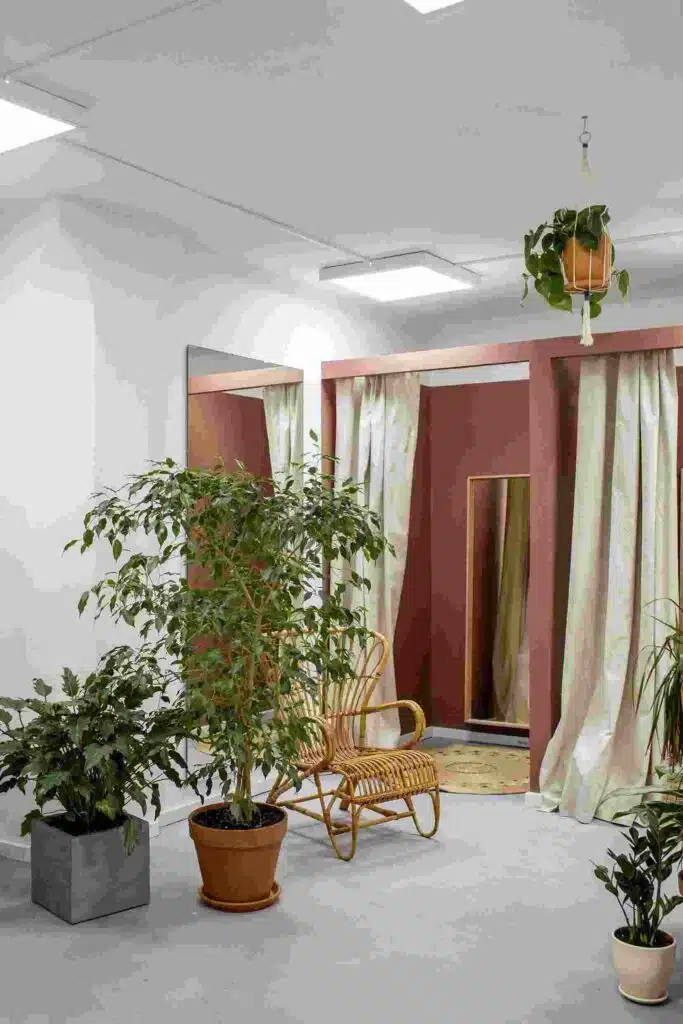
A good layout uses visual balance to create focal points without cluttering the room. Think in terms of:
- Focal points: One hero piece.
- Clustering logic: Grouping 3–5 plants of varied heights.
- Symmetry vs asymmetry: Depends on architecture style.
Source: Pexels
Step 4 – Budget Planning
Your budget should cover more than just the plants; you need to account for:
- Base plant cost
- Custom fabrication (if required)
- Freight and logistics
- Installation labor
- Compliance adjustments (fire treatment, anchoring)
- Decorative top dressing (pebbles, bark, moss)
The division of costs per area (e.g., Lobby vs. Breakout Area) is useful in controlling the overall expenditure.
Step 5 – Production, Logistics, and Delivery Planning
Large trees often have a lead time of 4-8 weeks, particularly when they are being made to order with fire-resistant foliage. Schedule the delivery so that the site is accessible but not operational, usually after-hours or during a soft opening period.
Step 6 – Installation and Final Styling
Professional installation entails the use of weighted bases or bolting the plants to the floor to make them stable in high traffic areas. After fixing, apply decorative top-dressings such as polished stones, preserved moss or wood bark to conceal the internal structure and authentic appearance.
Which Styles and Plant Types Work Best for Different Commercial Spaces?
The needs of different industries are different, and the selection of the plant must reflect the atmosphere of the space.
A- Best Artificial Plants for Retail Stores
Retail spaces enjoy the advantage of Instagrammable moments and points of focus that attract shoppers to explore the store further.
Popular options:
- Large Olive trees
- Sculpted Cherry Blossom
B- Best Artificial Plants for Hotels and Hospitality
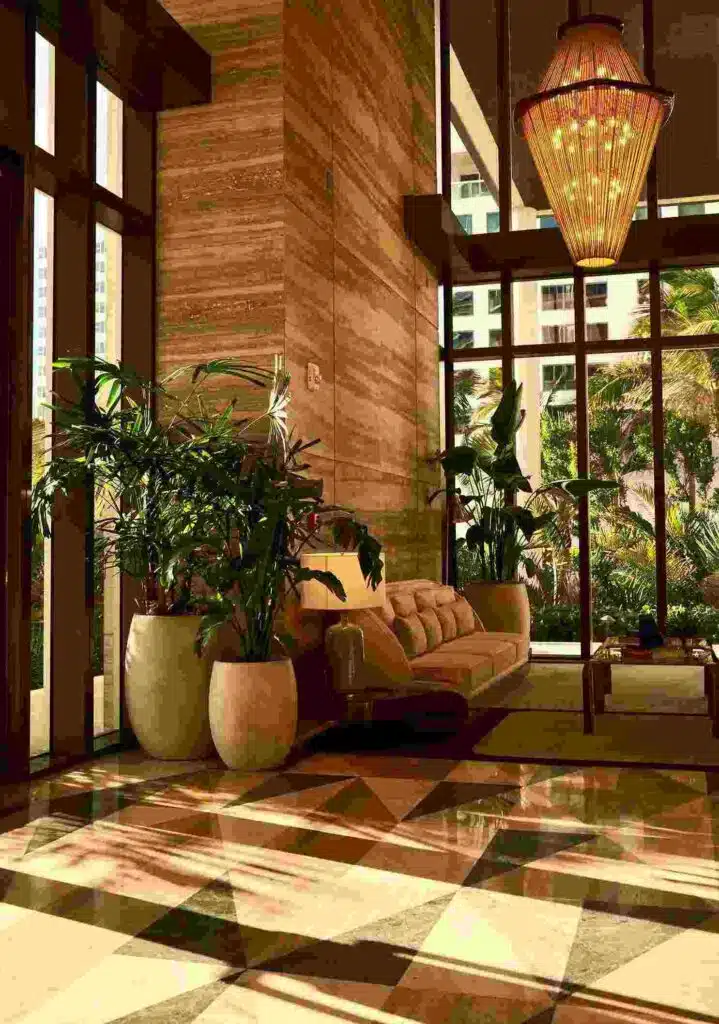
In hotels, the goal is usually a grand, welcoming entrance often used as architectural statements.
Popular options:
- Massive Areca Palms
- Travellers Palms
Large 15 ft or double-height trees create a tropical, resort-like feel in lobbies.
Source: Unsplash
C- Best Artificial Plants for Offices and Corporate Buildings
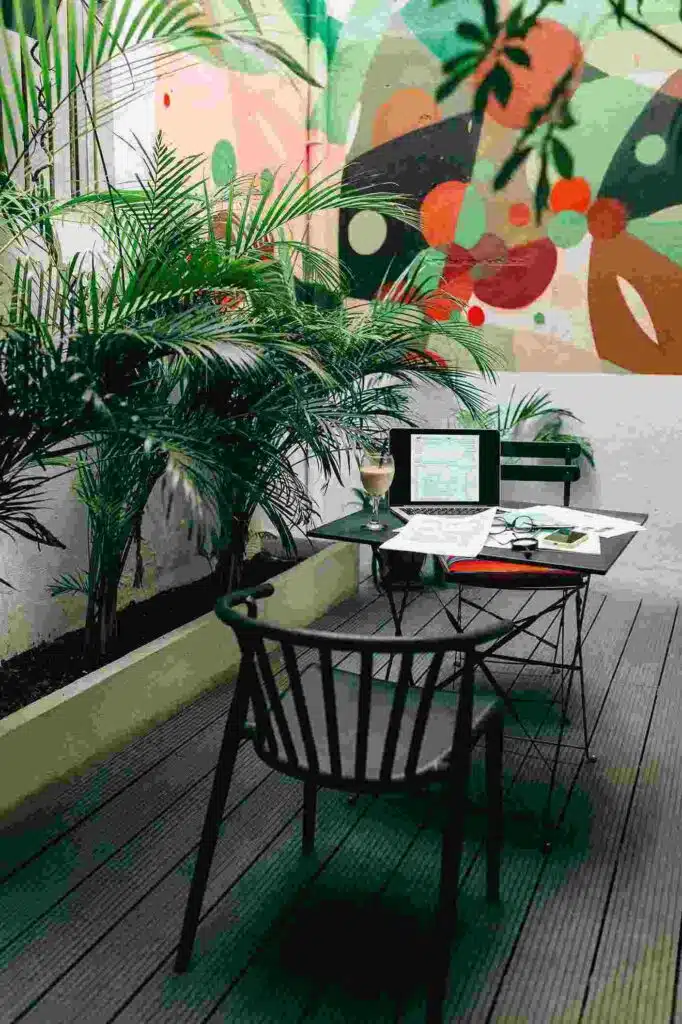
In the case of offices, it is about productivity and zoning to achieve privacy without the heavy walls.
Popular options:
- Ficus Trees
- Sansevieria (Snake Plant)
- Bamboo
These options can also provide slight acoustic benefits by breaking up sound waves.
Source: Pexels
D- Best Artificial Plants for Healthcare and Public Institutions
In hospitals and clinics, the priority is a calming, hypoallergenic environment to decrease stress in patients, and have no chance of mold or pollen allergy.
Popular options:
- Ferns (Philodendron)
- Areca palm
- Bamboo tree
Standardized vs. Custom Artificial Plants for Large Projects?
Deciding between off-the-shelf or custom-built plants depends on your project’s timeline, budget, and the architectural limitations of your space.
| Criteria | Standardized (Warehouse Stock) | Custom-Built (Bespoke) | Modular / Hybrid Approach |
| Definition | Ready-made artificial plants in pre-designed, ready-made sizes and styles. | Made-to-order trees and greenery tailored to exact project requirements | Combination of standard base units with selected custom focal pieces |
| Design Flexibility | Limited to available catalog options | Height is fully adjustable, canopy width, thickness of the trunk, density of the leaves, color shade. | Medium flexibility; base is normal but focal pieces are tailored. |
| Height & Scale Options | Pre-set height ranges | Can be built to exact ceiling height or architectural proportion | Standard heights with selective custom adjustments |
| On-Site Assembly Requirement | Minimal; mostly ready to place | Often required for large trees; built and shaped on site | Required only for focal installations |
| Lead Time | Shorter, depending on stock availability | Longer due to fabrication and fire-rating processes | Medium; standard items fast, custom pieces longer |
| Cost Structure | Predictable and generally lower per unit | Higher due to design, fabrication, engineering, and logistics | Balanced investment strategy |
| Multi-Site Rollout Suitability | Excellent for consistent brand rollout across branches | Difficult to replicate exactly across multiple sites | Good balance between consistency and uniqueness |
| Installation Complexity | Low to moderate | Moderate to high; may need professional installation crew | Mixed complexity |
| Best Use Case | Chain stores, corporate rollouts, budget-controlled projects | Luxury hospitality, flagship stores, atriums, iconic installations | Large commercial sites with tiered importance zones |
| Risk Level | Lower design risk, but limited wow-factor | Higher planning complexity, but high visual payoff | Managed risk with controlled standout features |
Common Risks in Commercial Greenery Projects (and Their Solutions)
Large-scale artificial greenery projects look simple on surface, but there are technical and compliance challenges behind the scenes. Knowing these risks early helps avoid expensive rework.
In public spaces, most building inspectors require IFR (Inherently Fire Retardant) materials. Unlike “spray-on” fire retardants that wear off or leave a sticky residue, IFR foliage has fire-stopping chemicals built into the fabric during manufacturing.
Solution:
Always ask your supplier to: :
- Confirm local fire regulations
- Request compliance documentation
- Ensure fire ratings are valid for public interiors
2- Structural Weight and Anchoring Challenges
An artificial tree 4 meters in height has much leverage. When a child sits on it or a suitcase hits it in a hotel lobby, it may tip.
Solution:
- Install extra-weighted steel bases or attach the tree directly to the sub-floor prior to the laying of the final flooring.
- With tall and heavy plants, insert expanding foam in the planter to hold the stem in position.
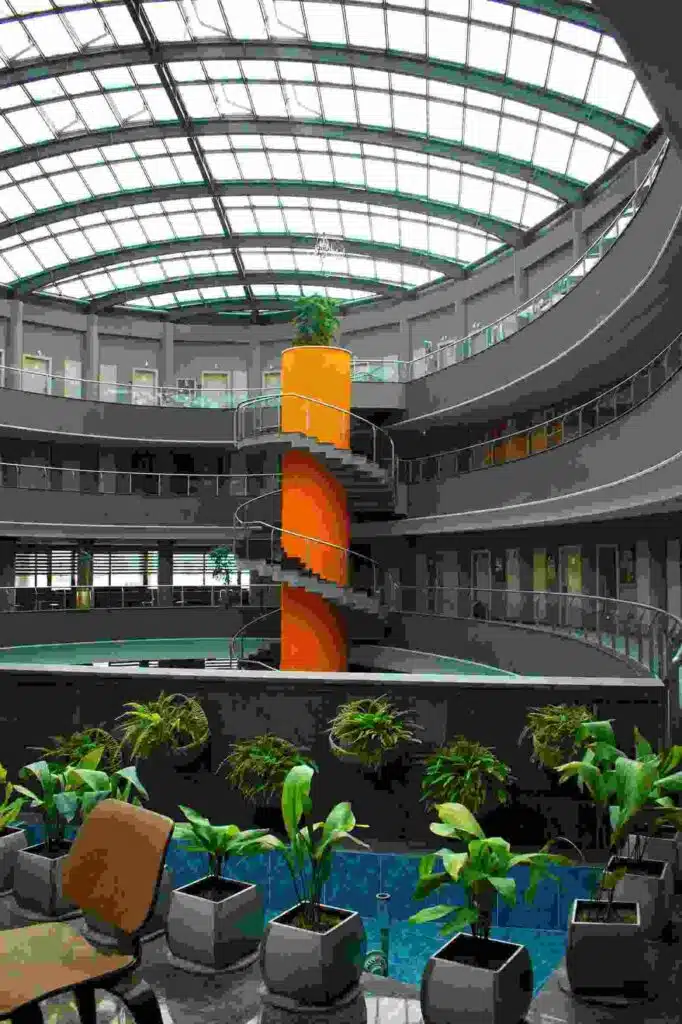
3- Poor Scale Planning and Visual Imbalance
A tree that is too small in a double-height lobby looks lost. One that is too large in a compact retail store feels overwhelming.
Solution:
- Always check ceiling height ratios, viewing distance and furniture scale around. Visual imbalance can be avoided with the help of mock-ups or 3D visualization.
- Apply grouping (3 plants of varying heights) to make it look more natural and more compact instead of having individual and isolated pots spaced far apart.
Source: Unsplash
4- Color Fading and Environmental Stress
If your plants are near large glass windows or in an outdoor courtyard, they must be UV-rated. Standard indoor silk plants will turn a strange blue or “dusty” grey within months if exposed to direct sunlight. “Outdoor-rated” foliage uses specialized poly-resins that resist UV breakdown and keep their deep green color for years.
Summary: How to Successfully Plan and Execute a Large Artificial Plant Project
Success in commercial greenery requires balancing “focal point” aesthetics with strict safety compliance and smart budget allocation. You can build a low-maintenance landscape that will last ten years by beginning with a thorough site analysis, selecting fire-resistant materials, and combining custom-made hero trees with standardized fillers.
Ready to green your space? Explore HRTrees projects now, or reach out directly for a professional consultation on your next commercial project.
FAQs
Q: How Do You Evaluate and Select a Commercial Artificial Plant Supplier?
Find a supplier that is able to supply “spec sheets” and fire-rating certifications. A good supplier must not only sell you a product, but he must give you advice on scale and anchoring. Request pictures of their past large-scale installations to verify the authenticity of their branch-to-trunk connections, where the inexpensive plants tend to fail.
Q: What is the typical lead time for a commercial-scale Artificial Plants order?
With normal warehouse inventory, it is 1 to 2 weeks. But in case of custom-made trees or big orders of a few hundred products, the lead times typically range between 6 and 10 weeks. This will enable sourcing of fire-rated material, custom production, and special freight delivery.
Q: How do you clean large-scale artificial greenery in high-ceiling spaces?
In extremely tall trees, a telescopic duster or a low-speed air-compressor (on a low setting) might be necessary to blow off dust at least once a month. In the case of reach-level plants, an ordinary damp microfiber cloth or a special spray called leaf shine is sufficient. Do not apply heavy chemicals that may destroy the fire-retardant coating.
Q: What are the best large artificial plants for low-light office corners?
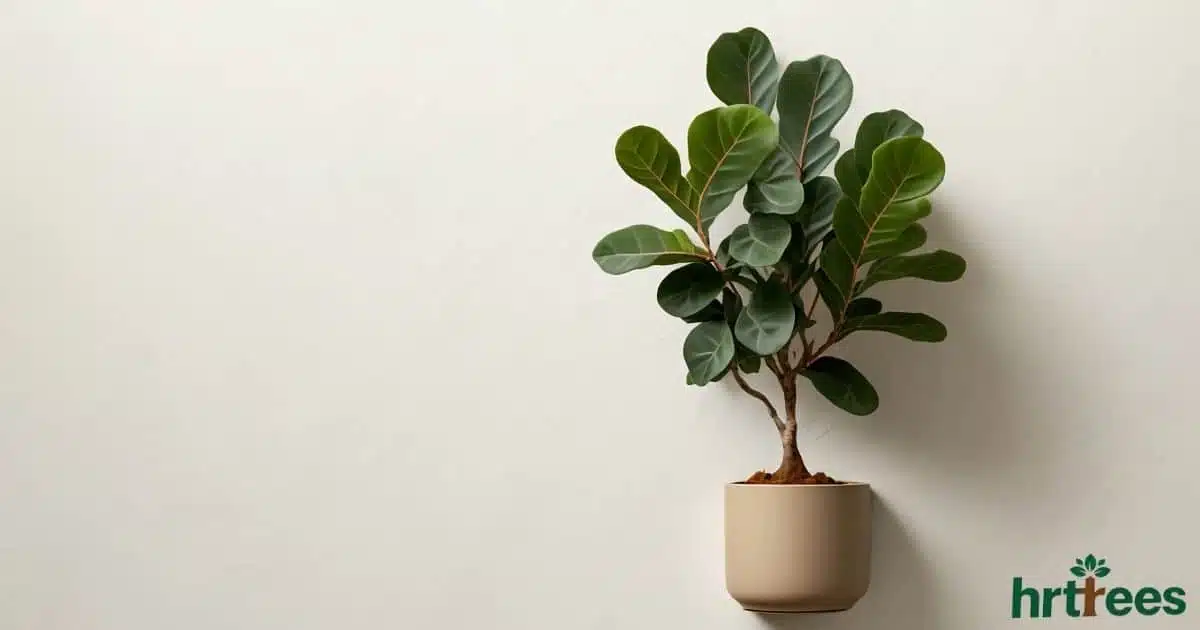
Because light is not a concern with artificial plants, you can select species that would never live in a real office corner, like lush. Monasteras, Fiddle Leaf Figs and Black Olive trees are good options in dark areas since their broad leaves cover the empty area and bring a sense of life where the actual plants would have turned yellow.